When Baseball Seeks Its Center
Hara (腹), ki (気/氣) and the possibility of reaching the martial-arts ideal in hitting, pitching and fielding
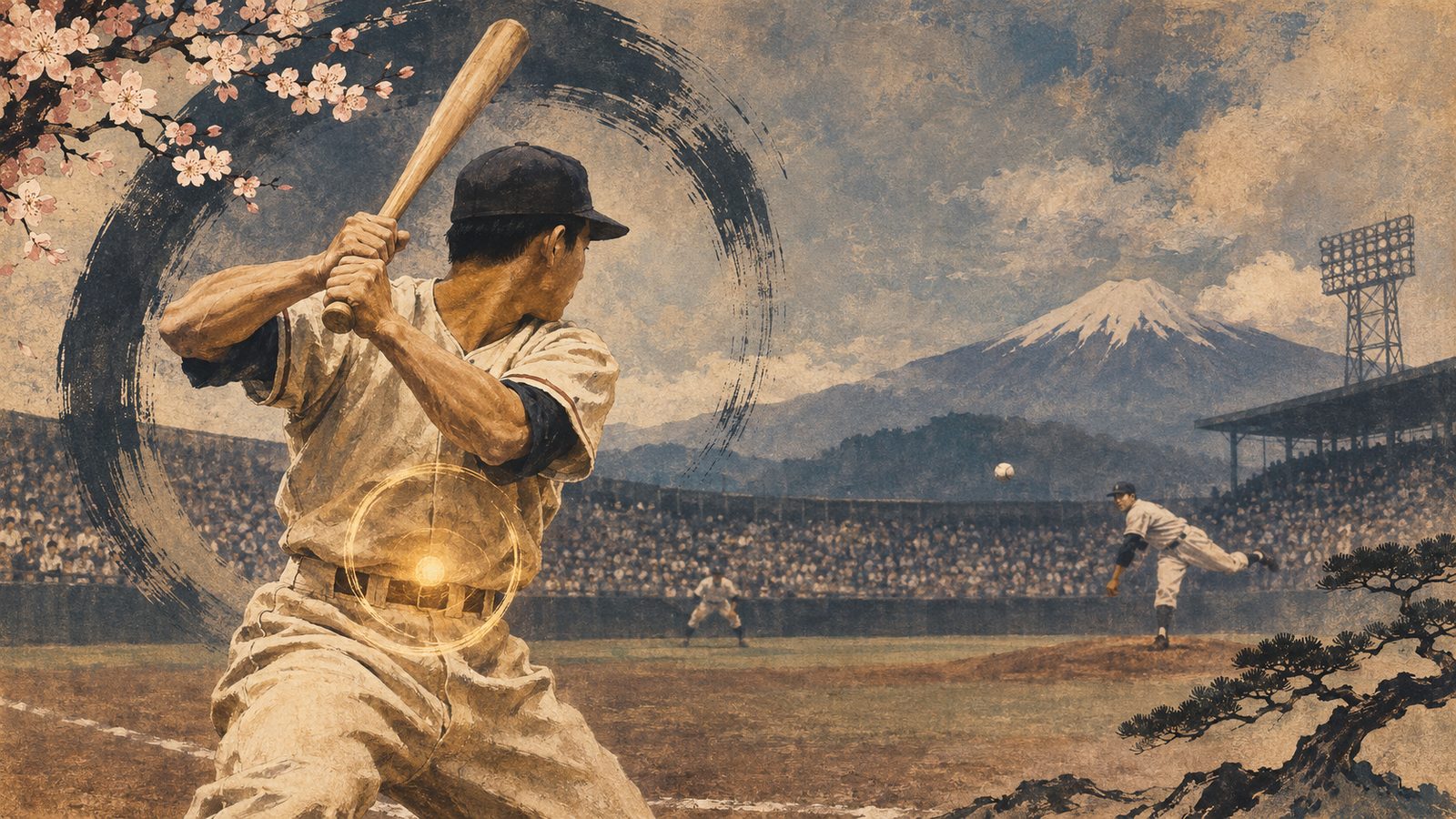
Hara as a question of baseball mastery
When I came across a remark in Dollar Sign on the Muscle (1984) by the American ballplayer and later scout Tony Roig (1928–2010) about Japanese coaches and their word hara (腹), my attention stopped at that single word. It was not the discovery of an unknown Japanese concept. I knew hara (腹) from years spent studying Asian martial arts. I also knew how hard it is to translate: at one moment it means the belly and the center of gravity, at another courage, concentration, firmness of character, or a state in which movement and decision no longer pull apart. That is exactly why it surprised me to find the word in an American book about baseball scouting. [1, 2, 3]
In the martial arts one meets similar ideas again and again, if under different names. Starting from a simple stance and the repetition of basic techniques, the student is meant to arrive gradually at movement in which neither a straining for power nor inner hesitation can be seen. A teacher may speak of hara (腹), tanden (丹田), mushin (無心), fudōshin (不動心) or ki (気/氣). In all these traditions it is a long, sometimes lifelong journey toward one’s own physical and mental center. My experience with the martial arts led me to the question that became the basis of this study: could a similar ideal be fulfilled in baseball too, especially in hitting, where success is decided in a fraction of a second?
Roig’s remark was the first impulse for my search. What actually led me to write this study, however, was something else: the reactions I kept meeting among people in Czech baseball. Some of them have devoted many years to the game, yet any mention of martial arts in connection with hitting or pitching drew raised eyebrows, an amused smirk or automatic dismissal. This surprised me all the more because I did not have in mind some loose resemblance between a swing and a sword cut, but concrete historical links between players, coaches and teachers, documented in contemporary interviews, memoirs and scholarly work. I gradually concluded that this part of baseball history remains almost unknown in my country. With this article I would like to fill at least part of that gap and offer interested readers the names, sources and stories that let them look at baseball from a less usual perspective.
I was particularly struck by training drills and preparatory exercises. Their many variants often reminded me, surprisingly, of methods familiar from the martial arts. Most people around me, however, did not see the connection — perhaps also because they did not know the original ideas behind these methods. That is another reason why I decided to verify the historical links in the sources and offer them to readers who want to look at baseball more deeply than through everyday technical terminology.
Roig, who played in Japan for the Nishitetsu Lions (1963–1967) and the Kintetsu Buffaloes (1968), described how power hitters and contact hitters were taught differently. In the interview recorded by Kevin Kerrane he then came to the Japanese word hara (腹). It was his following words that stood at the beginning of my search:
“In Japan they teach hitters style patterns—one style for power hitters, another style for contact hitters. Their concept is, we’re gonna get the most outa what you have, your own individual abilities, and so they vary their instruction. Some teachers talk about hara, the belly, the center, the still point. But for me, it comes outa the head. The still point is what you’re believin’ up here. If you got a lot of confidence, if you really feel like you can hit, that’s half the battle. You should know in your mind ‘Man, I’m gonna hit this ball. I’m gonna hit it hard somewhere.’ So when the Japanese talk about hara, I think of that more as the courage to stand in there on inside fastballs. That comes from the belly, all right. We call it guts.”
On a closer reading it helps to distinguish three levels that overlap in the Japanese sources. The first is the way the body is held and organized: how to stand, breathe, move and shift weight. The second is the mental state — the ability to stay attentive, ready and inwardly calm. The third level comes from the traditional concept of ki (気/氣), the idea of an energy that manifests itself in a person and that an experienced practitioner can consciously develop. Teachers of aikido (合気道; aikidō) often did not treat these levels separately. Tanden (丹田) was the place of concentration, ki (気/氣) the expression of unification, and outward technique the visible form of an inner state. I will follow this connection directly in the surviving baseball testimonies. [3–5, 18–20]
This text attempts to trace a historical path from teachers of Japanese martial arts to professional baseball players and on to today’s MLB. We will turn first to hitters, about whom unusual states of perception and of swing execution are reported. Then to pitchers and fielders, where the same theme becomes a matter of time, reaction and the opponent. Only after these testimonies will we reach the present and the question of whether today’s professional baseball experiences something similar, even if it speaks about it in other words.
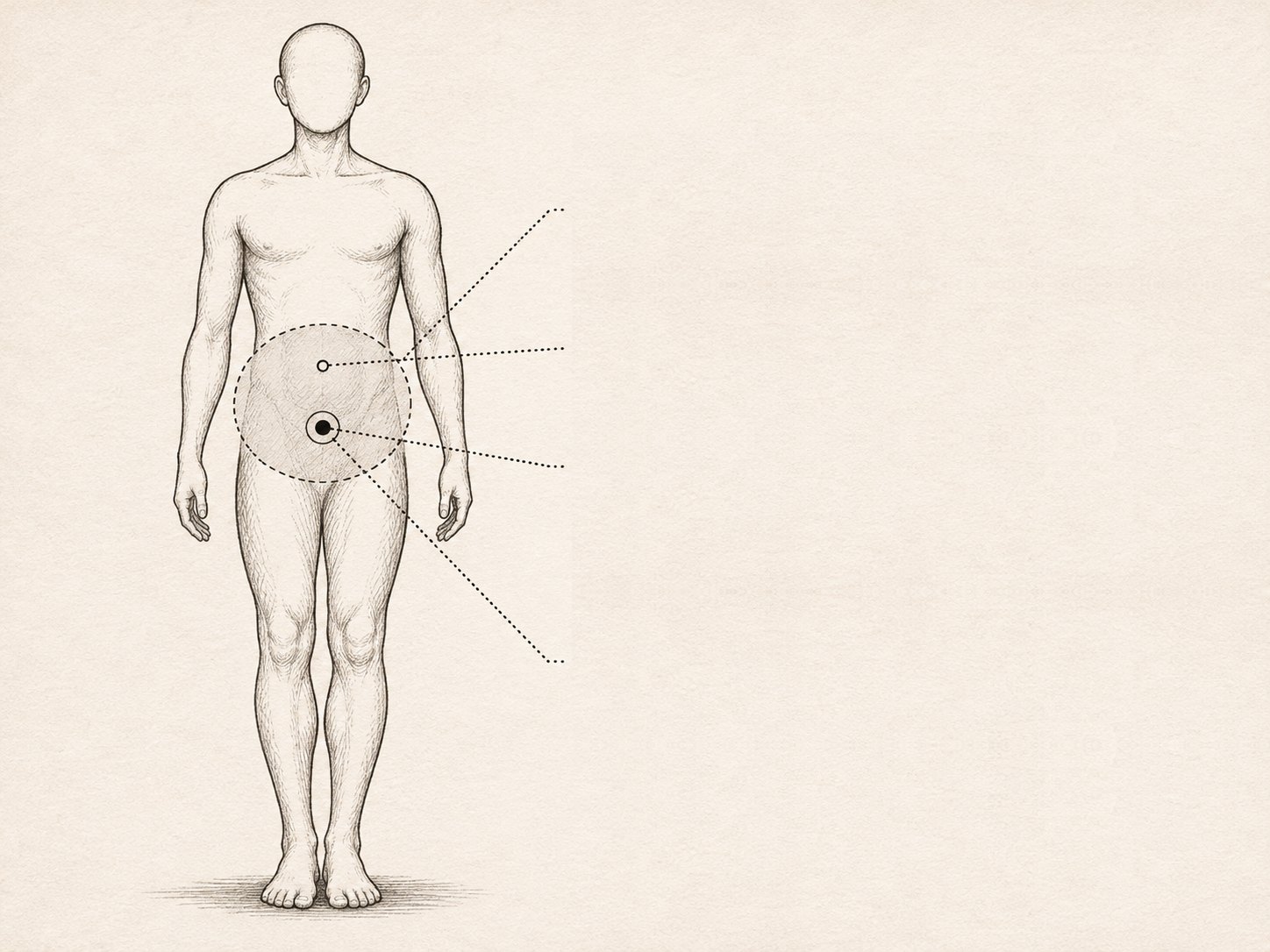
- 腹HaraLiterally “belly.” In Japanese culture also the center of a person: the seat of calm, courage and inner support.
- 臍navel (heso)
- 臍下丹田Seika tandenAn imagined center in the lower abdomen, a few centimeters below the navel. Not a muscle or an organ, but a point to which stance, breath and movement refer.
- 臍下の一点Seika no itten“The one point in the lower abdomen” in the teaching of Koichi Tohei, which Oh, Enomoto and Hirooka encountered. In this school the concept differs from the classical tanden.
The Japanese terms deserve a brief definition. Hara (腹) literally means belly; in a broader cultural sense it is also a person’s inner center. Seika tanden (臍下丹田) denotes an area or imaginary point below the navel on which attention is focused. The school of Koichi Tohei also uses the more precise expression seika no itten (臍下の一点), “the one point in the lower abdomen.” In traditional language ki (気/氣) is life energy; in Tohei’s teaching it is also the way a unified mind and body express themselves outwardly. It is precisely between tanden (丹田) as the center and ki (気/氣) as the expression of inner unification that a tension arises which appears surprisingly directly in some historical baseball testimonies. [3–5, 18–20]
The word hara (腹) itself is older and broader than sport in this setting. The anthropologist Takie Sugiyama Lebra describes it as the symbolic seat of the inner self, which may be hidden behind a person’s everyday conduct. The expression hara ga suwaru (腹が据わる) — “to have a settled belly” — expresses readiness to act without confusion. To a Western reader such language may seem metaphorical; for someone who has gone through aikido training, however, it is tied to the concrete experience of stance, bodily calm and concentration. Translating it into the language of baseball means returning to the question of what must be present for a swing or a pitch to happen at the right moment. [3, 4]
Further research into Japanese sources shows that the relationship between baseball and the martial arts did not develop along a single line. Alongside Arakawa’s aikido and Hirooka’s teaching of ki (気/氣) there is a well-documented tradition of kobujutsu (古武術), the study of older fighting techniques, and in recent decades also targeted work with the Chinese forms of taijiquan and yiquan (意拳). The common denominator is not the national label of a particular school but the experience of a body learning to combine a firm stance, quick reaction, relaxation and precise timing. [51, 53, 74, 75]
Enomoto, Oh and the path to the perfectly executed swing
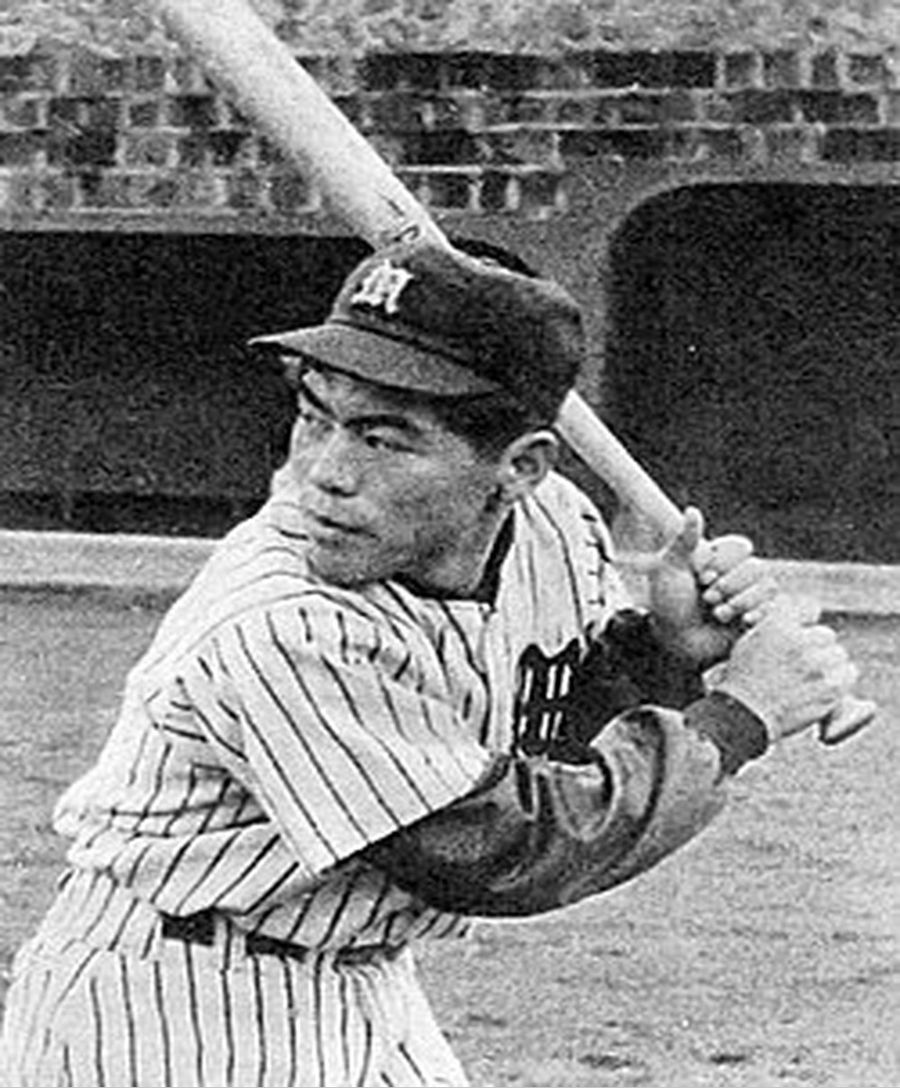
The first great story of this line revolves around Kihachi Enomoto (榎本喜八; 1936–2012). He entered NPB straight out of high school in 1955 and immediately won the Rookie of the Year award. He spent most of his career with the Orions, whose name changed over the years from Mainichi through Daimai and Tokyo to Lotte; he played his last season, 1972, with the Nishitetsu Lions. In eighteen seasons he appeared in 2,222 games, collecting 2,314 hits and 246 home runs with a career batting average of .298. He won the batting title twice: in 1960 with .344 and in 1966 with .351. These figures confirm his exceptional standing among Japanese contact hitters. [12, 13]
Behind Enomoto’s technical development stood Hiroshi Arakawa (荒川博; 1930–2016), a former professional player and later coach whose own NPB career ran from 1953 to 1961. In an interview with Tōyō Keizai (2010) Arakawa recalled:
“技はあるけれども、『気』がない”
Translation: “He had the technique, but he lacked ki (気/氣).”
That is why he took him into his own home for several months and brought him to an aikido dojo (道場; dōjō). In this context the coach spoke of an experienced fighter’s ability to radiate such certainty that the opponent begins to sense his strength even before the actual clash. In baseball a similar quality was supposed to work on the pitcher facing the hitter. Arakawa explicitly linked the work with ki (気/氣) to Enomoto’s first batting title in 1960. [9, 10]
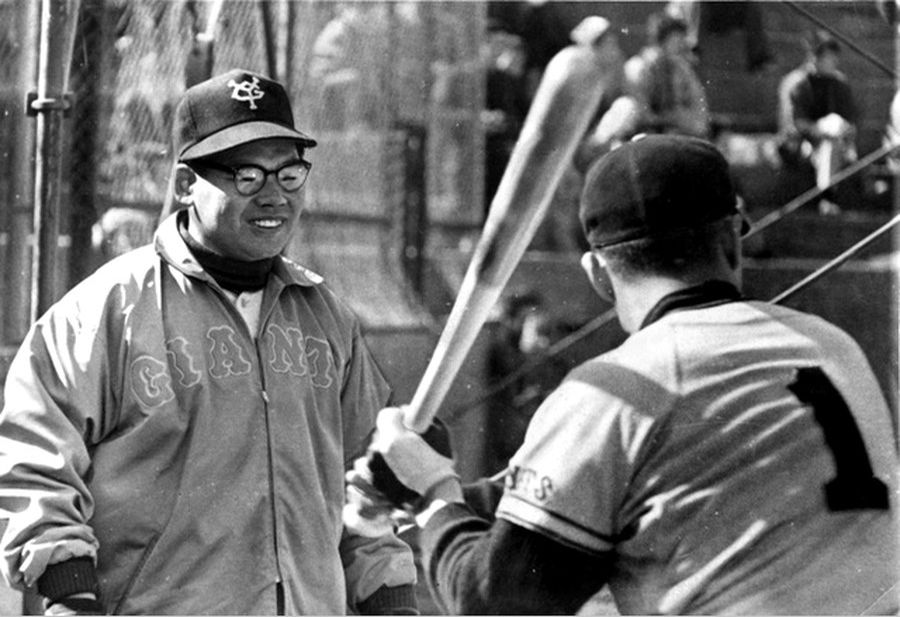
Arakawa’s own biography explains why he could combine so many seemingly disparate stimuli in Enomoto’s preparation. He had gone through professional baseball himself, then began practicing aikido (合気道) regularly and gained access to teachers who worked with the technique of the body differently from an ordinary sports instructor. In his eyes the swing was not an isolated movement of the arms. What mattered was the work of the whole body, timing and the state of mind. So when he sensed a lack of ki (気/氣) in the young Enomoto, he did not simply send him to more batting drills; he changed his daily environment for a time and brought him into the dojo (道場). From the standpoint of the history of sports pedagogy, this is an exceptionally concrete method of carrying knowledge from one field into another. [9, 10]
Here the relationship between the martial arts and baseball appears in an entirely concrete form. Arakawa was not describing only relaxed muscles or a more favorable center of gravity. He spoke of something a player brings into the confrontation with an opponent as a whole person: presence, decisiveness, calm and the expression of ki (気/氣). His explanation grew out of his personal experience of aikido (合気道) and shows how a Japanese coach of that time understood a higher degree of technical mastery. When we read his words today alongside Roig’s hara (腹), the two sources begin to overlap. [1, 9]
In 2010 Arakawa also recalled his idea of how ki (気/氣) affects an opponent. In the advanced martial arts, he said, an experienced person does not come across as someone still wondering whether he will be able to react: his readiness is legible even before the technique begins. He looked for the same thing in a hitter. A pitcher may have a better fastball than the opponent has bat speed, yet he senses that he is facing someone unusually calm and ready. Later recollections of Enomoto’s stance by his opponents provide exactly such a counterpart to the teacher’s explanation. [9, 14, 17]
Enomoto’s search, however, continued even after his first title. Later he described a special period of hitting in 1963, when he was twenty-six, in which the very experience of time seemed to change. In an interview printed in 1985 in Sports Graphic Number he used an unusual formulation:
“臍下丹田でボールをとらえている”
Translation: “I catch the ball with my seika tanden (臍下丹田).”
Recollections passed on by the journalist Mitsuyoshi Okazaki (岡崎満義) add that at the plate he perceived an unusual amount of time and that his swing took place without the usual conscious estimation of timing. When the state faded after about two weeks, he regarded it as the loss of something he never fully regained. [11, 12]
Yet in 1966, three years later, Enomoto achieved an even more striking full-season result: a .351 batting average, 167 hits and 24 home runs. By ordinary statistics his second title can be regarded as one of the peaks of his career. The player himself, however, attached extraordinary weight to the brief state of 1963. Precisely this difference matters for the theme of hara (腹). Enomoto judged the perfection of a hit also by the quality of its execution and the felt coordination of the movement, not only by whether the ball fell in between the fielders. [11–14]
In recollections of Enomoto, an almost motionless batting preparation appears again and again. Opponents and journalists alike saw a calm stance, minimal movement and then an exceptionally fast swing. The former great hitter Isao Harimoto (張本勲; 1940–) later stressed that this apparent stillness contained inner activity. He captured it in a phrase also known from the traditional language of the martial arts: movement hidden within stillness.
「静」の中に「動」があるフォーム。まるで動かないように見えて、静かに膝でタイミングを取る。
Translation: “His batting form held movement within stillness. He seemed not to move at all, but he was quietly taking his timing with his knees.”
Harimoto further stressed that when hitting, Enomoto did not open his body early or shift his weight too far forward. That was where he saw the exceptional quality of his batting technique. [14]
Enomoto’s work with relaxation was therefore at the same time work with readiness; the body was not supposed to reveal the intended action too early. [14]
Okazaki connected Enomoto’s account with a summer stretch of 1963 which, in later tellings, appears as two weeks of extraordinary hitting. Some recollections also give the figure of 24 hits in 43 at-bats, a .558 average. A more recent reconstruction of the game schedule points to some uncertainty in this calculation; in a retrospective account, the boundaries of an experience and the exact selection of games need not coincide with the statistics. It remains highly telling, however, that a player with such a long and successful career regarded precisely this short period as something qualitatively exceptional. [11, 12]
Enomoto managed to describe his experience at a time when sporting success was associated almost exclusively with results. For a player with thousands of plate appearances behind him, the distinction between a good swing and a good result became part of his personal philosophy. In baseball this distinction is especially sharp: a perfect line drive can end up straight in a glove, while poor contact can drop in between the fielders. Enomoto’s talk of seika tanden (臍下丹田) can thus be read as an attempt to name an inner quality of execution that the box scores of his day could not capture. [11, 12, 14]
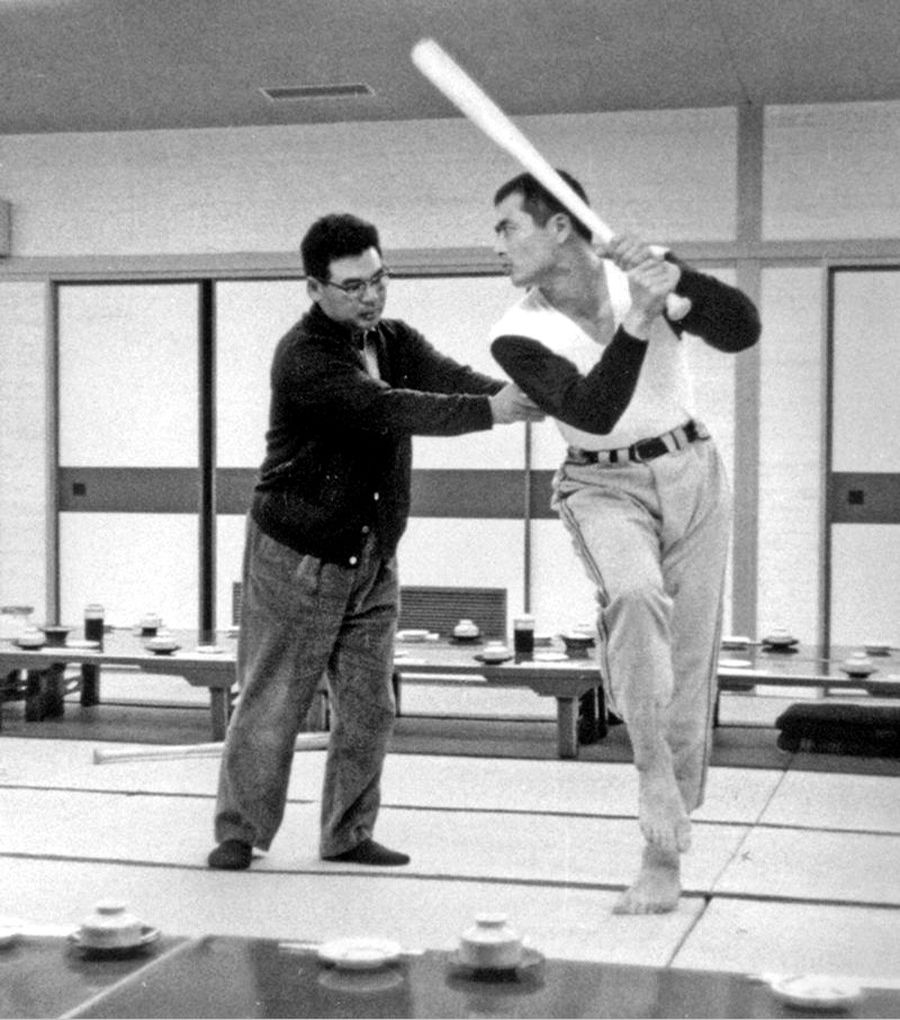
The second key story begins with Sadaharu Oh (王貞治; 1940–), who spent his entire professional career, 1959–1980, with the Yomiuri Giants. In 2,831 games he collected 2,786 hits, 2,170 RBI and 868 home runs, still the highest total in NPB history; his career batting average was .301. The player whose public image gradually became tied to the one-legged stance ippon-ashi dahō (一本足打法) became one of the most famous examples of the link between baseball and Japanese tradition. [6, 7, 38]
The one-legged ippon-ashi dahō (一本足打法) differed from an ordinary batting stance above all by a pronounced phase of balance on the back leg. Oh hit left-handed: as the pitch began, he lifted his front, right leg high, sometimes almost to his chest, and for a brief moment stood on his left leg alone. Only then did he stride toward the ball and swing. Compared with the usual smaller and smoother stride, this was a conspicuous movement that demanded precise timing but helped keep his weight back and limit an early forward drift of the body. Arakawa began developing it systematically with Oh in 1962, in order to eliminate a late swing and an unnecessary preparatory movement of the bat (the hitch). That same year Oh led the league in home runs for the first time. [6–8]
Arakawa did not draw on a single school. In an interview given in 2004 to the publisher Dō Shuppan, he stated that he held a sixth dan in aikido (合気道), had studied directly under Morihei Ueshiba (植芝盛平; 1883–1969), and had trained in iaidō (居合道) under the swordsman Junichi Haga (羽賀準一; 1908–1966). His baseball teaching thus grew out of his own long practice, in which different ways of working with stance, blade, attention and ki (気/氣) came together. [122]
For Oh, therefore, the unusual position alone was not enough. Arakawa used the one-legged stance as a means of transforming the whole movement pattern, and his training included work with the sword, breathing, balance, concentration, practice in the dojo (道場) and very long hours of repetition. [6–10]
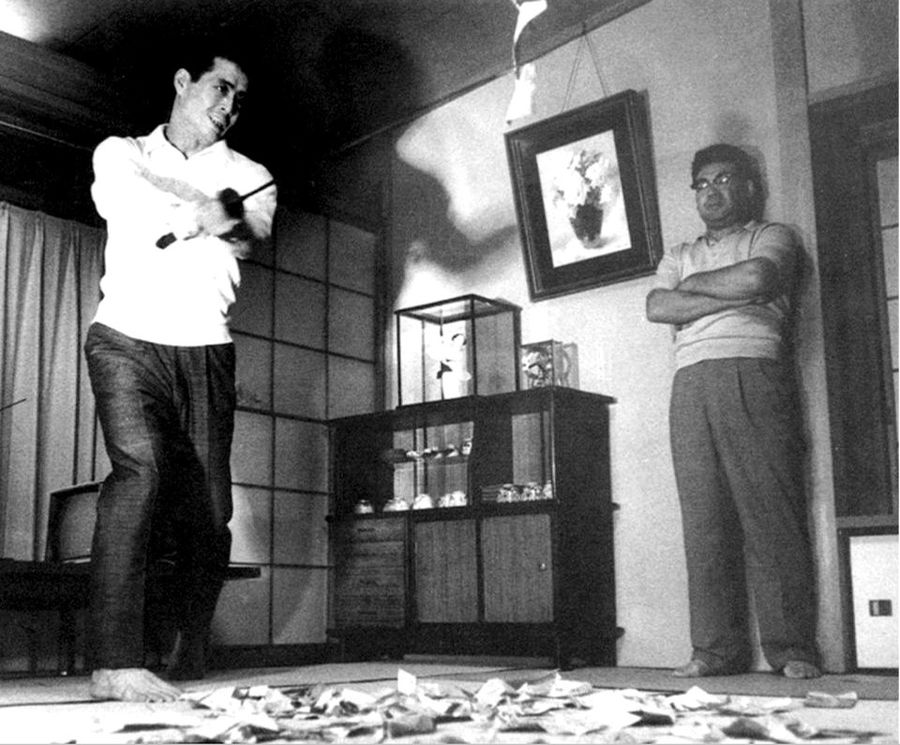
In his autobiography A Zen Way of Baseball (1984), Oh recorded one of Arakawa’s most interesting exercises. A narrow strip of paper hung from the ceiling on a thin thread, constantly turning and swaying slightly. Oh stood in his ready stance on one leg, holding a real Japanese sword, and was to cut the paper cleanly. Swinging at a moving target required correct guidance of the blade, the exact moment to start the cut and control of balance. But the paper kept turning, so the player had to wait for the fraction of a second when its motion stopped. Oh recalled that at first he felt growing impatience, but gradually he was able to stand on one leg for more than three minutes and keep his concentration in the lower abdomen. Waiting became an active part of the technique: in the end he could catch the moment of the cut even before the paper actually stopped. The detailed description comes from Oh’s autobiography (pp. 160–168) and is also analyzed in a later academic study. [7, 43, 45]
At a press conference for the release of A Zen Way of Baseball in November 1984, after his first season as manager of the Yomiuri Giants, Oh explained to journalists what sword training had meant to him. He described the benefit of the sword for concentration and relaxation in the words quoted below. He also mentioned breathing and self-confidence. Journalists and American baseball observers thus heard from the record holder himself an explanation that went much further than the one-legged stance as a technical curiosity. The report from the press conference also speaks of three years of joint work by Oh and Arakawa with an aikido (合気道) teacher and of the concept of ki (気/氣). [7, 43]
“Using the sword helped me learn to concentrate and then relax.”
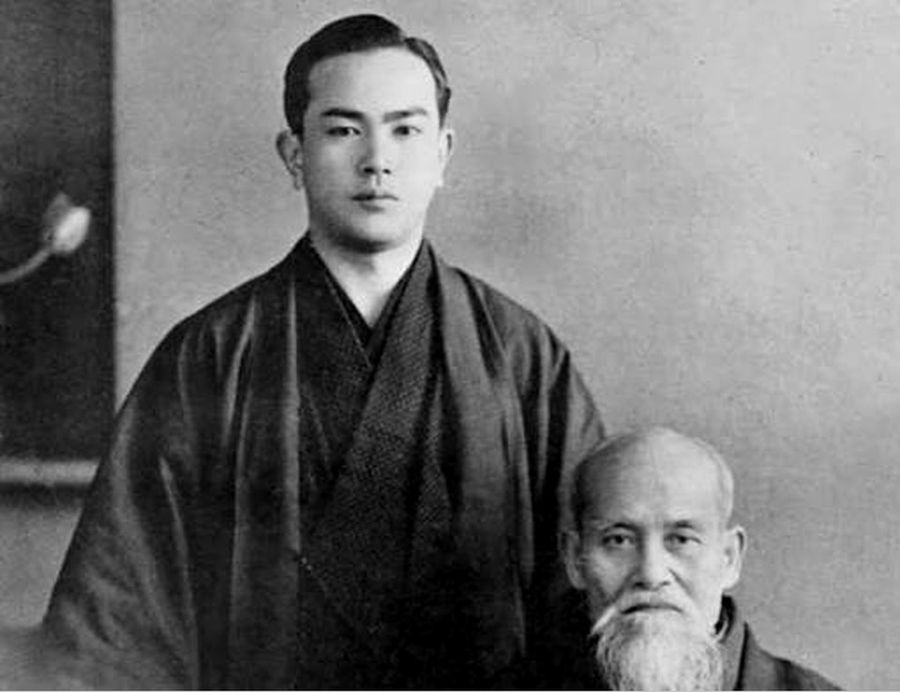
An important witness is Koichi Tohei (藤平光一; 1920–2011), later the founder of the school of Shinshin Toitsu Aikido (心身統一合氣道) and of the Ki Society (氣の研究会; Ki no Kenkyūkai). In an interview of 8 February 1996 he stated explicitly that he had taught the unification of mind and body to Sadaharu Oh and also to Yomiuri Giants players. This statement carries exceptional weight as a source: here the link between professional baseball and the teaching of ki (気/氣) is confirmed by the teacher himself, not by a later romanticizing biographer. [5]
News of Oh’s training also reached American readers. The journalist Thomas Boswell returned to the subject in January 1985 and noted how the unusual combination of swordsmanship, aikido and baseball struck some American readers. What matters is that this teaching was not built up afterward around Oh’s fame: it was part of his preparation at a time when he was trying to overcome specific technical shortcomings. [7, 10, 36]
A direct path also leads from Oh’s circle into American baseball: his Yomiuri Giants protégé Reggie Smith (1945–) took up the work with the sword and in 1989 used it as a hitting instructor for the Los Angeles Dodgers’ farm teams. A contemporary report noted that he had learned the method precisely from Oh; we will return to it in more detail in the American chapter. [140]
Arakawa had the chance to compare his two exceptional pupils. In his recollections he described Enomoto as a man striving for ever deeper perfection, whereas Oh, in his view, could also enjoy the game and leave room in it for naturalness. The result is two different baseball destinies and two possible forms of the search for the same ideal. Enomoto appears as a relentless investigator of his own movement, Oh as an athlete who managed to turn hard discipline into performance he could repeat over a long career. [9]
A surviving testimony from the world of aikido (合気道) adds one more view of Arakawa’s training. Yasuo Kobayashi (小林保雄; 1936–), a longtime aikido student at the Hombu Dojo (道場) in Tokyo, later described how Arakawa learned directly in the dojo and, in a demonstration, compared the ability to deflect an attack with the movement of a baseball bat. He also recalled ballplayers visiting the dojo, where Arakawa demonstrated principles of working with the body. For our theme the difference in roles is especially interesting: Arakawa, as an active practitioner of the martial art, carried his personal experience into baseball; Oh acquired it mainly through specially chosen exercises and observation. [152]
With Oh, Arakawa returned to the same range of stimuli as with Enomoto, but he was solving a different problem. The one-legged stance looked paradoxical: the less stable it seemed to the spectator, the more calm, rhythm and precise weight distribution it demanded from the player. Oh could no longer paper over the problem with new small fixes; he had to change the relationship of his whole body to the moment of contact. [6–8]
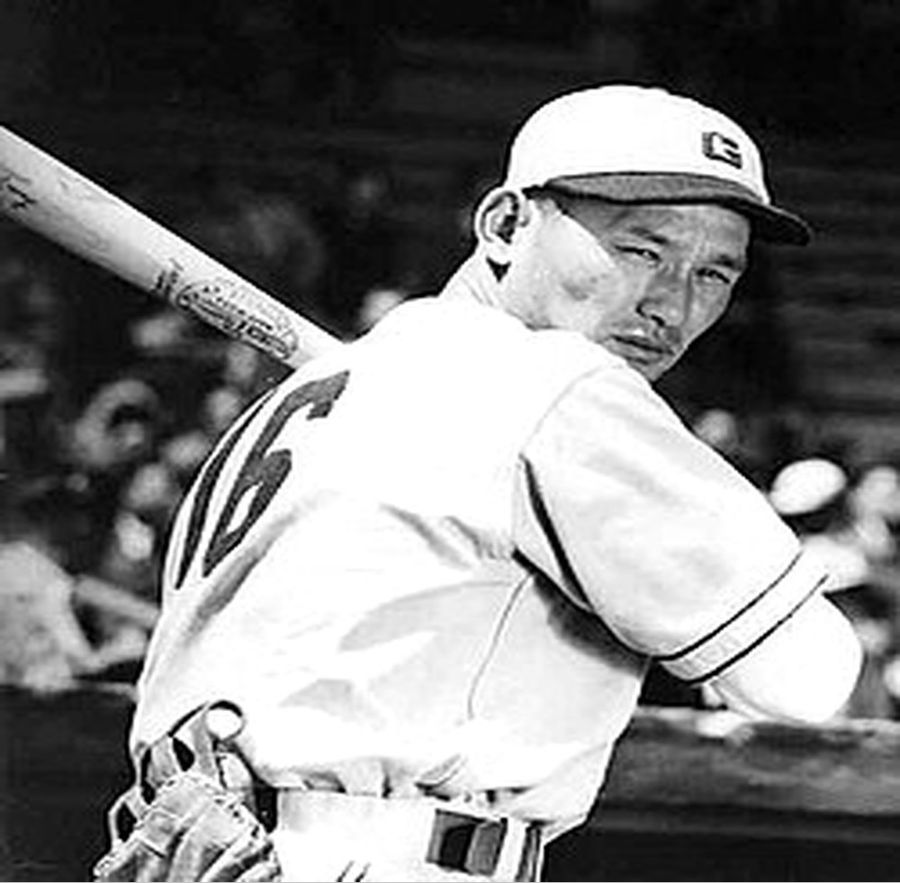
The older generation also includes Tetsuharu Kawakami (川上哲治; 1920–2013), star and later manager of the Yomiuri Giants. Over his NPB career he recorded 2,351 hits, 181 home runs and a .313 average. His name is associated with the saying that in a state of extraordinary concentration the incoming ball appeared to him almost motionless. When we place such testimony beside Enomoto’s account of slowed time, we obtain a third contemporary picture of a reality that Japanese players sometimes described in the language of spiritual concentration and at other times in the language of baseball feel. [6, 14]
It is with hitters that the intersection with the martial arts is most visible. A swing against a fast pitch cannot be assembled from individual instructions at the very moment of contact. Years of work on mechanics, stance, rhythm and attention are meant to flow into a moment that subjectively feels simple and natural. With Enomoto it is described in the language of seika tanden (臍下丹田), with Oh through the sword, aikido (合気道) and ki (気/氣), with Kawakami through the image of a ball standing still. The different testimonies converge on an idea of technical mastery that ultimately goes beyond its own visible technique.
Arakawa’s paper exercise connects two movements that are usually kept apart: a long, calm preparation and a very short decisive strike. Looking at Oh’s one-legged batting stance, the connection is clear. A substantial part of the performance happens before the swing itself — in balance, breathing, patient waiting and recognizing the right moment. Training with the sword gave this experience a physically concrete form. [7, 8, 45]
Tohei’s school also offered a very concrete pedagogical language. It emphasized concentration on a single point in the lower abdomen, complete relaxation and a natural stance. For Oh’s one-legged swing this meant the ability to stand without outward rigidity and to let weight and timing work together. The movement of the bat itself remained baseball technique, but its inner organization derived from principles used in the dojo (道場). This connection explains why the words breath, sword, ki (気/氣) and tanden (丹田) appear so often in contemporary interviews about Oh’s style. [5, 7, 19]
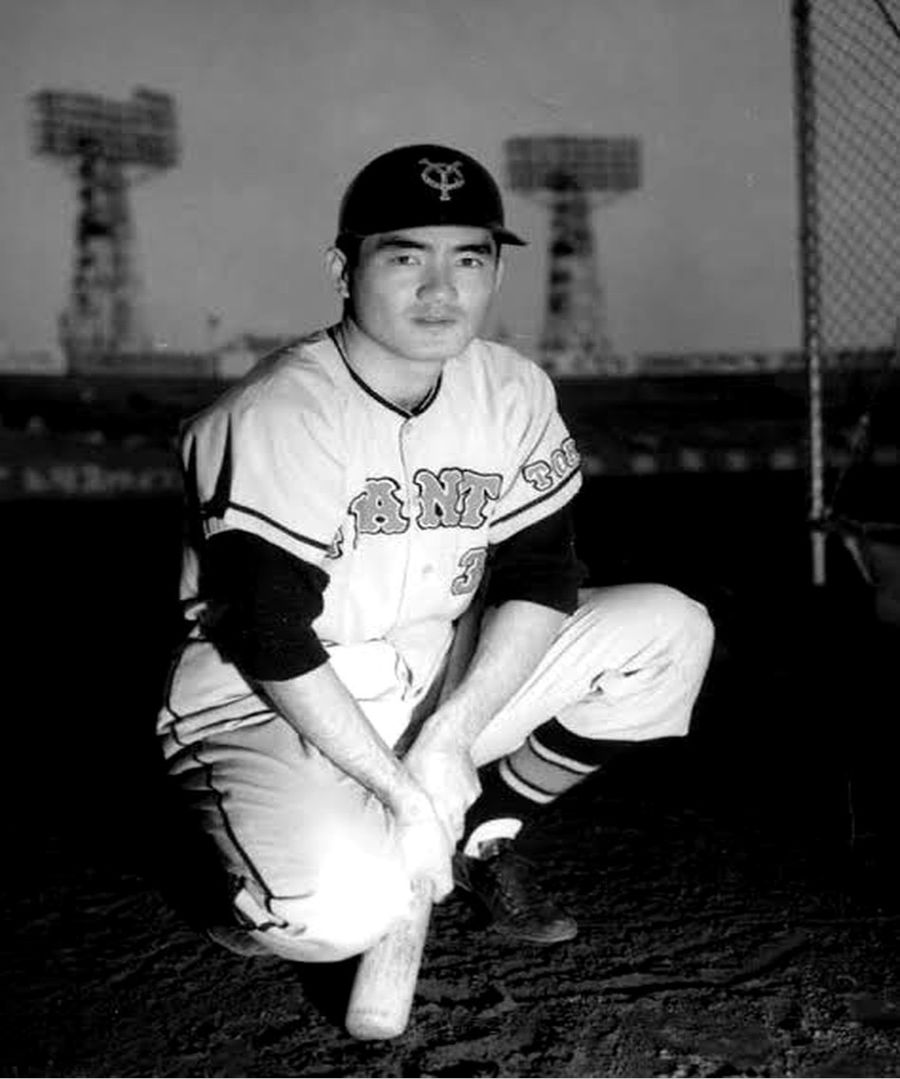
The circle around Koichi Tohei also included Shigeo Nagashima (長嶋茂雄; 1936–2025), one of the most famous figures of postwar NPB. Wearing the Yomiuri Giants uniform from 1958 to 1974, he recorded 2,471 hits, 444 home runs and a .305 batting average. The publisher Kōdansha explicitly lists Nagashima, Oh and Hirooka among the ballplayers Tohei taught. His book 「氣」の威力 (Ki no iryoku, “The Power of Ki,” 1990) contains separate passages on teaching Oh and on Nagashima’s quick grasp of the principles of ki (気/氣). Both players thus appear not only in shared recollections but directly in the teacher’s own writings. [92, 93]
Nagashima’s case also opens up the difference between individual mastery and the transmission of a training method. Oh left a detailed autobiographical reconstruction of the one-legged stance, the sword work and concentration. For Nagashima, the available sources consist mainly of his teacher’s statements and contemporary testimony about their contact. Historically, then, we have two exceptional hitters side by side, but also two sets of sources of differing completeness. [7, 92, 93]
In his book 成功の秘訣は「氣」にあり (Seikō no hiketsu wa ki ni ari, originally 1992, book edition Kōdansha 1996), Tohei described how the application of ki (気/氣) translated into relaxation, stability and concentration not only for ballplayers but also for athletes from other sports. Together with 「氣」の威力 (first edition 1990), this book complements Oh’s own testimony: the same training is seen once from the player’s side and once from the instructor’s. [92, 93]
Calm, time and ki beyond the batter’s box
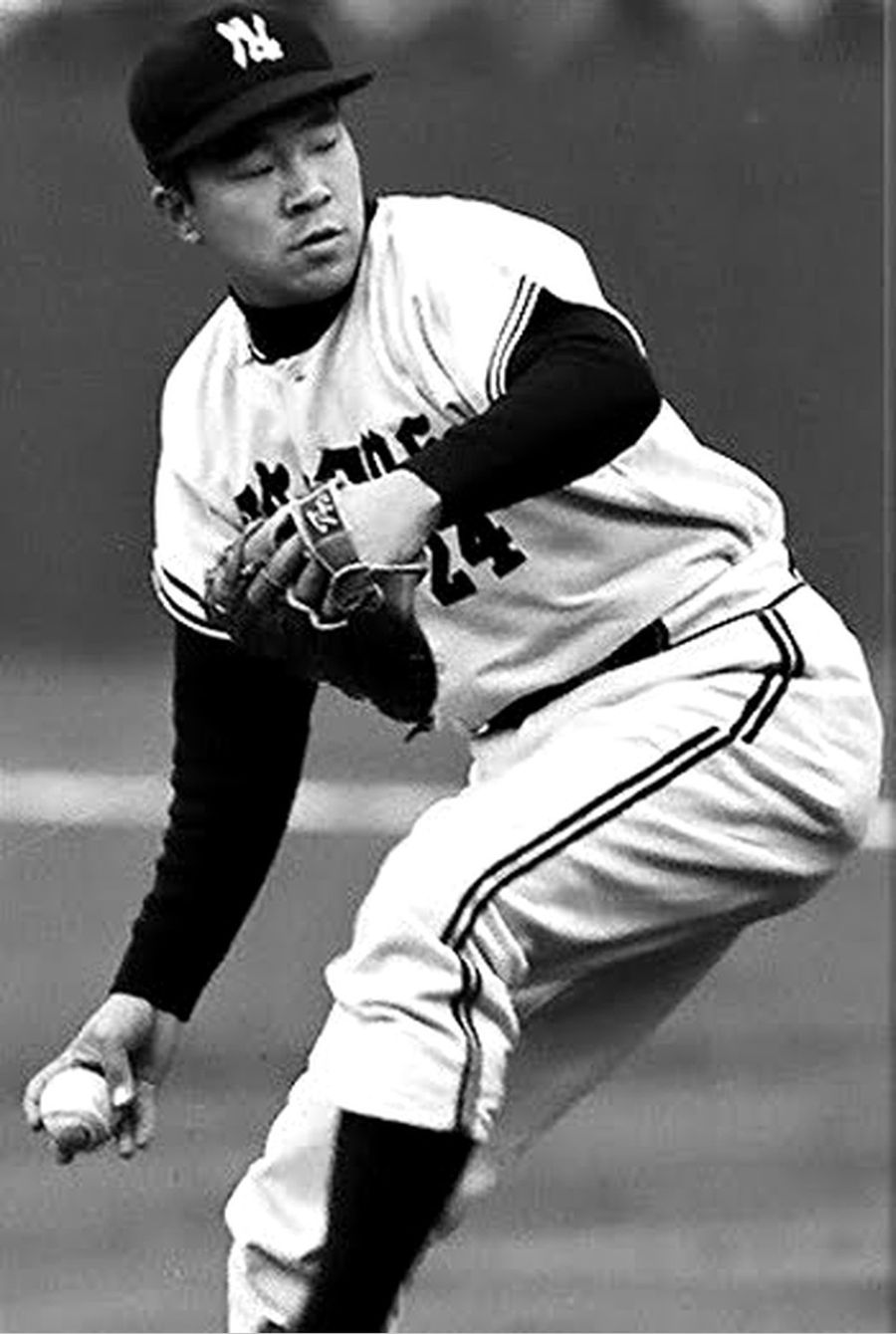
In searching for similar experiences among pitchers, the figure of Kazuhisa Inao (稲尾和久; 1937–2007) is extremely important. From 1956 to 1969 he was one of the pillars of the Nishitetsu Lions. His career record was 276 wins and 137 losses, with a 1.98 ERA, 2,574 strikeouts and 3,599 innings pitched. In 1961 he won 42 games, one of the most famous records in Japanese baseball history. For our theme he is also interesting because in 1963–1967 he played for the same club as Tony Roig, whose remark about hara (腹) set off this whole search. [2, 16, 39]
The journalist Mitsuyoshi Okazaki passed on Inao’s recollection of a period when he followed his own pitching motion in his mind almost like a slow-motion film. According to his account, he could distinguish individual details of his mechanics during the delivery and adjust them with uncommon precision. Naturally no direct game record of this subjective experience exists; historically, however, we have the testimony of one of NPB’s best pitchers, who described his performance in language similar to that Enomoto used for his hitting. [15, 16]
In 1958 Inao was one of the key figures of a dramatic Japan Series in which the Lions reversed an unfavorable course against the Giants and won the title. His four consecutive winning starts created a legend that later gave rise to an exclamation placing his name beside the gods and the Buddha. Historical tradition sometimes portrays Inao as the embodiment of pitching endurance; what is most interesting about his direct testimony on perceiving movement, however, is its personal precision. He does not merely say he was focused. He tries to describe how, during a certain period, the experience of his own body in the act of pitching changed. [15, 16, 39]
Inao also belongs to the story of Enomoto’s peculiar effect on opponents. In a recollection published by Seijun Ninomiya (二宮清純), he described Enomoto as an exceptionally difficult hitter whose motionless preparation and ability to wait until the last moment unsettled pitchers. Because of this single opponent he is said to have learned a forkball early in his career. Such testimony is a direct counterpart to Arakawa’s claim that mature ki (気/氣) can be perceptible from the moment the hitter stands facing the pitcher. [9, 17]
Pitching brings its own form of inner stability. The pitcher must control his stance, breathing, tempo and his gaze at the target. At the same time he knows the opponent is watching every hint that might reveal the pitch. Mastery therefore shows not only in the velocity of the fastball but also in the ability to maintain intention and rhythm through a long series of repeated duels. Inao’s recollection of slowed movement is one of the historical expressions of this ideal.
Pitcher and hitter, moreover, experience time differently. The hitter reacts to a movement coming from outside, while the pitcher must initiate the action himself, control its course and watch the opponent at the same time. In both cases, however, the individual phases fuse very quickly into a single movement. Inao’s experience of his own “slow-motion film” is therefore an important complement to Enomoto’s description of a ball flying strangely slowly. It is as if the two athletes, from opposite sides of the same duel, touched a special state of attention in which the usual sense of hurry disappears. [11, 15]
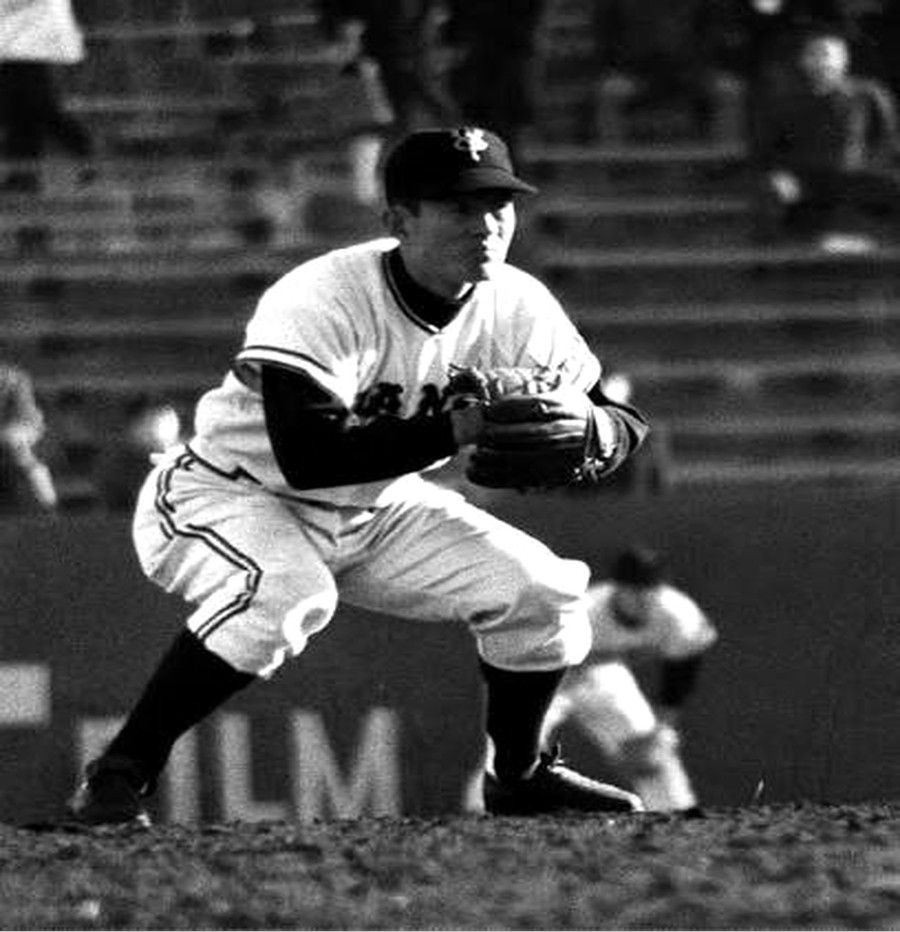
In fielding this tradition takes perhaps an even more concrete form. Tatsuro Hirooka (広岡達朗; 1932–) played 1,327 games for the Yomiuri Giants from 1954 to 1966, collecting 1,081 hits with a .240 average. His reputation, however, grew mainly out of his work at shortstop. Later he became one of NPB’s most important managers: in 1978 he led the Yakult Swallows to the club’s first Japan Series title, and in the 1980s he managed the successful Seibu Lions. Hirooka explicitly acknowledged the influence of the thinker Tempu Nakamura (1876–1968) and of Koichi Tohei. [18–20]
According to Hirooka’s own account, it was Arakawa, a former teammate and coach, who brought him to Tohei’s school. In the world of Shinshin Toitsu Aikido (心身統一合氣道) he learned stability of stance, concentration on seika no itten (臍下の一点) and work with ki (気/氣). In interviews from 2021–2022 he described how, in a player in good form, one can observe whether his ki (気/氣) acts openly and fully or whether it is dampened by uncertainty. For Hirooka, leading a team also meant being able to evoke this state and cultivate it in daily practice. [18–20]
His conception of defensive movement is exceptionally interesting. In fielding, a player must first stand correctly and react at the moment of contact; if he shifts his weight needlessly or hesitates, he loses time even before the first step. Hirooka related attention to the point below the navel not only to hitting but also to baserunning, stealing and infield play. In the traditional vocabulary, the stability of the tanden (丹田) was meant to enable movement that comes from a unified body rather than from excessive muscular tension. [19, 20]
Hirooka also understood his teaching as work on a player’s character. His long-standing quarrel with the idea that a good coach merely explains what a player should do is often summed up in the distinction between how to say and how to do. In the first case the athlete gets ready-made advice; in the second he goes through an exercise that lets him truly experience the principle. This is exactly how the traditional language of ki (気/氣) could enter ordinary baseball preparation: not as a lecture on Eastern philosophy, but as concrete exercises in stance, balance and attention. [18–20]
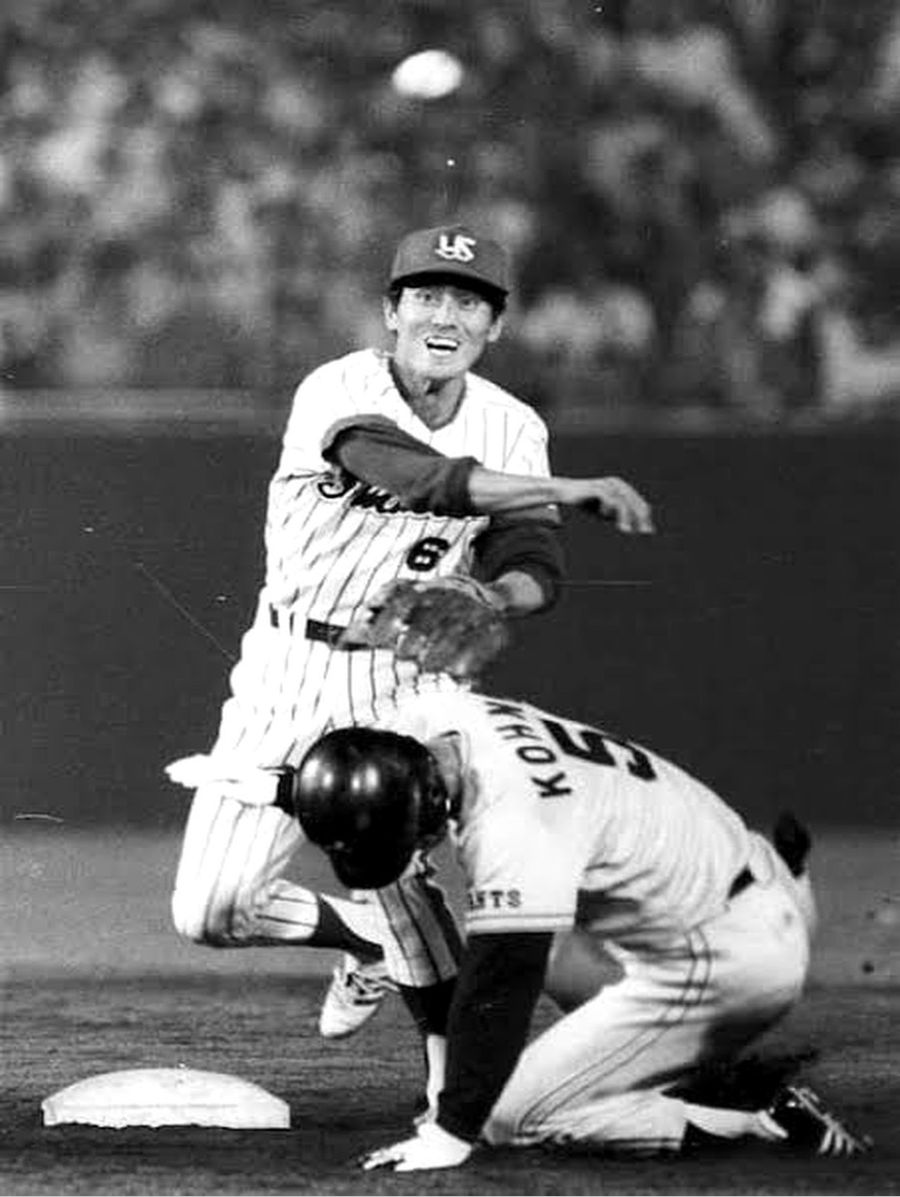
Yakult Swallows player Shintaro Mizutani (水谷新太郎; 1953–), who played in NPB from 1974 to 1989, gives a rarely concrete testimony. In sixteen seasons he played 1,297 games, collecting 854 hits, 23 home runs and 146 stolen bases with a .250 average. When in 2024, at the age of seventy, he recalled Hirooka’s teaching, he remembered morning sitting exercises and breathing practices led by Tohei himself. He described their effect very practically: at bat and in the field they helped him quickly calm his mind and focus it in the tanden (丹田). [21, 22]
The significance of this testimony lies in its ordinary baseball context. Mizutani was not describing an exceptional meditative episode somewhere off the field; he was speaking of a habit he could use during the game itself, at every moment before movement and decision. Ki (気/氣) emerges here as part of a coaching system and tanden (丹田) as a support for everyday defensive and offensive play. It is precisely such details that show how the traditional vocabulary could settle into a professional clubhouse. [20–22]
The distance in time is also important: Mizutani was speaking of an experience several decades old. In the 1960s and 1970s the teaching of Tohei’s school was a living practice in some clubs; in an interview half a century later it had become a personal technical and mental habit that the player could name precisely. Here the historian gains two perspectives at once: a trace of the original coaching method and information about how long its meaning was preserved in the memory of a man who used it on the field. [21, 22]
A similar theme appears among later pitchers. In a discussion published in 2021, Kazumi Saito (斉藤和巳; 1977–) and Ryota Igarashi (五十嵐亮太; 1979–) talked about the tanden (丹田), relaxation and intra-abdominal pressure, in Japanese fukuatsu (腹圧). Saito went 79–23 in NPB, while Igarashi pitched in 823 NPB games and also spent part of his career in MLB (New York Mets, Toronto Blue Jays and New York Yankees). Both described the pitch as a coordinated movement in which force must not be lost too early in tension in the upper body. [23]
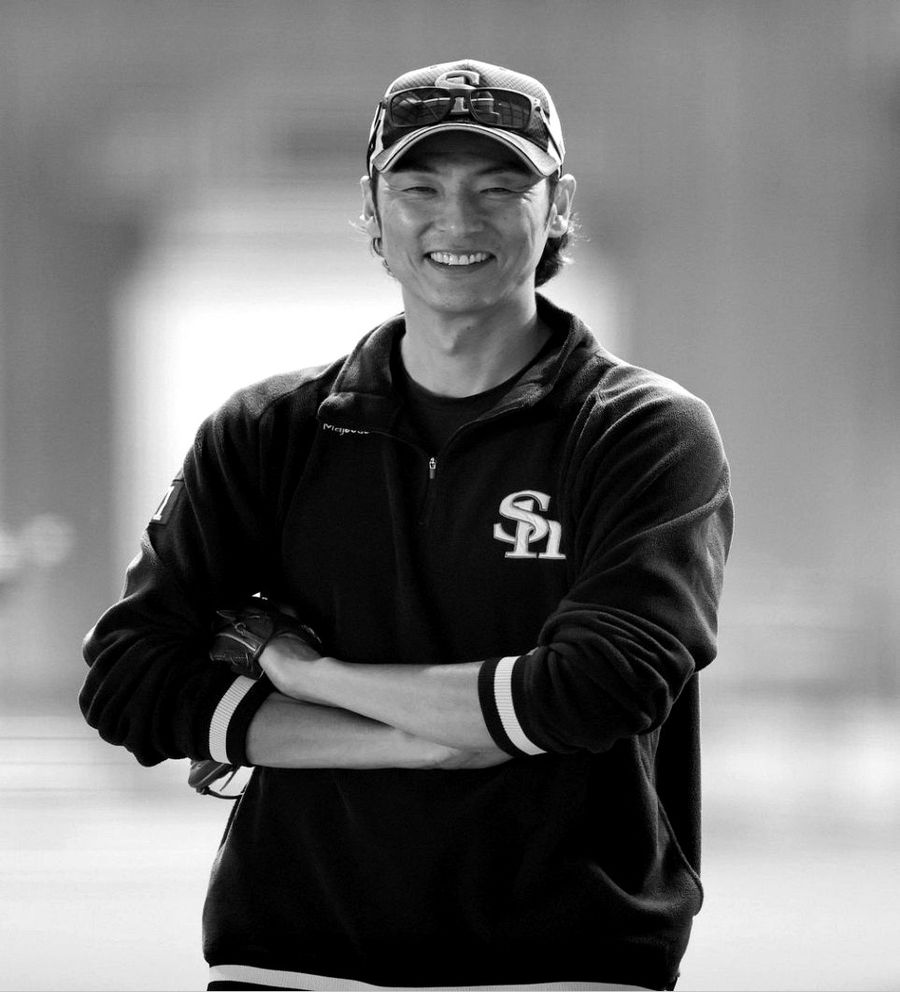
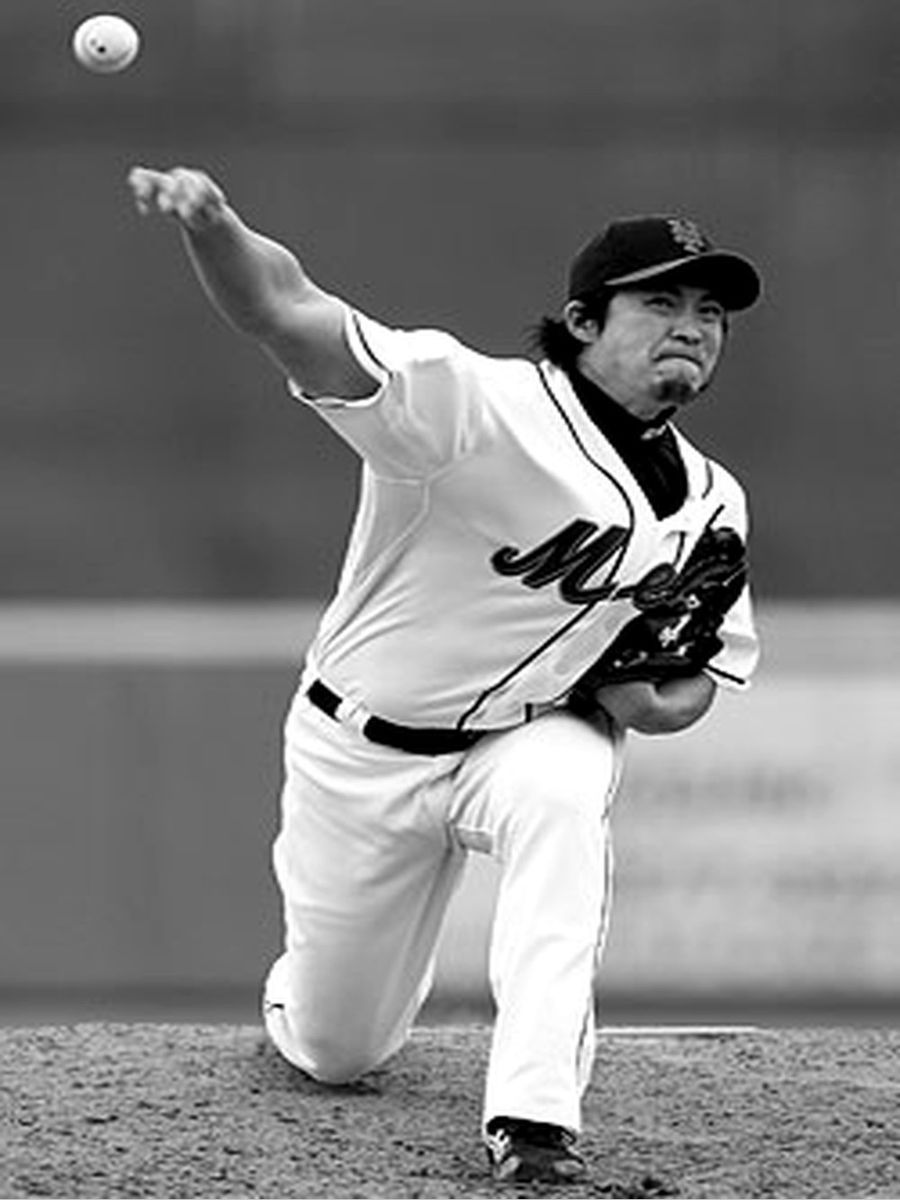
The evidence, then, is more than a few famous hitting legends. With Enomoto and Oh the work involved the sword and aikido (合気道); with Inao the experience of slowed time recurs; with Hirooka and Mizutani a calm stance, breathing, defense and work with ki (気/氣) come to the fore. The common denominator is an ideal well known to martial artists too: years of drills and conscious preparation are meant to make possible an immediate and natural action in which the body no longer gets in the way of its own intention.
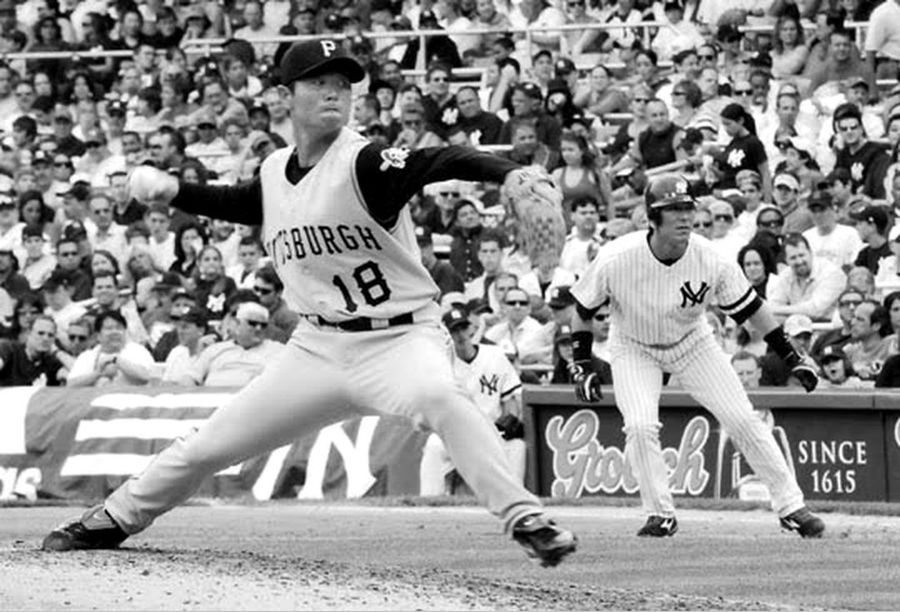
Another exceptionally telling case is Masumi Kuwata (桑田真澄; 1968–), a Yomiuri Giants pitcher from 1986 to 2006 who later briefly played for the Pittsburgh Pirates as well. In NPB he pitched in 442 games, going 173–141 with a 3.55 ERA and 1,980 strikeouts. At the start of the new millennium he began to reassess his movement habits under the influence of Yoshinori Kono, a researcher and teacher of traditional Japanese fighting techniques. In 2002 he went 12–6 with a 2.22 ERA and won the Central League ERA title. [51, 52]
Yoshinori Kono (甲野善紀; 1949–) was not a teacher of a single classical school. According to his own biography he studied aikido (合気道), Kashima Shinryū (鹿島神流) and Negishi-ryū (根岸流); in 1978 he founded the research dojo Shōseikan (松聲館). In his own practice he devoted himself mainly to Japanese swordsmanship – kenjutsu (剣術), sword drawing – battōjutsu (抜刀術), staff techniques – jōjutsu (杖術), the spear, the naginata and unarmed combat – taijutsu (体術). To Kuwata he passed on his own synthesis of old movement principles, above all relaxed footwork, purposeful distribution of force and movement without unnecessary pre-tension. In a 2003 interview Kuwata recalled how amazed he was by Kono’s step, which resembled gliding on ice; with the physical therapist Naruhito Kamiya (神谷成仁) he then spent several years translating these experiences into pitching. [51, 94]
The interview appeared on 31 March 2003 in a professional newspaper published by Igaku-Shoin; besides Kuwata and Kamiya, it also included Hiroyuki Takenaka (竹中弘行). In it Kuwata explained that even as a child he had been drawn to the films of Bruce Lee and Jackie Chan, to their agility and unusual movement solutions. In Kono’s teaching he found a way to return to questions he felt in his own pitching arm and body: eliminating excess twisting in the motion, relaxation and more economical coordination. In the interview he also explicitly mentioned the Chinese martial arts. [51]
Kuwata’s account contains one motif that strikingly recalls the earlier experiences of players in this study. About a moment in the field when he got to an unexpectedly deflected ball, he said that he reacted as if outside his own will and only afterward realized what his body had done. His more general formulation is captured in the following quotation. This very feeling became for him an impulse to experiment with other movements and later with his pitching mechanics as well. Kuwata also recounted that he was struck by Kono’s capacity for effective movement without visibly great force. [51]
“身体のほうがうまく表現してくれる”
Translation: “The body expresses it better on its own.”
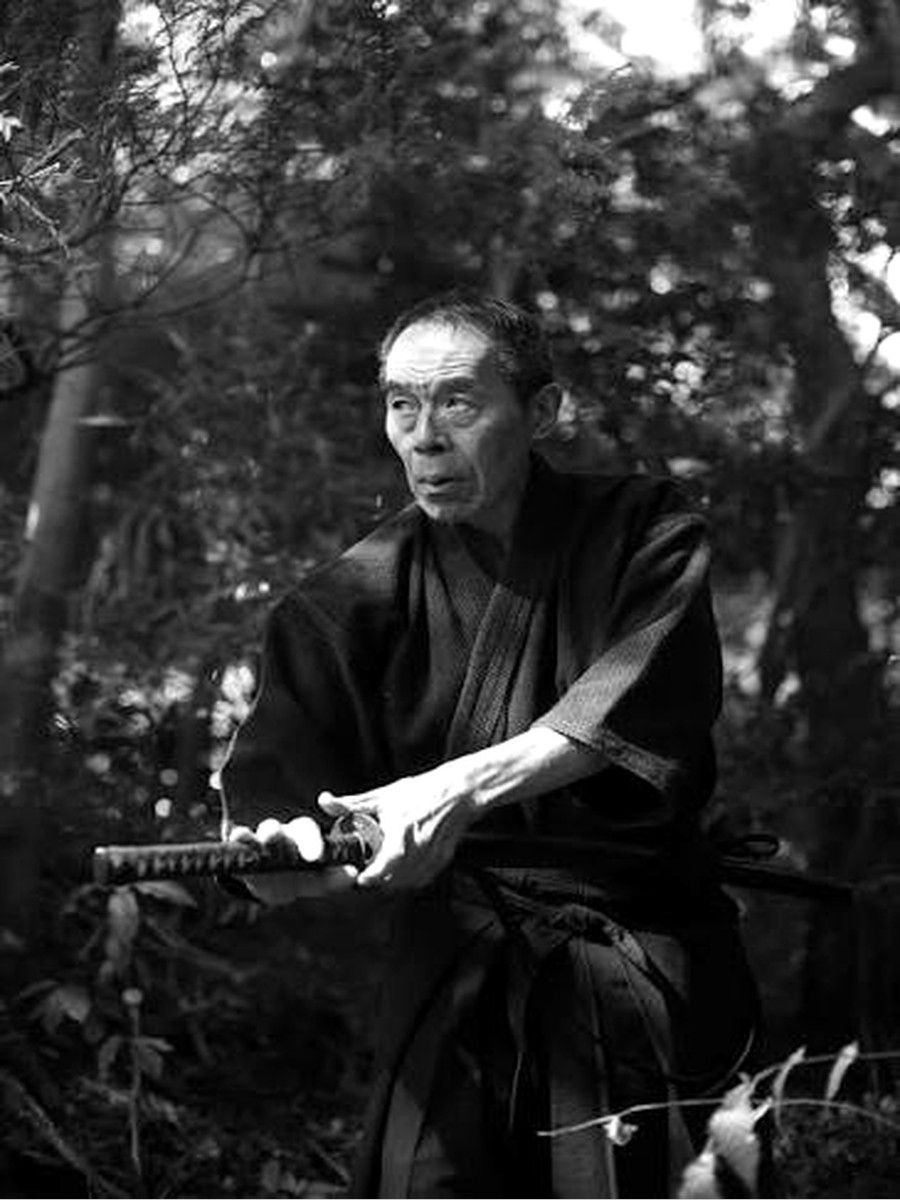
Kono’s rule “no twisting, no undulating, no loading” is expressed by the Japanese triad ねじらない・うねらない・ためない (nejiranai, uneranai, tamenai). Kuwata moved away from deliberately “loading” the rotation and from excess muscular tension. In the interview he described how, while rebuilding his mechanics, he was at first a target of criticism; the new way of moving settled into his training only gradually. [51, 55]
Kuwata gave an even more valuable testimony in a conversation with the university researcher Keizo Takahashi (1974–) on 3 December 2016. Asked where martial-arts training had helped him most, he answered surprisingly: first in fielding, only then in hitting. He described reacting to unexpected bounces and moments when he could make a play before he was able to assemble his action consciously. In the transcript of the research report he speaks of a body that reacted on its own. [53, 54]
Takahashi then examined, in a project funded by the Japanese state research program KAKENHI (2014–2017, no. 26870698), whether old movement principles could be transferred into teaching a quick delivery from the set position. In particular he tested so-called hiza no nuki (膝抜き) — releasing or “unlocking” the knee at the start of the movement. For six of nine university pitchers the slide-step time shortened; for six, however, ball velocity dropped at the same time. The research thus provided both a practical result and a precisely defined question for further development. [53]
Kuwata’s testimony thus meets Inao’s: one pitcher remembered his own motion as a slow-motion film, the other a bodily reaction that preceded conscious decision – even though whole generations and different training traditions separate them. [15, 51, 53]
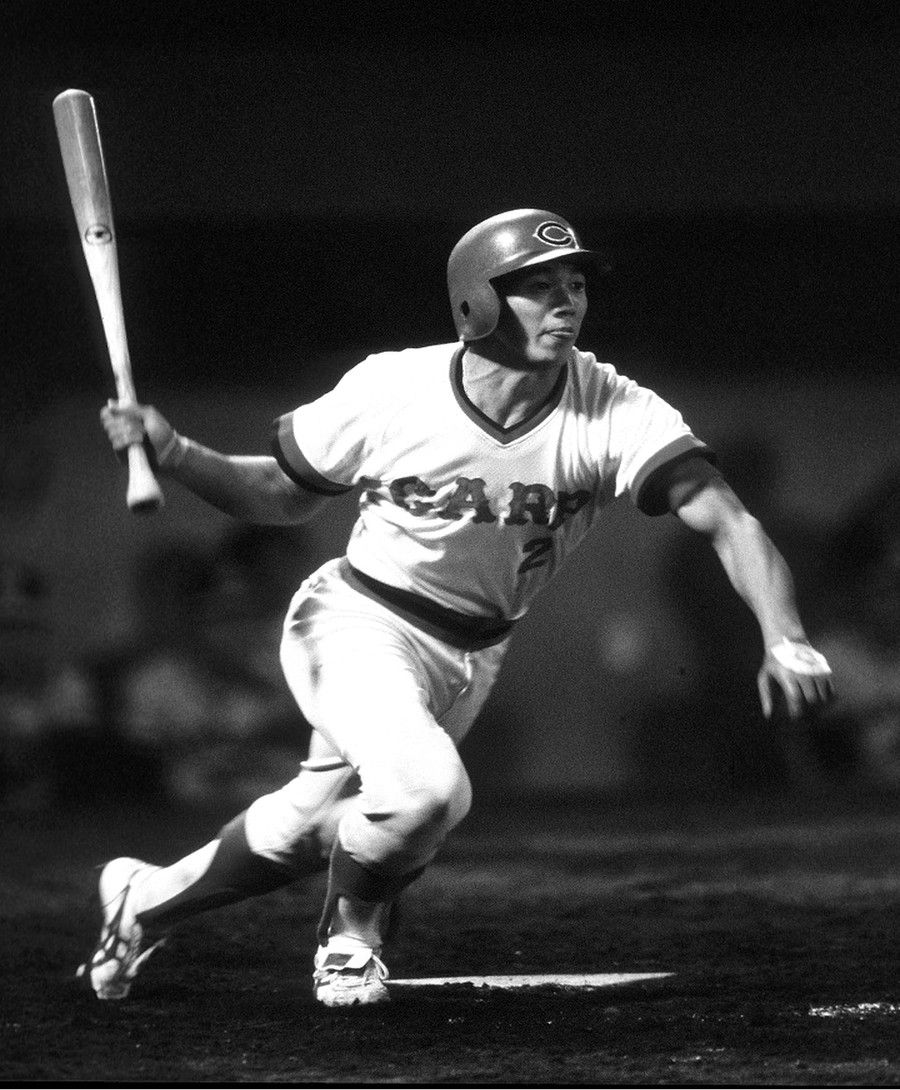
For the infield, too, we have direct testimony from the Hirooka era. Hironori Ishige (石毛宏典; 1956–) played 1,796 NPB games from 1981 to 1996, with 1,833 hits, 236 home runs and a .283 batting average. In an interview from November 2021 he described how manager Hirooka repeatedly sent him during fall camp to Tohei’s dojo (道場) in Tokyo’s Shinjuku instead of regular practice. He went there with a wooden sword and training clothes for about two to three years. [56, 58]
Ishige also described the demonstration of working with ki (気/氣) itself: at first, gripping tensely, he could not hold the wooden sword against the teacher’s strike; on the second attempt, concentrating on the point below the navel with relaxed shoulders, he held up much better. Recalling how he used this experience in fielding, he emphasized a balanced body axis, movement coming from the center and the ability to detect the opponent’s intention in time. [56, 57]
A near-contemporary report in the weekly Shūkan Baseball makes it possible to reconstruct this episode in detail. On 15 November 1982 Ishige and his teammate Koju Hirohashi (広橋公寿) came to Koichi Tohei’s dojo (道場). Ishige held a bokken (木剣) while the teacher tried to disrupt his stance and grip with a strike. On the first attempt he concentrated on a firm grip and could not hold the sword; on the second he was to relax his shoulders and arms and turn his attention below the navel. The journalist recorded his surprise on the spot. In the following 1983 season Ishige raised his batting average from .259 to .303. The chronological sequence alone offers an interesting historical picture of a coaching experiment. [57, 58]
Ishige’s recollection also helps us understand Hirooka’s work with other Seibu Lions players — among his teammates at the time were catcher Tsutomu Ito (伊東勤; 1962–), infielder Hatsuhiko Tsuji (辻発彦; 1958–), outfielder Koji Akiyama (秋山幸二; 1962–) and the young pitcher Kimiyasu Kudo (工藤公康; 1963–). The individual participation of all these players in specific lessons cannot be assumed, but Hirooka’s school influenced the wider club environment. [56, 59]
A pitching continuation of this approach is also documented from November 2013. Ryota Igarashi, then a pitcher for the Fukuoka SoftBank Hawks, was trying a method that manager Akiyama called tanden tōhō (丹田投法), “pitching from the tanden.” He moved his concentration below the navel, changed the work of his legs and described a lighter execution of the motion without excess tension in the upper body. [60]
Ki in today’s baseball
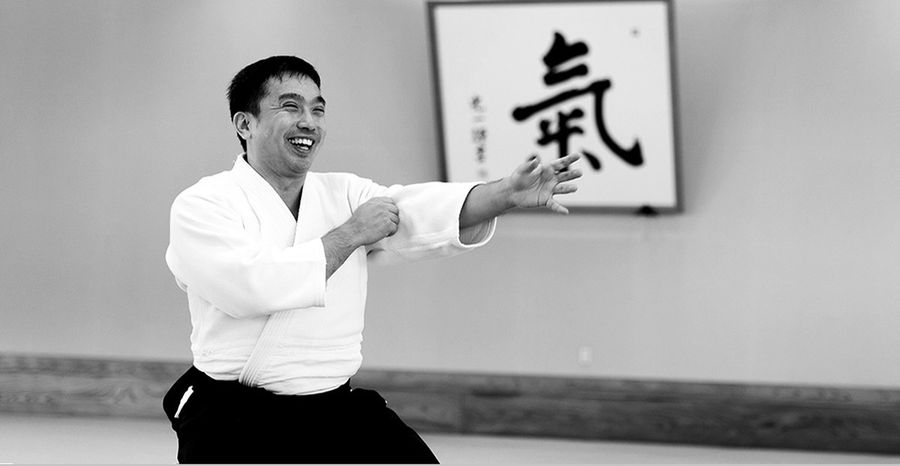
An unexpected result of further research is that the teaching of ki (気/氣) did not remain confined to Japan’s baseball past. Shinichi Tohei (藤平信一; 1973–), who carries on the school of his father Koichi Tohei, accepted an official invitation from the Los Angeles Dodgers and from 11 to 20 January 2010 taught the participants of a special winter program at Dodger Stadium. According to his later account, these were twenty-four young players listed as top prospects. The teaching focused on a calm stance, relaxation, work with ki (気/氣) and the unification of mind and body; Tohei was working with athletes whose technical and physical preparation was already at a high level. [24, 32]
Tohei recorded his first stay with the Dodgers on his blog as early as 25 January 2010. He noted that interest came not only from players but also from the organization’s coaches. At the same time he explained that his agreement with the club did not allow him to publish the participants’ names or details of individual lessons. This contemporary report therefore provides an exact chronology of the program, but not a list of his students’ names. [32]
On 6 July 2010 Tohei returned to Dodger Stadium. In a post published on 11 July he wrote that three of the young players he had taught in January had since reached MLB. He mentioned a pitcher called up directly from Single-A and an infielder who had won a regular place in the lineup; he did not publish their names either. During the July visit he also briefly met first-team players, answered their questions and then watched the Dodgers play the Florida Marlins, a game the home team won 7–3. [44]
The cooperation did not end with a single winter camp. In later writings Tohei recalled three years of work with young Dodgers players and coaches, beginning in 2010. When describing their preparation, he returned to the point that truly mature movement often looks unexpectedly light: a pitch or a swing can be exceptionally effective precisely when unnecessary tension disappears from the movement. This is how he explained the practical use of ki (気/氣) teaching outside the traditional dojo (道場). [25, 26]
The 2016 book 心と身体のパフォーマンスを最大化する「氣」の力 contains separate chapters on why MLB began to use ki (気/氣) teaching, how the lessons with the Dodgers went and what problems Tohei addressed with the players. The public summary safely documents at least this thematic structure; a detailed analysis of individual cases would require studying the full Japanese text. Yet the very introduction of the program into a club takes the history of ki (気/氣) far beyond the Japanese cultural context. [26]
Another historical trace comes from a Japanese interview series of December 2025. In it the former pitcher and later manager Hisanobu Watanabe (渡辺久信; 1965–) recalled how, early in his career with the Seibu Lions, young players went to a dojo (道場) where they learned the principles of Shinshin Toitsu Aikido (心身統一合氣道). Other members of that famous team were also named in the interview, and Shinichi Tohei himself recalled that his father visited players in spring training camps as well. The program thus had both a club and an intergenerational dimension: from the Giants through Yakult and Seibu to the Dodgers and the Padres. [28]
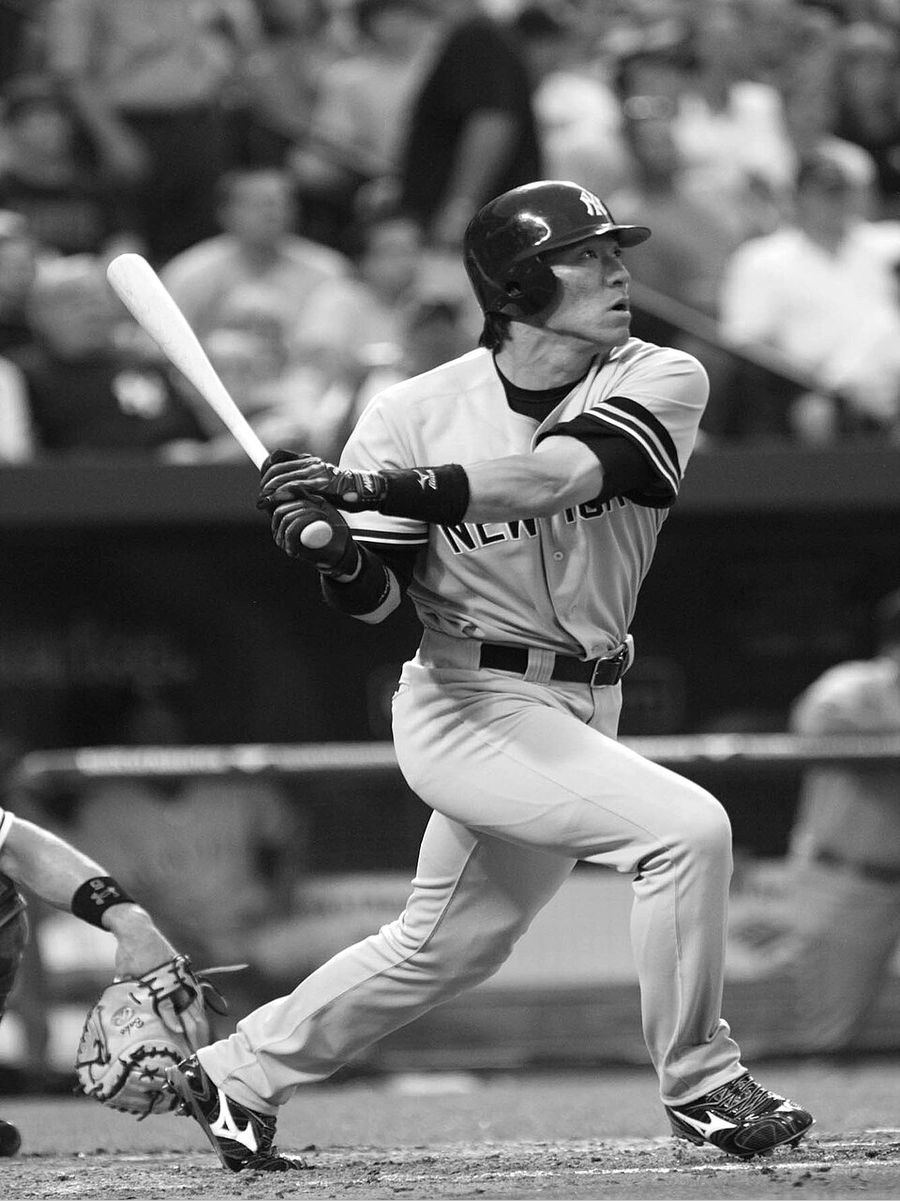
In 2025 Nikkan Sports also recalled that Hideki Matsui (松井秀喜; 1974–), the former Yomiuri Giants and New York Yankees hitter, used the principles of this school during his career. Matsui played in MLB from 2003 to 2012, collecting 1,253 hits and 175 home runs with a .282 average. His book Fudōshin (不動心; first edition 2007), “The Unshakable Mind,” also shows how much importance he attached to working with emotions and inner firmness. Here it is no longer a matter of general cultural similarity: there is direct contemporary testimony that a player who spent a significant part of his career in the United States used ki (気/氣) teaching. [27]
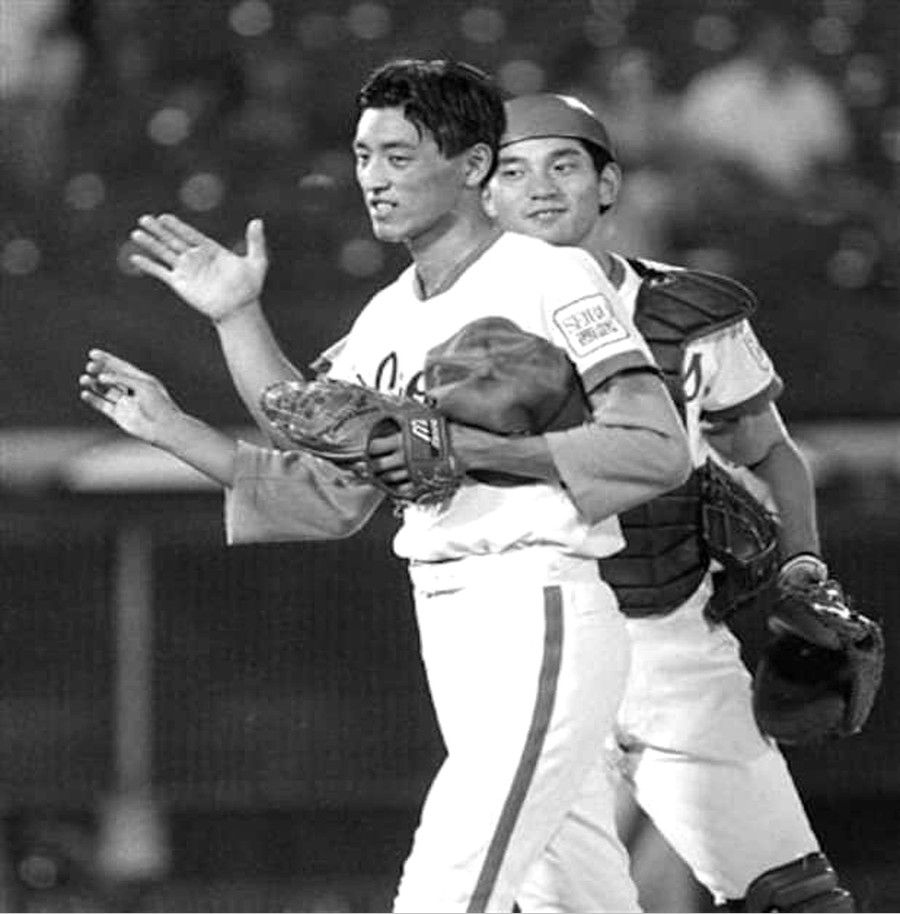
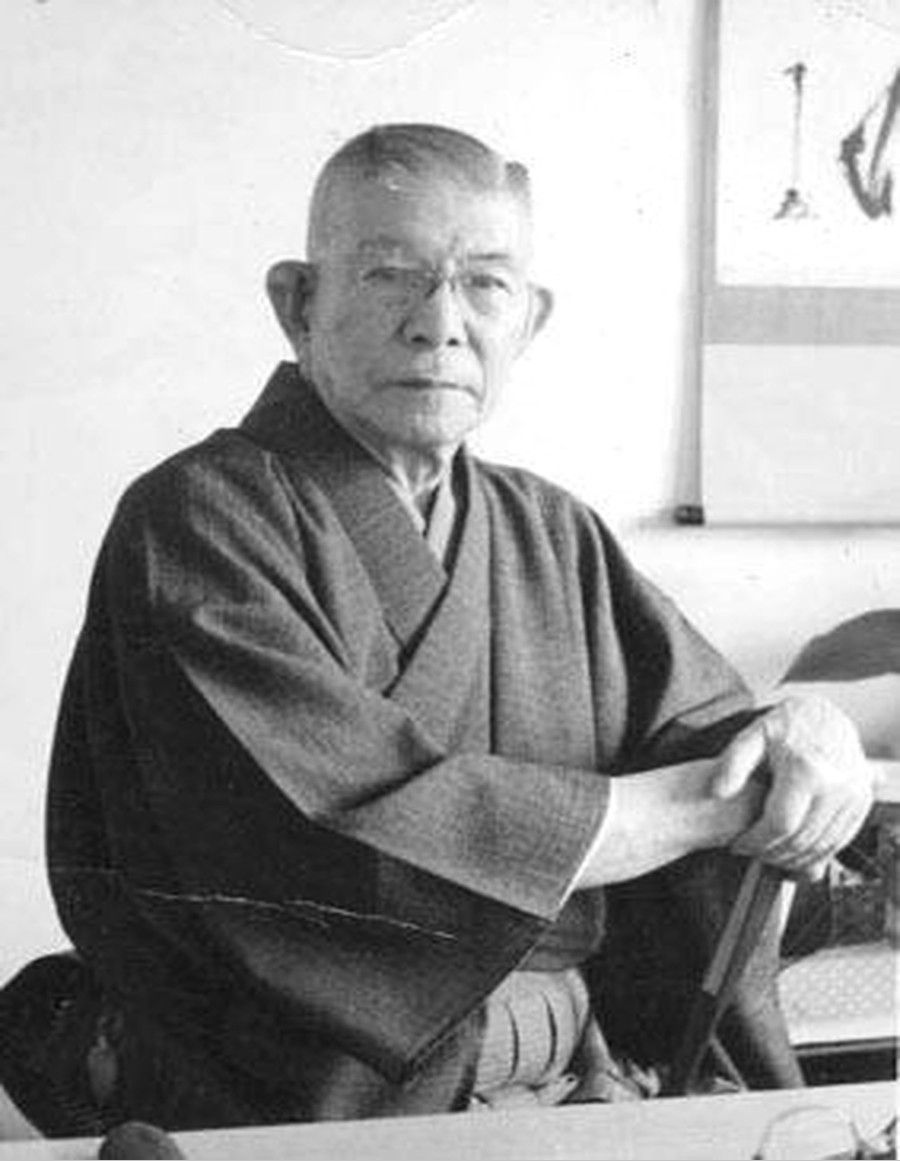
In this intergenerational line a special place belongs to Tempu Nakamura (中村天風; 1876–1968), a Japanese yoga teacher, philosopher and founder of his own school of working with mind and body. After serving in military intelligence during the Russo-Japanese War and after a serious illness, he traveled abroad, where by his own biographical account he also studied Indian yoga. On his return he created the system of shinshin tōitsu-hō (心身統一法), “the method of unifying mind and body.” In martial-arts literature the name shinshin tōitsu-dō (心身統一道), “the way of unifying mind and body,” also appears. It was not a separate fighting style with its own system of strikes or throws, but a discipline linking breathing, concentration, movement and work with one’s inner attitude. Nakamura began teaching his method publicly on 8 June 1919; around his lectures an organization known as the Tempūkai (天風会) gradually formed. [46, 47]
Nakamura’s teaching influenced many Japanese athletes and coaches, but for our story what matters above all is the personal link to Koichi Tohei. After the Second World War Tohei studied Nakamura’s method of unifying mind and body and combined it with aikido (合気道), which he had learned from Morihei Ueshiba. From this experience his own school of Shinshin Toitsu Aikido (心身統一合氣道), sometimes called Ki-Aikido, later grew. Through Tohei, Nakamura’s emphasis on the unity of mind and body reached Hirooka, Oh and other ballplayers. The result is a clearly traceable historical sequence: Nakamura and his shinshin tōitsu-hō (心身統一法), Tohei’s teaching of ki (気/氣), and its practical application in professional baseball. [5, 18–20, 48]
Surprisingly, this line returns with Shohei Ohtani (大谷翔平; 1994–). Already as a player at Hanamaki Higashi High School he read Nakamura’s book 運命を拓く — Unmei wo Hiraku, loosely “Opening One’s Destiny” or “Shaping One’s Destiny.” It is a posthumously published collection of Nakamura’s talks and reflections; the first book edition by Kōdansha appeared on 20 January 1994, a paperback edition followed on 12 June 1998, and it builds on older lecture material, parts of which were published under the title Tenpū meisōroku (天風瞑想録). The book deals with a positive inner attitude, self-control, the power of words and the possibility of directing one’s own conduct through the unification of mind and body. According to Japanese media, Ohtani returned to this reading repeatedly during his time with the Nippon-Ham Fighters and before leaving for the United States. [31, 46, 49, 50]
It is precisely this link across eras that matters. Nakamura formulated his method in the first decades of the twentieth century; Koichi Tohei developed it after the war in aikido (合気道) and also taught professional ballplayers; several generations later Ohtani reads Nakamura’s original philosophy while being one of the most outstanding players in modern MLB. In 2024, playing for the Dodgers, he hit 54 home runs, stole 59 bases and batted .310, becoming the first player in MLB history to surpass 50 home runs and 50 stolen bases in a single season. For Ohtani we have documented his reading of Nakamura’s book; for the older generation, moreover, a direct transmission of methods through teachers. It is the different form of this continuity that gives the comparison its historical interest. [27, 30, 31, 48, 50]
Another, purely coaching form of today’s transfer of Japanese methods is represented by Yoshinobu Yamamoto (山本由伸; 1998–) and Mookie Betts (1992–) in the Dodgers clubhouse. Yamamoto, a three-time Sawamura Award winner, uses unusual movement preparation under the guidance of Osamu Yada (矢田修; 1959–). His program includes throwing a short javelin and work on the sequencing of whole-body movement. In NPB the Japanese pitcher went 70–29 with a 1.82 ERA; after his arrival in Los Angeles, some elements of his preparation began to attract his American teammates as well. [29]
In March 2026 MLB.com reported that Betts had begun including short-javelin exercises in his own preparation and was learning directly from Yada. The story stands beside the Nakamura and Tohei line as an example of a different kind of exchange: an American hitter adopts a Japanese pitcher’s individual movement drill, while both seek more effective coordination of the body’s segments. [29, 38]
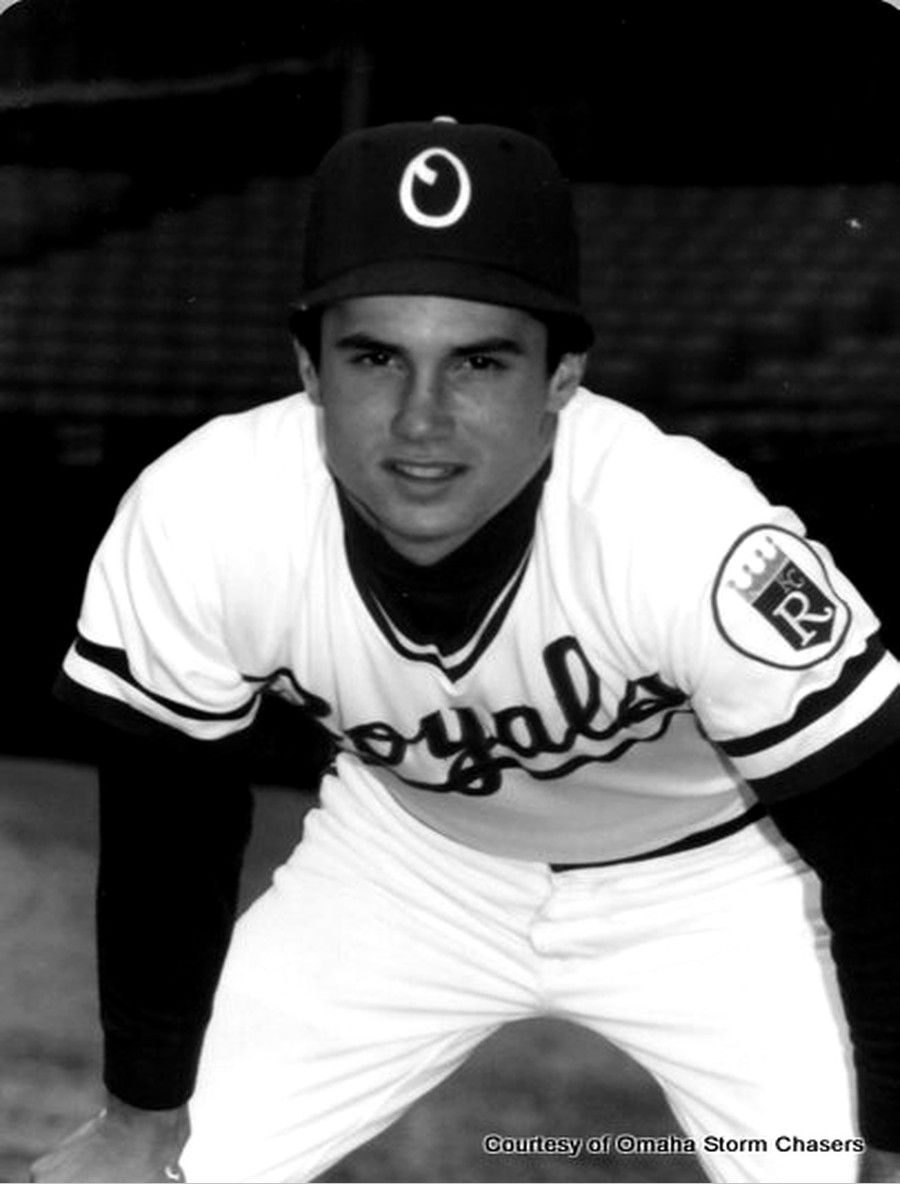
In the United States, too, there are player testimonies about experiences of extraordinary concentration. Buddy Biancalana (1960–), the Kansas City Royals shortstop who helped win the 1985 World Series, recalled being in the zone, a state in which time seemed slowed and movement ran with unusual ease. His account offers an interesting comparison with Enomoto’s and Inao’s descriptions of altered perception at peak performance. [33]
Today’s player naturally also uses technical and analytical terms that the generation of Enomoto or Oh did not have. He works with video, biomechanics, bat speed, pitch location, fatigue or Statcast data. In preparation he can analyze every segment of the movement in detail; in the pitch or swing itself, however, he needs the individual parts to function as a single action. It is precisely here that contemporary baseball remains remarkably close to the old problem of the teachers of hara (腹): how to create the most precise movement possible and, at the moment of performance, let it run without disturbing inner tension.
Among modern Japanese hitters it is worth including Tetsuto Yamada (山田哲人; 1992–), who in 2015 hit 38 home runs, stole 34 bases and batted .329 for the Yakult Swallows. Analyzing his swing, the journalist Seijun Ninomiya pointed to a feature he shared with Enomoto: apparent calm before the action and the ability to produce an extremely fast movement exactly at the moment of contact. Yamada uses a pronounced leg kick, whereas Enomoto was known for an almost motionless preparation; according to the author, the similarity lies in the principle of “movement within stillness.” The report, however, says nothing about any personal study of aikido (合気道). [14, 41]
Among modern American players Giancarlo Stanton (1989–) also deserves mention. In 2024 former hitting coach Sean Casey (1974–) described how important it was for Stanton’s hitting rhythm to slow down, shed excess tension and be ready before the pitch arrives. In his telling this was purely baseball technique. Yet it is precisely such remarks that show why some American coaching discussions use the word relaxation or rhythm where older Japanese sources might have reached for hara (腹). [40]
As of November 2026, the historical line of Tohei’s school can be followed right into today’s NPB. On 11 November 2026 the new manager Kimiyasu Kudo invited the school’s current head, Shinichi Tohei, to the Chunichi Dragons’ fall camp. In doing so Kudo built on his own youthful experience with the Seibu Lions, when he came to know Koichi Tohei’s teaching through manager Hirooka. [61, 62]
Tohei divided the players into pitchers and position players and worked on stance, removing unnecessary tension and coordination of movement. In a demonstration with Seiya Hosokawa (細川成也; 1998–), who weighs about 98 kilograms, he showed how to unbalance someone from a seated position. Those watching the exercise included Kosuke Ukai (鵜飼航丞; 1999–) and Takaya Ishikawa (石川昂弥; 2001–). Tohei then also addressed the batting stance and the stability of the body’s axis. [61, 62]
The transmission of the teaching tradition itself is remarkably continuous here: Koichi Tohei taught Hirooka; Hirooka brought Seibu players, including Kudo, to his teaching; decades later Kudo, as a manager, invited Tohei’s son to a new generation of professionals. The subject of the teaching remained ki (気/氣), relaxation and the unification of mind and body, even though players and coaches today also describe the same experience in the language of posture and biomechanics. [56, 61, 62]
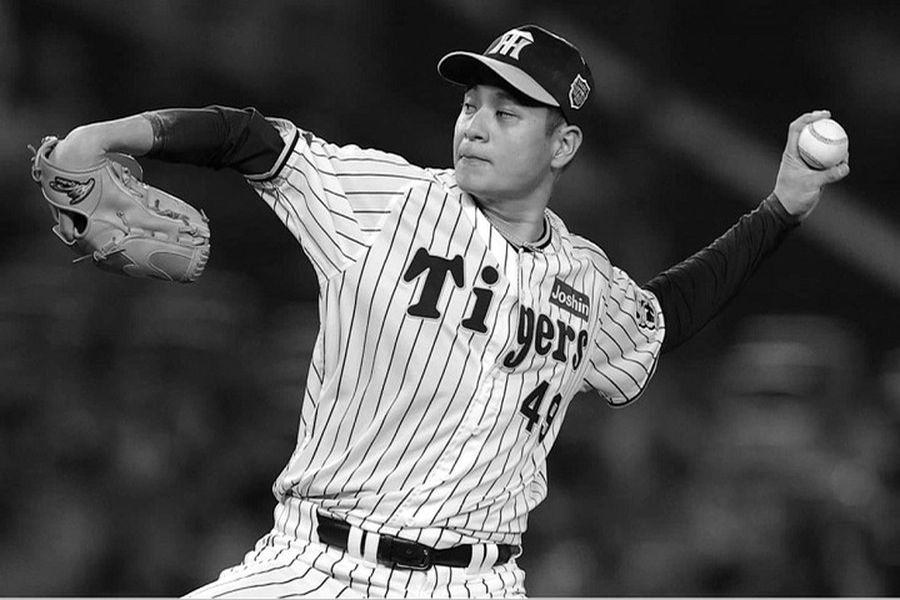
An individual, long-term form of this tradition is represented by Kotaro Otake (大竹耕太郎; 1995–), a pitcher for the Hanshin Tigers. In January 2023 he announced publicly that he had begun working with a method derived from aikido (合気道). In April 2026 he said he had first encountered it at the end of 2022 and since then has usually taken one individual lesson a week, even during the season. He connects the training with awareness of the body’s axis, breathing, the bokken and focusing his attention on the catcher. [63, 64]
In his own column for Shūkan Baseball of 15 April 2026, Otake explained very precisely what such a lesson means to him. He trains on a mat, uses a wooden sword and works with relaxation, awareness of the bones and the direction of attention. When pitching he imagines a fine thread running from him to the catcher; through it his attention is to be directed outward, toward the target and the opponent, and to stay connected with every next pitch. His Japanese formulation is captured in the following quotation.
“意識を外に飛ばす”
Translation: “Send your awareness outward.”
In a game against Hiroshima on 26 April 2026 he pitched seven scoreless innings and afterward spoke of maai (間合い) — the precise distance and timing between himself and the hitter. A concept familiar from the martial arts became, in his interpretation, part of a concrete tactical situation on the mound. [64, 65]
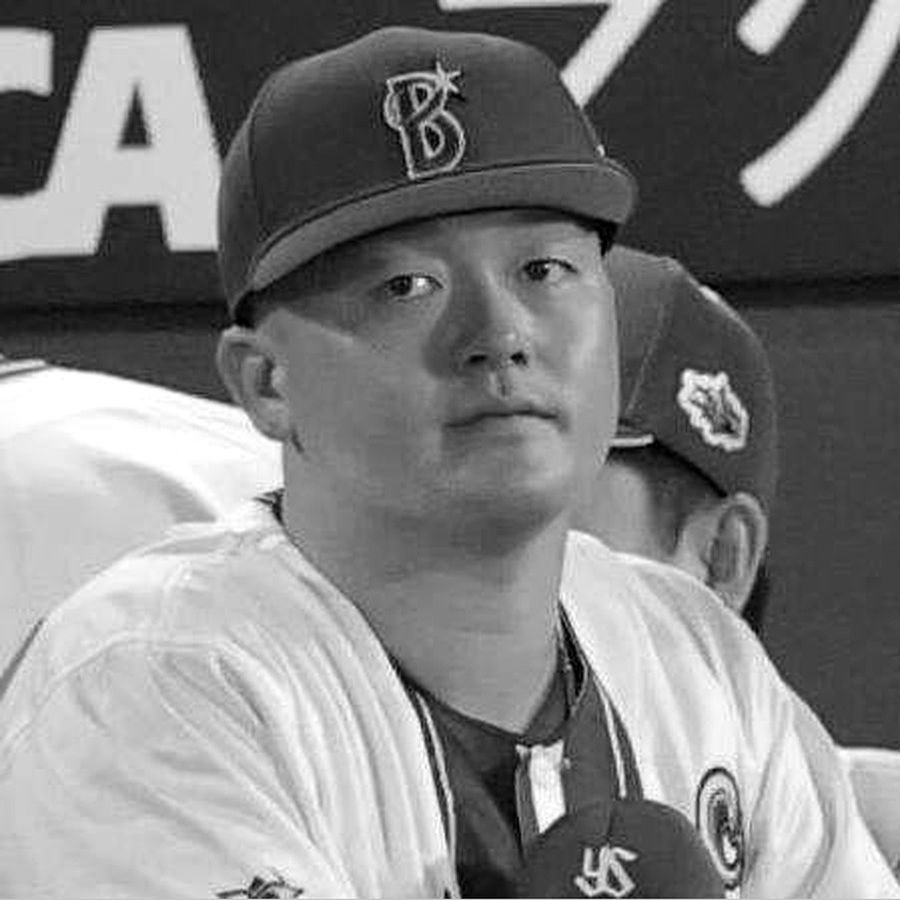
On the hitting side, another connection is represented by Shugo Maki (牧秀悟; 1998–) of the Yokohama DeNA BayStars. In January 2025 he trained with a pair of sai, weapons of the Okinawan martial arts; in January 2026 he added exercises with a training sword of the kind used in iaidō (居合道). His trainer Shogo Hamakawa (浜川彰吾) said that the length and guidance of the blade make it possible to detect deviations in the movement path more sensitively and to maintain repeatable trunk work. [66, 67]
This line recalls Oh’s historical sword training, though in a different baseball context. For Oh the sword was part of a long-term discipline associated with ki (気/氣) and mental concentration; in Maki’s case public reports stress mainly the body’s axis, reproducibility of movement and the quality of the swing. Both practices show that the sword as a training tool has not disappeared from Japanese baseball. [7, 66, 67]
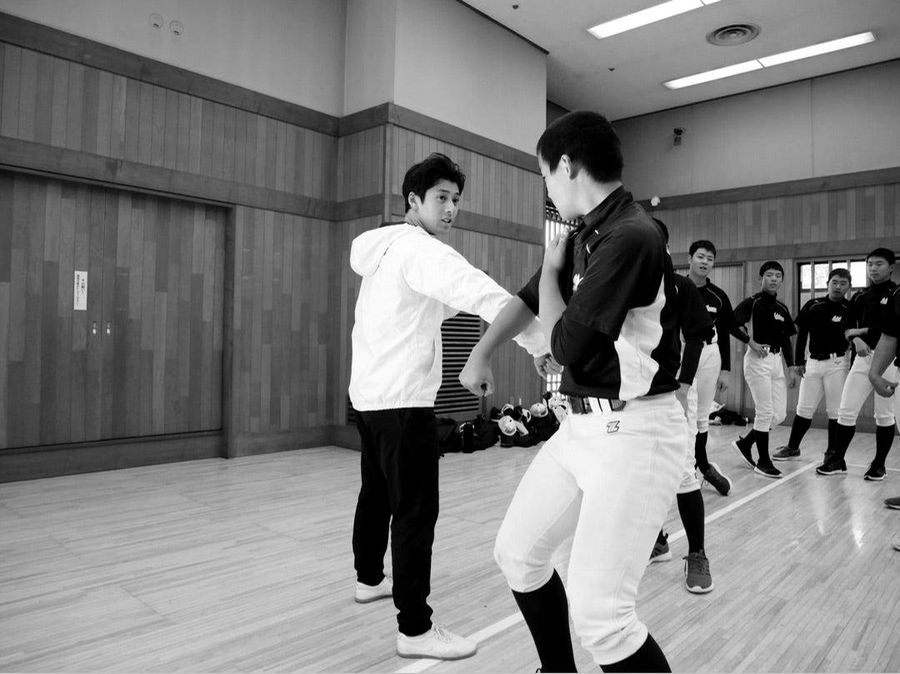
Research into the Chinese branch also turns up concrete methodical work with taijiquan (太極拳). Conditioning coach Ryuji Tachibana (立花龍司; 1964–) collaborated with Daisuke Ichikizaki (市来崎大祐; 1987–), a Japanese national-team athlete and instructor of Chinese wushu (武術). Ichikizaki won numerous titles in long-fist routines, changquan (長拳), and also competed internationally. Together they presented a program called in Japanese yakyū taikyokuken (野球太極拳), “baseball tai chi.” In it they carried selected principles of coordination, balance and conscious control of movement into baseball preparation. In this work Tachibana reassessed an overly one-sided emphasis on muscular strength and stressed the importance of removing unnecessary tension. [68, 69]
The work focused on trunk rotation, coordination of arms working in different directions, balance and movement of the legs. Ichikizaki’s teaching of young ballplayers was documented in December 2019 by the Ichikawa Little Senior club and by the portal Baseball King. This is a direct integration of a Chinese martial art into Japanese baseball instruction at the youth level. [68, 69, 70]
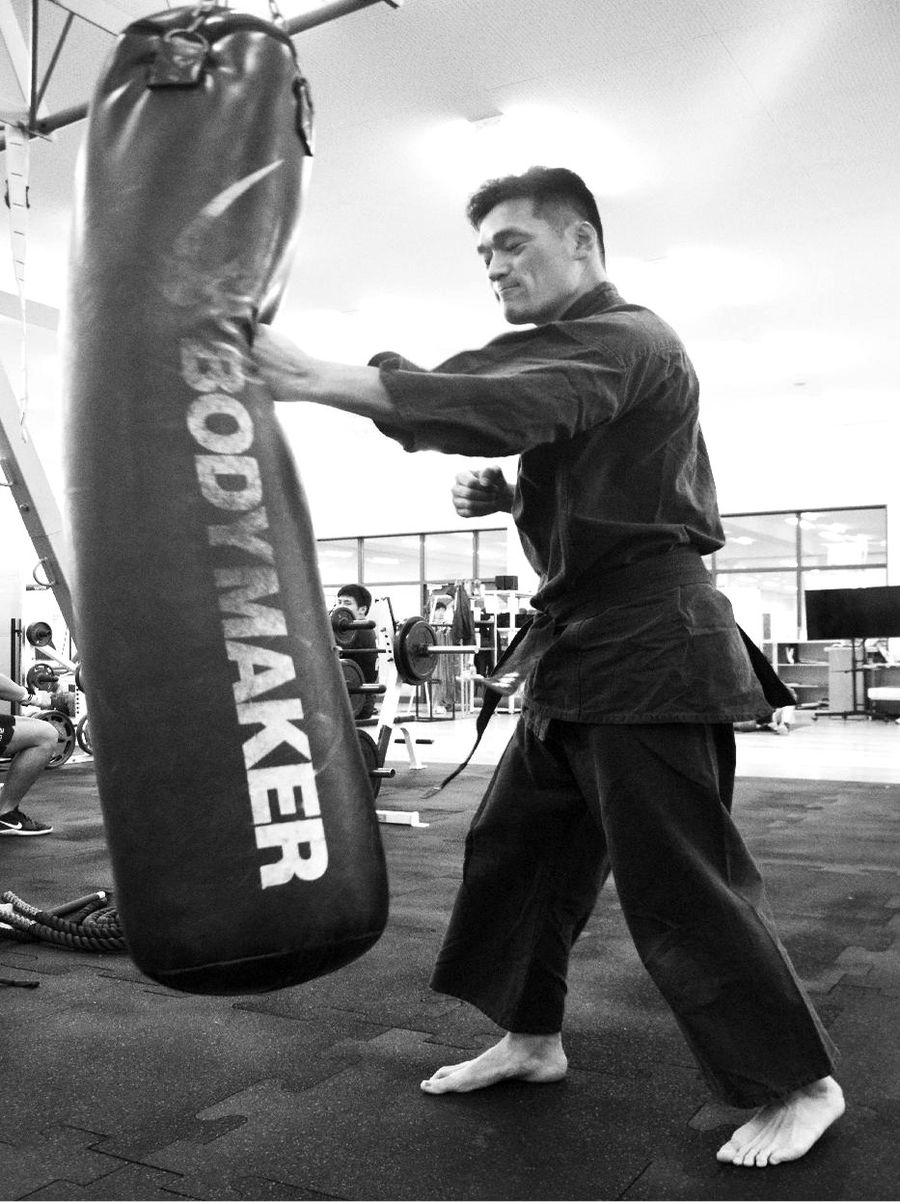
Even closer to the tradition of the Chinese “internal” schools is the work of Keizo Takahashi (高橋佳三; 1974–), professor of sports biomechanics at Biwako Seikei Sport College. Alongside Kono’s old Japanese techniques, he also studied Han Shi Yi Quan (韓氏意拳), a contemporary line of Chinese yiquan, under Hidetoshi Mitsuoka (光岡英稔; 1972–). In 2018, at a conference of the Japanese Society of Baseball Science, he presented a seminar titled 野球に活かす古武術 — “How to use traditional martial arts in baseball.” [53, 54, 71] [153]
Takahashi’s career connects two disciplines that are often kept apart in such debates. On the one hand he works on three-dimensional analysis of pitching and hitting movements; on the other he directly studies Japanese kobujutsu (古武術) and Chinese martial arts. In his own university profile he writes that he investigates what movement and what bodily feeling accompany peak performance. This approach builds a unique bridge between historical testimonies about ki (気/氣) and contemporary sports research. [54, 71, 72]
Another trace is offered by Japanese Shorinji Kempo (少林寺拳法). This modern system was founded in 1947 by Doshin So (宗道臣; 1911–1980) in Tadotsu on the island of Shikoku. He built on experience of the martial arts gained in China, which he reshaped into a postwar educational program. Although the name uses the same characters as the Chinese name of Shaolin (少林寺), Shorinji Kempo is not identical with the historical schools of Shaolin kung fu. The organization emphasizes the link between physical and spiritual development. [73]
An interesting family context is offered by Tetsuto Yamada, star of the Tokyo Yakult Swallows, a three-time winner of the prestigious triple three and one of the most outstanding Japanese hitters of his generation. His father Tomonori Yamada (山田知規; born c. 1958), a longtime police officer, was a successful Shorinji Kempo competitor in his youth. In his second year at Hōtoku Gakuen High School he even won the Japanese high-school championship in embu (演武), the demonstration of martial techniques. He was thus not a mere recreational practitioner but an athlete with proven success at the national level [159].
According to an article published on 9 June 2016 in the Japanese magazine Sportiva, Tomonori also took an active part in his son’s baseball development. Although he had no extensive baseball experience himself, he emphasized above all bat speed, regular repetition and varied coordination exercises. Tetsuto, for example, practiced hitting badminton shuttlecocks coming from different directions, worked with bats of different weights and learned to react to changes in timing [159]. From the standpoint of possible links between the martial arts and baseball, it is noteworthy that the article points to the importance of leg stability, the body’s axis and the elimination of superfluous movements — principles also characteristic of the martial arts. The available interviews, however, do not document a direct transmission of specific Shorinji Kempo techniques to the son, so any connection must be understood as an interesting parallel rather than a proven transfer of fighting techniques into baseball training.
Shun Norikane (法兼駿; 1994–), later an infielder for the Panasonic industrial-league team, can be documented directly as an active Shorinji Kempo (少林寺拳法) practitioner. As a child in Kagawa Prefecture he did baseball, athletics and Shorinji Kempo at the same time, continuing the last until fifth grade. He then concentrated on baseball, which he played at Asia University and from 2017 for Panasonic, where he served as captain from 2019 to 2022. This is an example of a genuine personal meeting of the two disciplines, not merely a symbolic analogy. [76, 77]
The Japanese Shorinji Kempo federation itself devoted an extensive piece in its magazine in 2023 to the similarities between baseball and kempo. Interviews with two former high-school ballplayers who later switched to kempo focused on training habits, the relationship to the teacher, care of equipment and collective discipline. Here the connection therefore appears more as a matter of upbringing and sporting ethos than as testimony about a special state of hara (腹). [78]
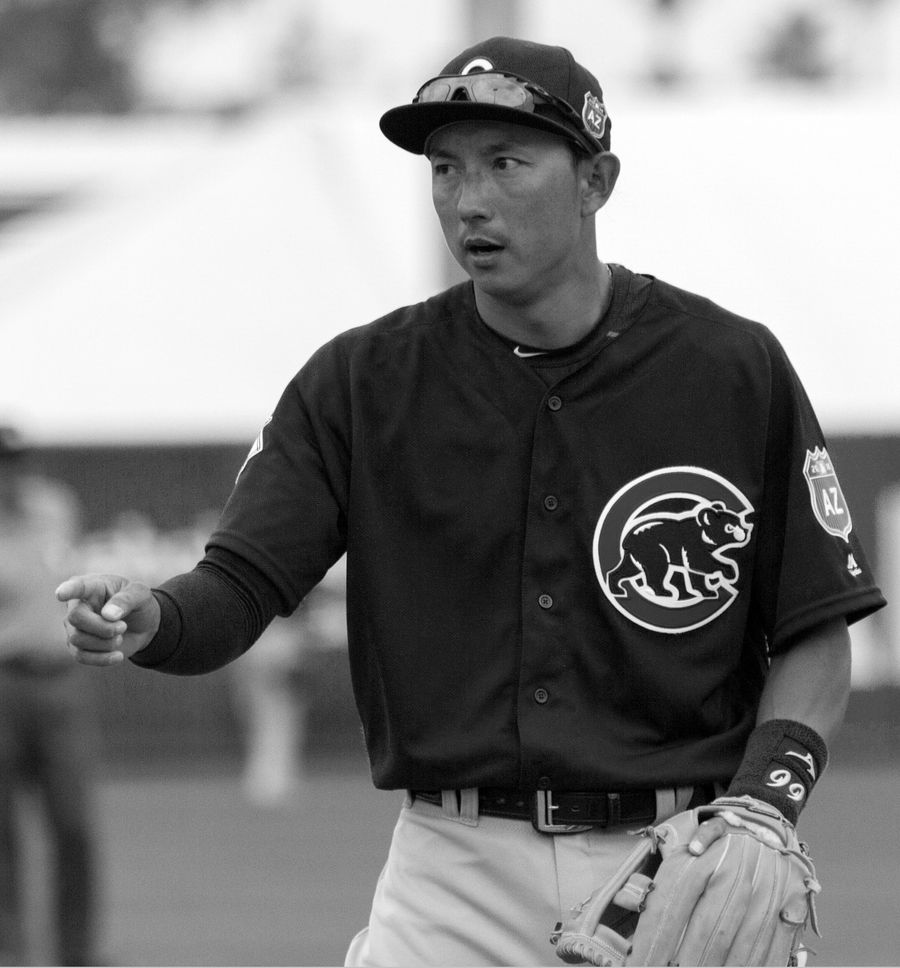
The karate branch brings different life stories. Munenori Kawasaki (川崎宗則; 1981–), later a player for the Fukuoka SoftBank Hawks and several MLB clubs, described in an interview for the Japan Sport Association that as a child he practiced karate alongside baseball and reached the brown belt. During a televised visit to a Shinkyokushinkai (新極真会) dojo in November 2024 he himself declared that his earlier karate training had helped him in baseball. The sources, however, did not reliably identify the school of his childhood karate. [79, 80]
The connection between karate and baseball thus takes several forms: a childhood experience of two sports, later personal training and modern training with Okinawan weapons. For both Shorinji Kempo (少林寺拳法) and karate it was possible to trace specific people and direct testimonies; the most complete historical line of ki (気/氣) – tanden (丹田) – hara (腹), however, is still provided by Tohei’s aikido (合気道), while the clearest direct Chinese path is the work with taijiquan and the Han Shi Yi Quan school (韓氏意拳). [56, 68, 71, 73, 79, 81]
Chinese martial traditions, pitching and the transfer of experience
The Japanese path from Arakawa and Tohei to professional clubs has different parallels elsewhere in East Asia. In Korea the search first seemed to lead through taekwondo and hapkido, in Taiwanese baseball through the Chinese schools of taijiquan (太極拳) and qigong (氣功). A closer look at contemporary interviews revealed an especially clear trace in Taiwan. The professional pitcher Chih-Wei Hu explained publicly why he had incorporated tai chi and later also Japanese kendo (剣道; kendō) into his baseball preparation. This testimony was given during his active career, with concrete details about how often he trained and how he intended the practice to carry over into pitching. [126, 127]
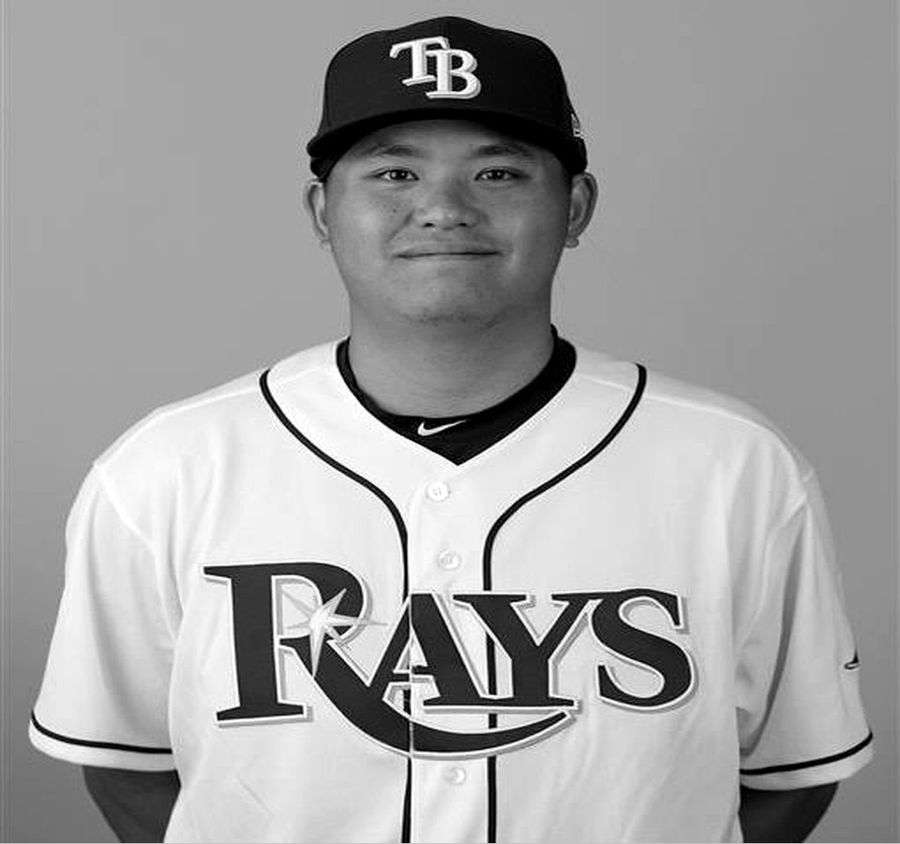
Chih-Wei Hu (胡智為; 1993–) went into American professional baseball in 2013 and in 2017–2018 appeared in eleven MLB games for the Tampa Bay Rays. In them he pitched 23 innings with a 3.52 ERA and 21 strikeouts; he built a further long career in the American minor leagues and later in Taiwan’s CPBL. Important for this study is his interview with the Central News Agency of 21 November 2016, given shortly after he was added to the Rays’ 40-man roster. At that time he had four seasons of professional baseball in North America behind him and had reached a fastball velocity of about 97 mph (156 km/h) in the Futures Game. [126, 129]
Hu came to taijiquan (太極拳) at the end of 2014 through the coach Fan Man-Yun (范嫚紜; born c. 1988–1989), who taught physical education and martial arts at Pingzhen High School (平鎮高中) in Taiwan. She was not an ordinary instructor of recreational exercise but a former elite member of Taiwan’s national team in competitive wushu (武術). In 2005 she won a silver medal in taijiquan at the 8th World Wushu Championships in Vietnam and another silver at the East Asian Games in Macau. At the 2007 World Championships in Beijing she won silver medals in taijiquan and taijijian (太極劍), the straight-sword routines. In 2009 she also took silver in the combined event of both disciplines at the World Games in Kaohsiung, where, however, wushu was a demonstration sport outside the official medal table. [160, 161]
Fan Man-Yun began martial arts as early as the sixth grade of elementary school. At first she practiced basic routines and changquan (長拳), before specializing in tai chi on the recommendation of coach Xie Qinghua (謝清華), head coach of the local wushu association. She gradually worked her way up among Taiwan’s leading national-team athletes and, after her elite competitive career ended, devoted herself to teaching and coaching. In an interview with United Daily News of 23 September 2014 she explained that the essence of her approach to martial arts was persistent repetition and gradual refinement of each movement. Her experience was captured by the traditional saying “拳打千遍,身法自現” (quán dǎ qiān biàn, shēnfǎ zì xiàn), which can be freely translated as “Repeat the form a thousand times and the right use of the body will reveal itself.” [162]
Her professional background went beyond the practical teaching of martial arts. In 2014 she was studying in the master’s coaching program at National Taiwan Sport University (國立體育大學) and was also working in sports biomechanics. The university’s laboratory of sports biomechanics and movement diagnostics records her work analyzing a complex movement transition in competitive tai chi — from a low balance position through a 180-degree turn into a one-legged stance. The analysis also included tracking the distribution of pressure under the feet. Fan Man-Yun thus represented an interesting combination of a traditionally based Chinese movement system, modern competitive wushu and a biomechanical approach to sports training. [162, 163]
It was under this coach that Hu began to develop a different way of working with his own body. He admitted that he used to be explosive and that sharp reactions followed him onto the field as well. After a poor outing against Japan in the semifinal of the 2014 Asian Games in Incheon he threw his glove, an outburst he later recalled publicly. In the 2016 interview, however, he spoke of a marked change: tai chi, in his words, helped him calm his emotions, regulate his breathing and restore his focus before the next task. As the most fitting principle of the training he named a single Chinese word — “慢” (màn, slow). He did not understand slowness merely as a reduced speed of movement, but also as the ability to stay patient, control his own reactions and not be ruled by momentary emotions. [126]
The physical dimension of his training was concrete too. He practiced tai chi for about thirty minutes between starts, usually after a game as part of recovery. He highlighted control of muscle tension, balance and mobility. At the same time he pointed out that the slow movements of tai chi require considerable physical strength and that executing them correctly is not as simple as it might seem at first glance. In the original Chinese interview he explained:
“加強平衡感、肌肉控制、柔軟度”
Translation: “To improve balance, muscle control and flexibility.”
From his point of view, slow and precise work with the body became a means of better managing the very fast, explosive activity on the mound. He therefore did not see tai chi merely as recovery or relaxation, but as a way of developing physical coordination and mental control — abilities he considered important for his professional performance. [126]
Hu’s search did not end there, however. In an interview with CNA of 8 November 2018 he said he had gradually also tried track and field, cycling and kendo (剣道), while continuing with tai chi. Each discipline, in his words, offered a different way of engaging the body. He used cycling, for example, to build endurance and as active transport to conditioning sessions, while he regarded kendo practice as another way of working on coordination and the muscular engagement of the arms. Shortly afterward he published a video of his sword training. In November 2018 he also stressed that including different kinds of movement could contribute to a more balanced development of the body and serve as one way of preventing injuries. [127, 128, 164]
In a contemporary interview he summed up his method of searching in the following words:
“我嘗試不同的運動,也在不同運動中找到棒球”
Translation: “I try different sports, and in them I find baseball again.”
Hu’s story offers an unusual comparison with the Japanese players. As with Arakawa’s sword, the point here is not the transfer of a particular fighting technique directly into the game. The experience comes above all from the contrast between two different movement regimes: slow, controlled practice versus the fast and dynamic pitch. With kendo another dimension is added — work with an object that demands precise coordination of the arms, the trunk and the whole body. His testimony addresses both sides of professional performance — the coordination of movement and the ability to manage his own reactions after failure.
Historically, what matters is that this case represents a directly documented use of a Chinese martial art in the preparation of a professional ballplayer, not merely a similarity between two movement systems discovered after the fact. Moreover, Hu trained under a coach whose sporting results and biomechanical education are independently documented. At the same time, the available interviews do not allow us to conclude that it was tai chi that caused his improvement or his promotion to MLB. The sources confirm above all the inclusion of the martial art in his preparation, the concrete form of the training and the player’s own assessment of its benefits. [126–129, 160–163]
A different form of the link between martial arts and professional baseball is represented by Tseng Hao-che (曾浩哲; date of birth not established), a former Muay Thai competitor who in May 2025 became a sports-science coach focused on pitching for the Taiwanese team Uni-President 7-Eleven Lions in the professional CPBL. Unlike Chih-Wei Hu, who used martial arts as a supplement to his own baseball preparation, Tseng came to baseball from an entirely different sport. He had no traditional baseball playing career behind him; his professional path led from a combat sport through conditioning and biomechanics to the individual training of elite pitchers. [130]
Tseng originally studied law while competing in Muay Thai. A turning point came with an injury in competition, which sparked his interest in how the human body works, in muscular strength and in preventing further injuries. Already in his second year of university he qualified as a strength and conditioning trainer and began working in a fitness center. Later he decided to continue at National Taiwan Sport University (國立體育大學), where he completed a master’s degree in competitive sport and coaching science (競技與教練科學研究所). He gradually focused on throwing biomechanics, sports diagnostics and the use of measurement technology in developing ballplayers. [130, 165]
His professional work was not limited to conditioning. From 2021 to 2024 he worked as a pitching consultant for several Taiwanese amateur and school teams, including New Taipei City and the Gubao baseball program (穀保家商). He then served as head of pitching training at the specialized baseball academy Basepara (貝思沛拉棒球學校). He was also involved in educating other coaches in biomechanics, injury prevention and pitch design. His professional courses covered, for example, analysis of spin, spin efficiency, the Magnus effect, the aerodynamic effect of the seams (seam-shifted wake) and the relationship between a pitcher’s mechanics and the resulting trajectory of the ball. [165]
Even before joining the Uni-President Lions he had worked with about twenty professional pitchers playing in Taiwan and abroad. They included Gu Lin Ruei-Yang (古林睿煬; 2000–), Chih-Wei Hu, Sha Tzu-chen (沙子宸; 2003–) and Liu Chih-jung (劉致榮; 1999–). Tseng stressed that the character of training must match each player’s performance level. With younger pitchers he focused mainly on basic mechanics, while with professionals he paid more attention to refining techniques already acquired and to the quality of individual pitches. [130, 165, 168, 169, 170]
A concrete example is his work with Gu Lin Ruei-Yang, who after a successful spell in Taiwan’s CPBL moved to Japan’s Hokkaido Nippon-Ham Fighters. Because he was a technically mature pitcher, Tseng did not consider it necessary to rebuild his mechanics fundamentally. He concentrated only on adjusting the work of the front leg and above all on improving the quality of the curveball and slider. The aim was to broaden his repertoire and prepare him for the more demanding confrontation with hitters in Japan’s top league, NPB. This approach shows the difference between basic pitching instruction and modern individual training, in which biomechanical analysis is combined with precise ball-flight data. [130, 168]
These very experiences caught the attention of the Uni-President Lions’ manager Lin Yueh-ping (林岳平; 1982–). The club had already worked with the Basepara academy during spring training, and Lin had had the opportunity to watch Tseng’s work with pitchers. When he learned in spring 2025 that Tseng was leaving the academy, he offered him a place on his coaching staff. According to the Taiwanese press of the time, the Lions thereby became the first CPBL club to create a separate, specialized position of sports-science coach for pitching. Introducing him on 20 May 2025, Lin explained that the aim was not to replace the experience of traditional baseball coaches but to complement it with research methods, objective measurement and individual training plans. Tseng was to pay special attention to young players with untapped potential and to pitchers whose development had stalled. [130]
His further career shows how significant a role modern sports science and biomechanics have begun to play in Taiwanese baseball. In April 2026 the club enabled him to make a study trip to the United States, during which he visited the MLB organization of the Athletics. The internship ran from 11 April to 3 May 2026 and its costs, about 250,000 Taiwan dollars, were covered by the club. During the stay Tseng learned about the organization of player development, training procedures and cooperation among specialists in American professional baseball. Thanks to previous work with pitchers in the Athletics system, he was also able to take part in internal biomechanical consultations. After his return he stressed above all the importance of a unified approach to player development across all levels of the organization. [166, 167]
From the standpoint of the relationship between martial arts and baseball, Tseng’s story is interesting mainly for how it differs from the previous cases. Whereas Chih-Wei Hu used tai chi to improve physical control and mental stability, Tseng did not transfer specific Muay Thai striking techniques into pitching. His experience of a combat sport became above all an impulse for deeper study of human movement, physical loading and sports training. Principles of balance, stable stance, coordination of the body’s segments and the timing of explosive movement can indeed be observed in both Muay Thai and baseball, but the available sources do not show that Tseng used specific Muay Thai techniques when teaching pitchers.
His case thus represents above all a transfer of professional expertise between two sporting environments, not the direct adoption of fighting techniques. Historically, what is significant is that a person without a traditional baseball playing background managed, through the study of sports science, biomechanics and practical coaching, to obtain a specialized position in a top professional league. In the wider context of this study, he adds to the examples of players who used martial arts in their own training the opposite path — from a combat sport to the professional coaching of ballplayers. [130, 165, 166, 167]
In searching for similar direct testimonies in South Korean baseball and in the professional leagues of mainland China, we do not yet have equally well-documented cases. The mere fact that a player practiced taekwondo or another martial art in his youth does not in itself prove a transfer of its principles into professional baseball preparation. While the cases of Chih-Wei Hu and Tseng Hao-che offer concrete testimony about the connection of the two worlds in Taiwan, another important area of research is the United States, where the use of Asian martial arts in baseball training can also be traced. [126–130, 165–167]
Martial arts as part of baseball mastery
The Japanese stories of Enomoto, Oh and Kuwata form unusual historical material: in their biographies one can follow a direct relationship between a martial-arts teacher and a professional ballplayer. In searching for American and Latin American parallels, however, it turned out that the transfer of movement principles between these two worlds is not Japan’s privilege. In interviews with MLB players, work on the boxing punch, balance, trunk coordination, relaxation under pressure and speed of decision recurs regularly. The language is different: instead of hara (腹) or ki (気/氣), one hears balance, footwork, timing, relaxation or confidence. The practical problem is often the same — how to perform a fast and precise action at the decisive moment without unnecessary tension blocking it.
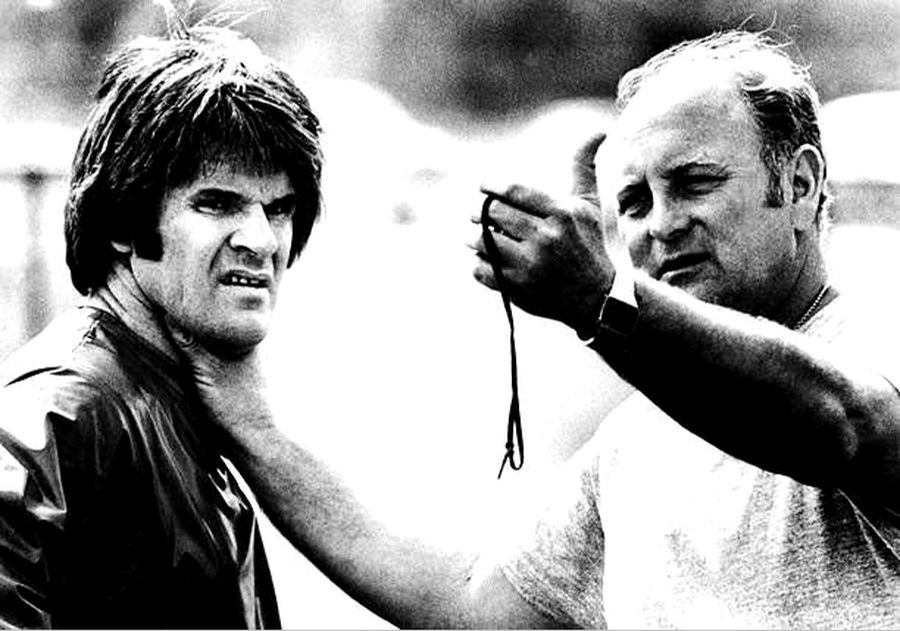
When research moves from individual players’ experiences to professional coaching programs, an exceptionally well-documented case appears in the United States. Gus Hoefling (1934/1935–2023) joined the Philadelphia Phillies in 1976 as a pioneer of specialized conditioning. In a small space next to the clubhouse at Veterans Stadium he led daily sessions combining resistance training, stretching and principles of traditional martial arts. Contemporary and later American reports often described his work as Northern Shaolin kung fu; Hoefling’s own path, however, led through more than one martial tradition. He worked with the Phillies for seventeen years and also prepared the generation of players that won the club’s first World Series title in 1980. [131, 138]
Hoefling encountered the martial arts long before entering baseball. In Southern California, according to his own recollection, he learned Okinawan tomari-te (泊手), one of the historical traditions from which karate developed. Another important stage was his study with the Chinese-American teacher James Wing Woo (1922–2014). According to testimony published in 2022 by a successor of Woo’s school, Hoefling was among his first students; film recordings of the forms they learned are said to survive from that time. Woo’s own system, Wing Woo Gar, combined several Chinese styles: Hung Gar, Choy Li Fut, Eagle Claw, Northern Shaolin and the internal schools of taijiquan (太極拳), baguazhang (八卦掌) and xingyiquan (形意拳). The key was work with stance, body alignment, rootedness and the fluid transfer of force. Such a broad tradition gives a more accurate picture of Hoefling’s teaching background than the single label “Northern Shaolin.” [138, 154–156]
In the Phillies clubhouse Hoefling developed a holistic conception of athletic preparation — stability, strength, flexibility, work with muscle tension and long-term endurance. Mike Schmidt (1949–), Larry Bowa (1945–), Bob Boone (1947–2026), Steve Carlton (1944–) and Larry Christenson (1953–) were among the players who went through his program. In Schmidt’s and Bowa’s recollections from 2023, alongside physical preparation there also appears work with attention, negative thoughts and the ability to sustain performance at the end of a long season. [131, 138]
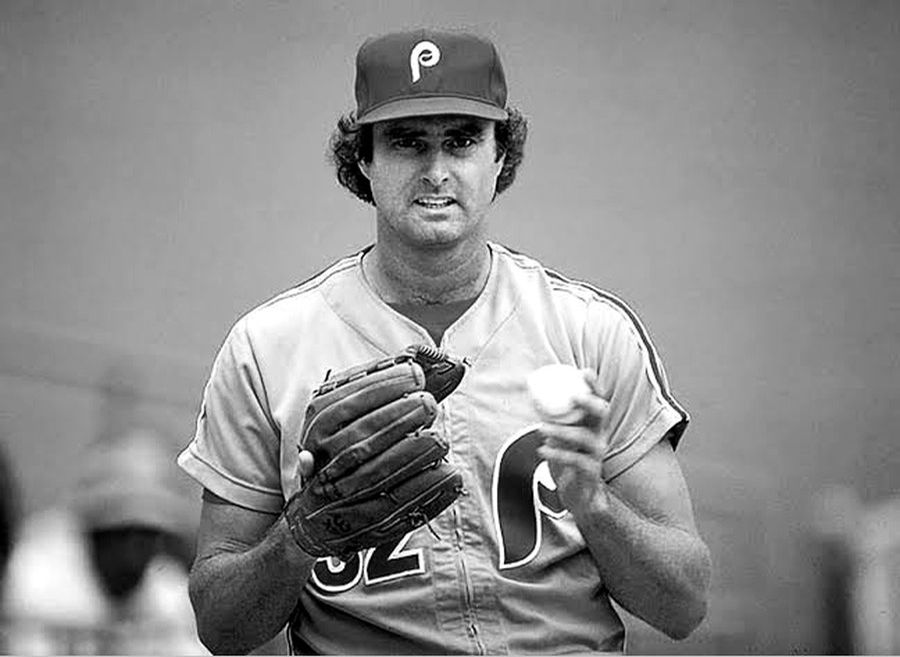
For our theme, the most important is Steve Carlton’s own testimony. The left-handed pitcher played in MLB from 1965 to 1988, compiled a 329–244 record with a 3.22 ERA, struck out 4,136 batters and won four Cy Young Awards. In an interview with Stan Hochman, later republished from the archive by The Philadelphia Inquirer, he explained that for him martial arts meant above all endurance and faster recovery between starts. After a long game he would sometimes do Hoefling’s workout the very next day. Carlton described arriving with a stiff arm, but after the session he felt relief and went into his next start better prepared. [132, 133, 139]
In the same interview Carlton also spoke of a change of perspective: compared with the demanding training days, the day he took the mound became almost a day off. Even more interesting is his work with attention. When pitching, he said, he stopped seeing the hitter as an obstacle standing between him and the catcher; he concentrated on the throw into the glove behind the plate itself. In his explanation this was about the ability to guide the ball precisely to the target and to pay no attention to anything that might disturb that intention. [133]
“Martial arts was for the endurance”
Thomas Boswell’s contemporary report for The Washington Post of July 1980 describes Carlton’s interest in kung fu, his work with bodily tension and the moment of its sudden release. Five years later the same journalist noted that other Phillies players also trained with Hoefling and that the trainer attached great importance to mobility. Here we have a historically well-documented movement in the opposite direction from Japan: a Chinese form of martial training was incorporated, through an American teacher, into the daily routine of elite MLB players. [134, 135]
Among Hoefling’s pupils, catcher Bob Boone, a four-time All-Star and seven-time Gold Glove winner, held a special place. As early as his preparation for the 1985 season, the Los Angeles Times reported that after the usual three-hour practice he added weight training and about thirty minutes of kung fu. Boone at the time credited martial training with increasing his strength, flexibility, endurance and mental toughness. He explicitly connected his long tenure in MLB with the discipline he had gained through regular training since the mid-1970s. This direct testimony is notable also because it is not tied to a single isolated success: over nineteen MLB seasons Boone caught 2,225 games, an exceptionally demanding role, and in 1980 he won the World Series with the Phillies. [143, 145]
In September 1987, when he tied Al López’s then record for games caught, Boone again spoke about his preparation. In an interview with the Los Angeles Times he explained that martial arts had taught him not to give in to fatigue during the performance itself. The journalist described how even after nine innings in the summer heat he would stay in the weight room after his teammates had left. Kung fu training appears here as part of a long-term professional discipline that the player repeatedly linked to longevity at the elite level. [144]
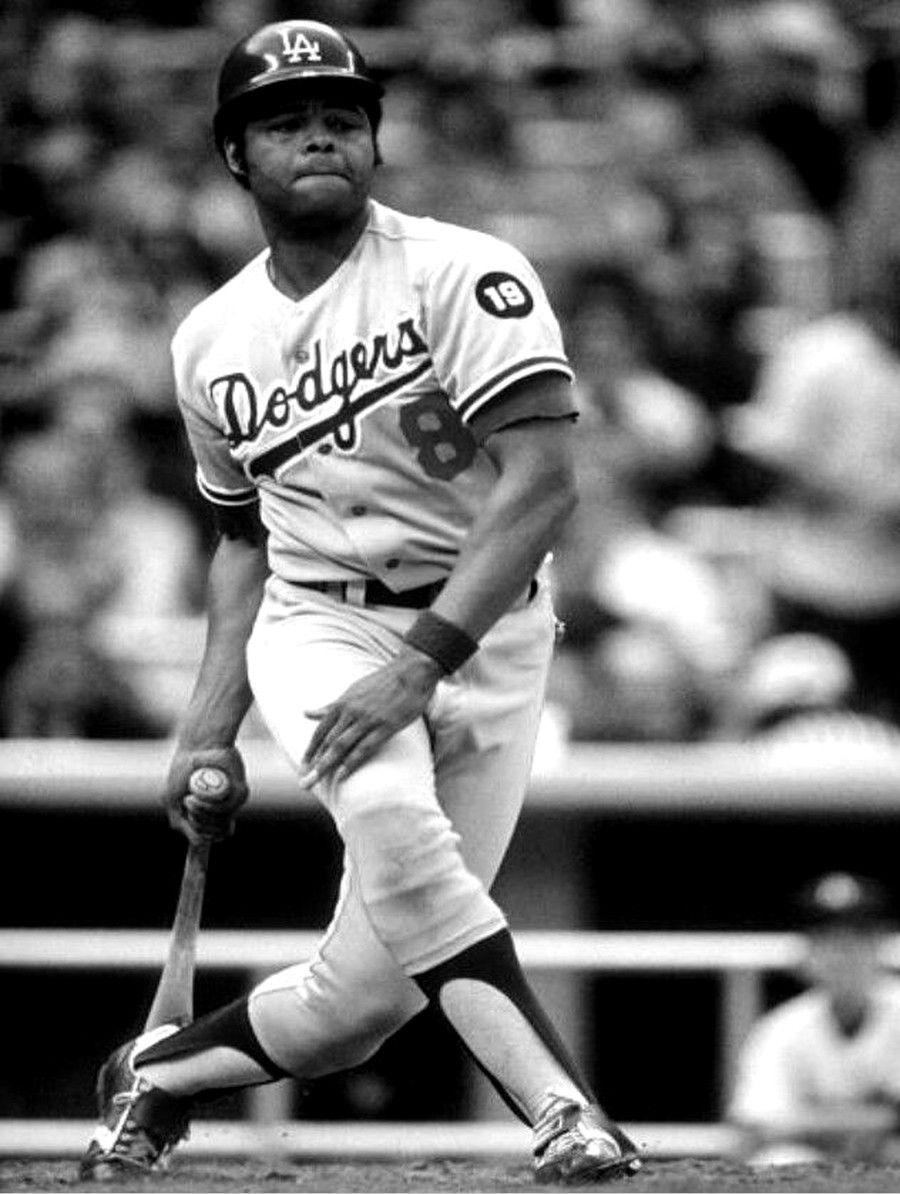
The American branch of the Japanese tradition is completed by Reggie Smith, who collected 2,020 hits and 314 home runs in MLB for the Boston Red Sox, St. Louis Cardinals, Los Angeles Dodgers and San Francisco Giants. After his American playing career he played in Japan for the Yomiuri Giants (1983–1984), where Sadaharu Oh served as assistant manager in 1983 and as manager from 1984. In July 1989 Smith was working as a specialized hitting instructor in the Los Angeles Dodgers’ farm system. During a visit to Bakersfield he demonstrated to reporters how he used a Japanese sword in teaching hitting. In the report Honing Dodger Hitters of Future he linked this method directly to Oh, who had trained with the sword himself. [140]
In the report Smith explained that the unusual object at first arouses curiosity, but once players understand the essence of the grip and the guidance of the blade, they can apply the same principles to the swing. The reaction of the young players is telling too: they called the lesson “kung-fu batting practice,” even though it was Japanese sword training. The journalist recorded a positive assessment of Smith’s teaching from Tim Johnson, manager of the Bakersfield Dodgers farm team. For the history of the transfer of martial techniques this is a rarely precisely dated case: Oh’s sword technique, passed on by an American player who had played in NPB, was being handed down in 1989 to a new generation of professionals in the Dodgers system. [140]
Barry Larkin (1964–) deserves special attention. He played nineteen seasons for the Cincinnati Reds from 1986 to 2004, collecting 2,340 hits, 198 home runs and 379 stolen bases with a career batting average of .295; in 1995 he was National League MVP, and in 2012 he was inducted into the Baseball Hall of Fame. After his career he began working individually with younger professionals in the Orlando area. Boxing became one of the tools of his teaching. The original interview of 22 July 2023 is not a report about a conditioning add-on, but about the way Larkin explained the swing through a different movement. [95, 96]
Larkin’s approach relied on the connection between the short boxing combination jab – cross – hook and the sequence of movements in hitting. The hitter had to understand the angle of attack, the transfer of load from the feet, the work of the hips and the ability to stay balanced during a powerful strike. Larkin stressed rotation of the lower body together with control of the direction of the upper body. The result was to be force transferred correctly and at the right time, not merely greater muscular tension. Recalling the training of Dominican shortstop Willy Adames (1995–), he remarked that the boxing drill reinforced in the player the qualities needed for hitting. Adames attended his preparatory program in the winter of 2018/2019, shortly after his MLB debut. [95]
In the same interview Adames recalled how physically demanding the sessions were. With gloves on he repeated combinations to the point of complete exhaustion, but he valued above all the atmosphere of working together and his restored self-confidence. For him Larkin was not just a striking coach: he gave him a space in which he learned a defensive stance, the swing and mental preparation. Other participants in Larkin’s program included Jesse Winker (1993–), Francisco Lindor (1993–) and the Venezuelan outfielder Carlos González (1985–). For Winker, Larkin described specifically how sparring helped him handle pitches on the inner part of the strike zone; for the others the report confirms participation in the program, not necessarily the same form of every individual boxing lesson. [95]
A quite special case within Larkin’s circle is that of the Puerto Rican hitter Edwin Ríos (1994–). During the 2020 interruption of the season he boxed with Larkin to maintain physical and mental readiness. In an August interview at the time he described the experience in the following words:
“It’s crazy what boxing does to not just the body but your mind as well.”
In 2024 he returned to the same period as a more experienced player in the Cincinnati Reds organization. He spoke about the importance of body language, mindset and the ability to keep perspective during a difficult part of the season. In his case both a concrete coaching relationship and the player’s own assessment of the mental benefit can be documented. [97, 98]
Larkin’s account provides a natural parallel to Arakawa’s use of the Japanese sword. Both coaches reached for a task the player did not know well, and through it sought a more effective organization of a familiar baseball movement. For Arakawa it was a strip of paper on a thread, for Larkin a boxing combination. In both cases the feedback was unmistakable: one could tell at once whether a person was balanced, whether he moved fluidly and whether his action came at the right moment. [7, 43, 95]
As early as the 1970s and 1980s, outfielder Ruppert Jones (1955–), the first player chosen by the Seattle Mariners in the 1976 expansion draft and a two-time All-Star, sought a similar experience. During his MLB career (1976–1987) he collected 1,103 hits and 147 home runs. In an interview with Sports Collectors Daily of 10 January 2022 he said that in his two most successful seasons, 1979 and 1982, he had done off-season karate training each time. The reporter asked him directly about speed, timing and hand-eye coordination; Jones, however, named concentration and control of his own body as the greatest benefit. [141]
His answer is exceptionally telling for a comparison with Tohei’s school:
“It was about uniting my mind with my body.”
Jones added that he was subsequently better able to apply this ability on the field. Whereas Arakawa and Hirooka used the Japanese terminology of ki (気/氣) and shinshin tōitsu (心身統一), Jones decades later described his own karate experience in almost the same basic words, without any reference to the Japanese philosophical tradition. The interview offers direct testimony from a player that martial-arts training could be, for an elite ballplayer, a path to a subjectively felt unification of attention and movement. [141]
Another American testimony comes from outfielder Bubba Crosby (1976–), who played in MLB from 2003 to 2006 for the Los Angeles Dodgers and New York Yankees. In a Houston Chronicle report of 25 December 2005 he described off-season training at Houston’s Main Boxing Gym under Bobby Benton. In the ring he was looking for first-step quickness, agility and relaxed movement. In his own words, boxing also helped his footwork as an outfielder. His observation is captured in the following statement.
“If you tighten up, you’re going to be a lot slower.”
He related the same experience to hitting: excess adrenaline and clenched muscles can slow the swing. [99]
Crosby’s testimony is among the closest American analogies to the old Japanese ideal of movement without excess tension. He does not work with the concept of ki (気/氣), but explicitly places speed, relaxation and technical precision side by side. It was nevertheless hard physical training: according to the report he left the gym completely exhausted and limited the risk of sparring because of possible injuries to his hands or face that could have threatened his baseball career. [99]
In the Latin American setting the best documented is Adrián González (1982–), a first baseman born in San Diego, raised in Tijuana and representing Mexico. He played in MLB from 2004 to 2018, accumulating 2,050 hits, 317 home runs and 1,202 RBI with a .287 average. In the winter of 2012/2013 he turned part of his home garage into a boxing gym, where former heavyweight world champion Chris Byrd (1970–) came regularly. His brother Edgar and other ballplayers also worked there with González. [100, 101, 118]
In an interview with the Los Angeles Times of 17 November 2012, González formulated the link with the baseball swing with exceptional precision: in a cross and in hitting alike, the force must come from the trunk, the explosiveness must be immediate and the path of the strike must stay short and direct. In February 2013 he summed up the same idea in one sentence:
“The explosive rotation of a swing is the same as that of a punch.”
Byrd watched his hand speed, hip work and ability to produce a powerful movement without a long wind-up. Outside the ring González added work at the Sports Science Lab training center and adjustments to his hitting technique under the supervision of Mark McGwire. [100, 101]
The rhythm of the whole baseball season also played a key role in his preparation. After shoulder surgery he looked for a way of training that would strengthen his core, build physical endurance and at the same time help him cope with the demanding 162-game MLB regular season. In 2015 he therefore continued his boxing preparation at the famous Wild Card Boxing Club in Hollywood, founded by Freddie Roach (1960–), one of the world’s most respected boxing trainers. Later González did intensive interval training there under the Filipino boxing coach Marvin Somodio. In interviews at the time he pointed out that accumulated fatigue over a long season is one of the causes of slumps. He therefore saw boxing not only as a means of refining the dynamics and coordination of his swing, but above all as part of comprehensive conditioning that was to help him sustain his performance throughout the season. [102, 103]
González’s case gains another dimension thanks to a Spanish-language report in the Mexican daily RÉCORD of 2 March 2013. In it Byrd described in detail the beginning of their collaboration and a typical lesson: shadowboxing to loosen up, then punches on the pads, hand coordination, abdominal work and speed drills. He explained that it was the positioning of the body before the punch and the transfer of movement from the hips that created the connection with the baseball swing. Alongside González, another Mexican infielder of the Dodgers, Luis Alfonso Cruz (1984–), trained under Byrd; this was therefore not an individual effort but a deliberately designed program for a pair of professional ballplayers. [104]
The Brazilian catcher Yan Gomes (1987–), who debuted in MLB in 2012 and in the following years played mainly for the Cleveland Indians, represents a different form of transfer. In December 2017 MLB.com caught up with him during winter lessons at Shield Systems Academy in Knoxville. He went three to four times a week, starting with shadowboxing and moving through footwork to pad work, defensive reactions and counterpunches. With trainer Ben Harrison he used MMA above all as a way of refining his movement coordination. [105]
Unlike hitters, Gomes also focused on the specific movement demands of the catcher’s position. In the transition from a low crouch to a throw to second base, what counts is the speed and length of the first step, maintaining balance, correct timing of the individual movements and efficient transfer of force from the legs through the pelvis and trunk into the throwing arm. He spoke about his training directly:
“I correlate this 100 percent to baseball.”
Harrison noticed that professional ballplayers often come into a boxing gym with an exceptionally good feel for balance, rotation and timing. According to him, then, something worked in both directions: the combat drill improved the baseball movement, and baseball preparation made it easier to teach the punches. [105]
For the Canadian catcher Russell Martin (1983–), a longtime player for the Dodgers, Yankees, Pirates and Blue Jays, MMA meant above all a rebuilding of his conditioning. After problems with his hip and knee he sought out trainer Jonathan Chaimberg, who had worked with MMA legend Georges St-Pierre. During the winter of 2010/2011 he did six intensive sessions a week and lost about seven kilograms. In a 2011 interview he spoke about interval training, exercises with heavy battle ropes and the ability to repeat explosive movements without long breaks. He stressed the importance of physical endurance for a catcher, who even late in a game must be able to react quickly to errant pitches and keep balls in the dirt from getting past him. Just as a boxer’s exhaustion can decide a whole fight, a catcher too can make a fatigue-induced mistake that affects the outcome of the game. [106, 107]
Martin’s program is an example of fighters’ conditioning systems being adopted into professional baseball. He himself specified explicitly that he did not go into the ring to fight; he was interested in how fighters prepare. Historically significant in his case is the choice of means — high intensity, short rest, mobility and body control — and the immediate demand to use them behind the plate. [106, 107]
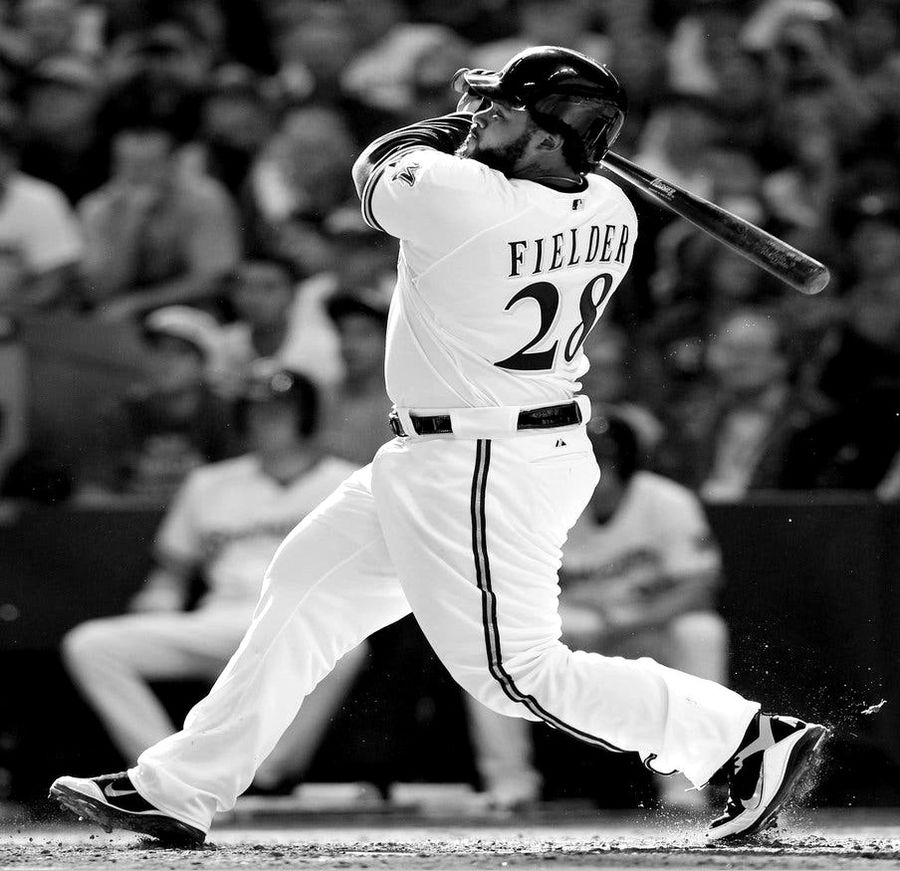
Another power hitter was Prince Fielder (1984–). During the Detroit Tigers’ spring training in 2013 he trained at the 6 Levels MMA gym in Orlando up to five times a week. According to an interview with FIGHT! Magazine, he combined boxing, kickboxing, Muay Thai and elements of Gracie jiu-jitsu. He was led to it by his two sons’ lessons; at first it was curiosity, gradually an important part of his own off-season preparation. Fielder explicitly mentioned hand-eye coordination, foot speed, agility, conditioning and explosiveness. He considered no less important the self-confidence gained from tasks that at first did not come to him at all. [108]
Fielder returned to boxing-style preparation in 2016 as a Texas Rangers player. He brought a speed bag and a heavy bag to spring training and encouraged teammates Mitch Moreland and Keone Kela to try them. In an interview with MLB.com he spoke mainly about balance, footwork, rhythm and trunk rotation. In 2015 he batted .305 with 23 home runs and 98 RBI, which placed him among the very productive hitters of his time. Although these results cannot be attributed directly to boxing training, the contemporary report documents how much importance the player attached to it and why he kept returning to it during his career. [109]
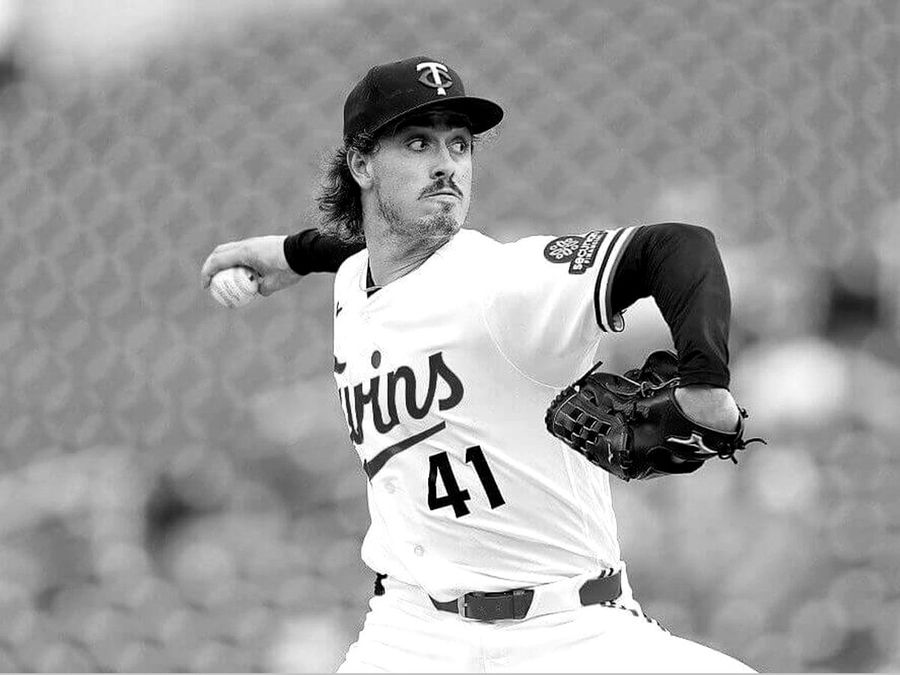
In terms of pitching mechanics, an interesting example is Joe Ryan (Joseph Philip Ryan; 5 June 1996–), an American pitcher for the Minnesota Twins who debuted in MLB in September 2021. From his youth Ryan played several sports, above all water polo, which gave him experience with movement coordination, shoulder positioning and ball-release technique. In an interview with Sports Illustrated of 24 May 2021 he explained that his long experience of throwing in water polo shaped the way he pitches, especially his ability to release the ball far in front of his body and generate significant velocity in the final phase of the throw. [111]
In 2020, during the pandemic interruption of baseball competitions, Ryan also began studying Muay Thai under Jason Park, an experienced combat-sports coach and sports physical therapist. Park, who holds a doctorate in physical therapy from the University of Southern California, has long worked in movement biomechanics, strength and conditioning and the rehabilitation of elite athletes. As a striking coach he has worked with, among others, the legendary UFC champion Anderson Silva and elite fighter Brian Ortega. His experience also includes preparing professional athletes from MLB, the NBA and the NHL. Ryan thus had the opportunity to work with a specialist who, besides practical combat-sports experience, also had extensive education in sports medicine and physical therapy. [111]
Their training together was aimed neither at preparing for fights nor at mastering complex fighting techniques. According to Ryan’s statement to Sports Illustrated, Park focused mainly on relaxing the body, better awareness of one’s own movement and natural coordination. An important part of his approach was also playfulness and the effort to remove unnecessary muscle tension that can limit the fluency of movement. It was these experiences that Ryan later related to his pitching mechanics.
In an interview published on MLB.com on 12 June 2024 he explained that what struck him most about Muay Thai was the similarity between the mechanics of a punch and of throwing a baseball. His own summary was simple:
“Throwing a baseball is similar to throwing a punch.”
Ryan explicitly stressed that his goal was not to become a fighter. He saw Muay Thai as an opportunity to learn different movement principles, especially the way force is generated and transferred between the body’s segments in an explosive movement. At the same time he regarded it as a welcome alternative to ordinary stretching and a way of keeping the body active through varied movement. [110]
Ryan’s case is thus another example of a conscious search for connections between the martial arts and baseball. Like Masumi Kuwata, he did not try simply to adopt a particular fighting technique, but to understand his own athletic performance better through a different movement discipline. Especially noteworthy is the collaboration with Jason Park, whose professional background links practical combat-sports training with modern physical therapy and biomechanics. Ryan’s testimony documents his own perception of a similarity between a punch and a pitch, but it is not direct proof that Muay Thai training measurably improved his pitching results. [110, 111]
An interesting example of the search for new movement principles outside traditional baseball training is Michael Lorenzen (Michael Clifton Lorenzen; 4 January 1992–), an American professional pitcher who in MLB was also able to play as a hitter and outfielder. In an interview with FanGraphs of 12 April 2019 he explained that in refining his technique he sought out specialists from other sports, whose experience let him look at baseball movements from a different perspective. [142]
One of them was the South Korean martial-arts teacher DK Yoo, whose real name is Yu Dae-gyeong (유대경), founder of his own Warfare Combat System (WCS), which combines principles of several martial arts. During his career Yoo practiced, among other things, Chinese kung fu, wushu, judo, boxing and the Russian combat system Systema, from whose movement and technical principles he then created his own teaching method. His work with Lorenzen is also documented in his personal professional archive, where he states that from 4 to 7 April 2019 he led Lorenzen’s training in Pittsburgh during his time with the Cincinnati Reds. Under his guidance Lorenzen focused mainly on stability of stance, balance and the ability to use effectively the force generated by the legs in contact with the ground. He was particularly interested in how to transfer this force through coordinated movement via the pelvis and trunk into the arms, both in the swing and in the pitch. [142]
About two years earlier he had also worked with the Israeli movement specialist Ido Portal, known among other things for preparing UFC fighter Conor McGregor. Portal had no previous experience with baseball training, but precisely for that reason he was able to point out movement deficiencies that traditional baseball coaches might miss. Lorenzen recalled that Portal noticed, for example, insufficient use of the front leg or limited mobility of the thoracic spine. Their training together helped him develop the ability to control the movements of individual body segments consciously and to respond more quickly to technical cues. [142]
Lorenzen saw in these experiences above all a chance to overcome ingrained movement habits. He believed that coaches who work in a single sport for a long time may overlook some technical flaws precisely because they are too used to certain movement patterns. Specialists from other disciplines, by contrast, bring different experience and can point out connections that would otherwise go unnoticed. His case therefore documents a conscious use of experience from martial arts and movement pedagogy in the search for a more effective baseball technique, but not the direct adoption of a specific fighting technique into the game. [142]
Among pitchers we also find a mental parallel. As a child, at the ages of eleven and twelve, Tommy Hunter (1986–) won titles in the Junior Olympic judo competition. In an interview with MiLB.com of 13 May 2010 he recalled that he started going to the dojo (道場) on his fifth birthday thanks to his grandmother. Later he gave up competitive judo and concentrated on baseball; in 2009 he went 9–6 with a 4.10 ERA for the Rangers. When the journalist asked him about the relationship between the two sports, Hunter replied:
“It's helped me in the mind part of it.”
He elaborated on the ability to keep his focus through failure and to handle situations in which things do not go as expected. [112]
A similar but even younger example is pitcher Carson Fulmer (1993–), who earned a black belt in karate before reaching MLB. At the June 2015 draft he spoke to MLB.com about the influence of his childhood training, which he kept up until the start of high school. As the main benefit he named discipline, alongside flexibility and mobility. In this case the martial art preceded the full development of his baseball career; its significance lies mainly in the habit of systematic preparation and the ability to control the body. [113]
Historically, the connection between boxing and catching is exceptionally vivid in the case of Ellie Rodríguez (1946–2026) of Puerto Rico. Before reaching MLB in 1968, he competed as a teenager in New York’s Golden Gloves and won two bouts in his division. After breaking a finger while sparring he concentrated on baseball. In interviews for the SABR BioProject conducted in January and February 2018, he explicitly linked the footwork of the boxing gym with catching technique:
“It's all about your quick feet and release.”
He considered the ability to get the body quickly into the right position one of the foundations of a sharp and accurate throw. [114, 115]
Rodríguez spent the years 1968–1976 in MLB, played for five clubs and made the All-Star Game twice, in 1969 and 1972. He was valued for controlling the running game and for his work with pitchers; in 1975, for example, he caught Nolan Ryan’s fourth no-hitter. When we set his testimony beside that of the present-day Gomes, the same foundation appears between two players whose careers are separated by several generations: the boxer learns to have his feet under control before the punch, and the catcher needs the same before the throw. [114, 115]
Catcher J. T. Realmuto (1991–) also grew up in Oklahoma among exceptionally successful wrestlers. His mother Margaret, née Smith, is one of ten siblings; four of her brothers — John, Pat, Lee Roy and Mark Smith — reached the elite collegiate or international level. John Smith (1965–) won two Olympic gold medals in freestyle (1988 and 1992), four world titles and two individual NCAA championships; later, as a coach, he led Oklahoma State to five NCAA team titles. Pat Smith became the first four-time individual NCAA Division I champion (1990, 1991, 1992 and 1994), Lee Roy Smith won the NCAA title in 1980 and took silver at the 1983 World Championships, while Mark Smith was a repeated collegiate All-American. Realmuto’s cousins Chris Perry and Mark Perry, both two-time NCAA champions, later succeeded at the same level. [158]
Realmuto began wrestling competitively at about five or six and kept up club wrestling until just before high school. In the Smith family people wrestled even at family gatherings; he met future collegiate champions as a child. His visits to his grandmother stuck in his memory especially strongly: at seven he would take his uncle John Smith’s Olympic gold medals out of their case and put them around his neck. In an interview with Todd Zolecki for MLB.com of 21 February 2023 he recalled that at the time he could hardly grasp that someone in his family had been the best in the world. He returned to the story in connection with his own selection to the U.S. team for the World Baseball Classic. [157, 158]
In an interview with The Philadelphia Inquirer of 12 April 2019 he called wrestling an important foundation of his athletic upbringing. He summed up its benefit for his later baseball career in three words:
“strength, mental toughness, balance”
It was on these experiences that Realmuto drew in moving into professional baseball: a catcher needs a firm low stance, hip mobility, a quick first step and the ability to transfer weight into an accurate throw. In his case a wrestling childhood, a family tradition of elite sport and the daily demands of MLB thus merged into a single long-term movement foundation. [116, 158]
In the infield, a similar experience appears with Caleb Durbin (2000–). In 2025 he played 136 games for the Milwaukee Brewers, batted .256 and hit eleven home runs. In February 2026, after joining the Boston Red Sox, he described how high-school wrestling helped him acquire the low defensive stance he naturally uses in fielding. Manager Alex Cora also pointed to Durbin’s ability to get up immediately after going to the ground. This practical detail connects to Hirooka’s earlier work on the first step and the stability of the defensive stance. [117]
The move from individual instruction to a broader training repertoire is illustrated by Bo Bichette (1998–). The Canadian national-team shortstop, who established himself with the Toronto Blue Jays, began including Muay Thai in his program at the end of November 2023, along with swimming and Pilates. In March 2024 he described it to The Canadian Press as one of the most mentally demanding things he had tried. He stressed the large volume of cardiovascular work and the demand to push past his own comfort zone. The report captures a personal experience of preparation in a period after health problems, when he was looking for new forms of conditioning and lower-body work. [119]
The American slugger Khris Davis (1987–), the son of a Mexican mother, recalled his off-season boxing in an interview with La Vida Baseball of 12 August 2019. He began with simple punching practice on mitts and gradually realized it benefited his hand-eye coordination. His remark:
“I train at a boxing gym because I can get locked in there, and there are a lot of similarities between the sports.”
Davis’s statement sounds lighthearted, but behind it lies a classic baseball problem: timing the movement of the arms against a rapidly approaching target. At the same time Davis looked back on his childhood in Mexico, where he practiced hitting pebbles or beans with a broomstick. [120]
Catcher Francisco Cervelli (1986–), known in MLB mainly for his time with the Yankees and the Pittsburgh Pirates, comes from Venezuela. In December 2018, together with the Venezuelan footballer Josef Martínez, he published a video of movement training that the media described as capoeira. A contemporary article in the Spanish daily AS covered the session, and a few weeks later MLB.com wrote about Cervelli’s unusual movement lessons, including low stances and work with balls. For Cervelli, then, we have documentation of the training itself and of a broader orientation toward mobility and free movement; his own explanation of how capoeira specifically influenced his catching or hitting, however, is missing from the available material. [121, 123]
Cuban cases also show how boxing appears in the preparation of professional players, though often only as brief public records. Aroldis Chapman (1988–), the star Cuban pitcher, posted videos of boxing training with a heavy bag during the pandemic interruption in April 2020. Luis Robert Jr. (1997–), the Cuban outfielder of the Chicago White Sox, published footage in January 2023 from his preparation for the World Baseball Classic that included boxing movements. Both cases document a form of conditioning; from these brief reports we do not yet have their own analysis of a transfer into pitching or swinging. [124, 125]
A remarkable current example of a direct link between martial arts and professional baseball is Cameron Shayne (1971–), an American martial-arts teacher and movement specialist who in 2025 worked with the Philadelphia Phillies as a mobility and movement coach (movement coach). His more than thirty years of experience span several different martial disciplines. At sixteen he earned a black belt in Olympic taekwondo (태권도; 跆拳道), in which he reached 5th dan in 1992. In 2003 he received 3rd dan in the Japanese Yōshūkai Karate-dō (養秀会空手道), and in 2022 also a black belt in Brazilian jiu-jitsu (ブラジリアン柔術), awarded by respected figures of the discipline, Alexandre “Xande” Ribeiro and Rafael Lovato Jr. During his career he also studied under the legendary Rickson Gracie. His coaching work has included collaboration with many elite athletes, among them former boxing world champion Sugar Ray Leonard, three-time Olympic beach-volleyball champion Kerri Walsh Jennings and professional MMA fighters Sean O’Malley and Gilbert Burns. [137, 171]
Drawing on long experience, in 2001 he created his own movement system, Budokon (武道魂). Its name combines the Japanese characters bu (武; fighting or warfare), dō (道; way) and kon (魂; spirit), which Shayne interprets as “the way of the warrior spirit.” It is not a traditional martial art but a modern system linking techniques of karate, taekwondo, Brazilian jiu-jitsu and MMA with yoga, calisthenics, mobility and animal-inspired movement. An important part of the teaching consists of fluid transitions between body positions, work in low stances, crawling on all fours and movement sequences derived from ground fighting. The goal is not only to develop muscular strength or flexibility, but above all the ability to coordinate the body’s segments, control their relative positions and safely handle unusual movement situations. [137, 171]
Shayne’s first direct collaboration with professional baseball was individual training with outfielder Nick Castellanos (1992–). Castellanos had been interested in Brazilian jiu-jitsu since 2022 and gradually discovered Shayne’s movement methods through social media. He was struck above all by the ability of the then fifty-three-year-old instructor to move with extraordinary lightness and fluency. He therefore contacted Shayne personally and, during winter preparation before the 2025 season, completed a six-week individual program with him at his home in South Florida. Their collaboration then caught the attention of Morgan Gregory, the Phillies’ director of strength and conditioning, who personally attended one of the sessions. With the approval of club management, Shayne was then invited to the first team’s spring training. [136]
From late February to mid-March 2025 Shayne led a six-week program at the Carpenter Complex training facility in Clearwater, Florida. His exercises differed markedly from a traditional baseball warm-up. Players moved along the ground in various supports, transitioned between low squats, kneeling and all-fours positions and worked on trunk rotation, balance and coordination. Instead of isolated stretching of individual muscle groups, Shayne focused on fluid movement sequences in which several joints and muscle chains worked together at once. The exercises were meant to prepare the body for the subsequent athletic load and develop the ability to control movement safely even in less usual positions. Although participation was voluntary, according to a Phillies Nation report of 4 October 2025 more than 85% of the players on the Phillies’ Opening Day roster took part. [136]
Participants included pitcher Aaron Nola (1993–), catcher J. T. Realmuto and the German-American outfielder Max Kepler (1993–). Nola explained that after just five to fifteen minutes of Shayne’s exercises he felt ready to throw, hit or run. He stressed the importance of preserving overall athleticism, which pitchers can gradually lose as a result of narrowly specialized preparation. Realmuto, for his part, recognized in some movement sequences principles familiar from his earlier wrestling training. In his words, the exercises helped him perceive his body’s capabilities better and adopt more safely positions he did not encounter in ordinary training. [136]
A particularly interesting testimony came from Max Kepler, who spontaneously compared Shayne’s method to taijiquan (太極拳). He was struck above all by the fluid continuity of the movements, in which one position flowed naturally into the next. In an interview he explained that this form of preparation let him get to know his own body from a new perspective and become aware of movement possibilities he had previously ignored. He admitted that he was only just beginning with Shayne’s method and would like to continue with it. From the standpoint of this study his statement is notable mainly because the similarity with a Chinese martial art was recognized by a professional ballplayer himself, not by a later expert interpretation. [136]
Shayne named the long-term preservation of professional athletes’ movement abilities as one of the main goals of his work. In the case of the Phillies, whose roster included many veteran players, he considered it important not only to prepare the body for immediate performance but also to develop its resilience and movement versatility over the long baseball season. Although it cannot be objectively proven that his method directly improved the team’s results or reduced the number of injuries, the very inclusion of such a program in the organized preparation of an MLB club is significant evidence of the gradual penetration of martial-arts movement principles into professional baseball. [136, 137]
Hoefling and Shayne thus represent two historically different but remarkably related examples. The first brought into baseball experience with Okinawan tomari-te (泊手) and the Chinese system Wing Woo Gar, which includes elements of Shaolin and internal schools. The second, several decades later, introduced professional players to a modern synthesis of jiu-jitsu, karate, taekwondo and other movement disciplines. In both cases a teacher whose original professional environment lay outside baseball reached the MLB level and was able to offer a different view of human movement. It is also remarkable that both worked for the same organization — the Philadelphia Phillies. Whereas Hoefling represents one of the historical paths by which Asian martial arts entered American baseball, Shayne documents their present-day use in the form of systematic movement preparation for professional players. [131, 136, 154–156]
A different type of transfer is represented by John Baker (1981–). After the end of his playing career in 2015, the former MLB catcher took up Brazilian jiu-jitsu and gradually earned a brown belt. At the same time he joined the Chicago Cubs’ baseball operations, worked as a mental-skills coordinator and later led player development for the Pittsburgh Pirates. In a June interview for the podcast Learning to Fight (2026) he explained in detail why professional player training should create situations similar to a real game: the athlete learns against a live response, tries out different solutions and gradually develops the ability to make decisions under changing conditions. [146, 147]
Baker openly compared jiu-jitsu practice, in which a partner actively resists, with ordinary baseball drills. He shifted the emphasis to the quality of the learning environment, the choice of stimuli and room for independent problem-solving. He did not teach Cubs or Pirates players to grapple on the ground; he brought into professional baseball development a way of thinking about acquiring skills under pressure. For our study his case is interesting precisely because of this change of role: a man who spent his whole life in elite baseball began, after his career, to study a martial art intensively and gradually looked for common principles between the two worlds. [146, 147]
Walt Weiss (Walter William Weiss; 28 November 1963–), a former American shortstop, 1989 World Series champion with the Oakland Athletics and later manager of the Colorado Rockies and Atlanta Braves, also devoted himself to martial arts over a long period. He began martial training in his youth, mainly taekwondo (태권도; 跆拳道), in which he later earned a black belt. During his playing career he gradually broadened his experience to include Brazilian jiu-jitsu (柔術), Muay Thai (มวยไทย) and other disciplines of mixed martial arts (Mixed Martial Arts; MMA). Unlike many ballplayers who discovered combat sports only after their professional careers ended, Weiss used such training while still active in MLB. In an interview with the Associated Press of 13 March 2015 he stated explicitly that martial arts had probably been part of his conditioning throughout the second half of his playing career and that after it ended in 2000 he pursued them even more intensively. [151, 173]
An important figure in his martial training was the American instructor Clarence Thatch, a former successful kickboxer and 4th-dan holder in Enshin karate (円心空手), a modern Japanese full-contact system founded by Joko Ninomiya (二宮城光; 1954–). Thatch was one of the pioneers of the American MMA scene and ran the 3D Martial Arts training center in Colorado, where he combined karate, kickboxing, Muay Thai, boxing, wrestling and ground fighting. Under his guidance Weiss trained alongside active fighters and also tried full-contact cage fighting, although he never took part in a documented professional MMA bout. It was therefore not merely a matter of using a few striking drills as a supplement to baseball conditioning, but of a long-term interest in the combat disciplines themselves, their technique and training methodology. [151, 174, 175]
It is especially interesting that Weiss later carried his experience into his work as a baseball manager. In March 2015 he invited former UFC champion Georges St-Pierre (1981–), one of the most successful figures of modern MMA, to the Colorado Rockies’ spring training. In a meeting with the players lasting about ninety minutes, the Canadian fighter spoke mainly about mental preparation, a competitive mindset and the ability to maintain concentration under pressure. Weiss subsequently stressed that it is precisely mental toughness and the right mindset that can give an athlete a significant advantage over an opponent. Although the available sources do not describe a specific baseball technique that Weiss took from the martial arts and systematically taught his players, his case documents the long-term use of martial training during a professional playing career and the later conscious mediation of an elite MMA fighter’s experience to a baseball team. [151, 173]
In assessing the individual stories, however, it is essential to distinguish between what the players themselves said about the significance of martial arts and how journalists or later authors interpreted their training. Barry Larkin, Adrián González and Joe Ryan gave their own explanations of the connection they saw between martial training and baseball preparation. For other athletes we have only contemporary reports, photographs, videos or general information about conditioning. Such sources can reliably confirm that a player practiced boxing or another combat sport, but in themselves they do not prove that he consciously used its technical principles in hitting, pitching or fielding. It is precisely this distinction that allows the historical relationships between martial arts and baseball to be reconstructed more accurately than by simply collecting photographs of professional players wearing boxing gloves.
Taken together, the documented testimonies nevertheless reveal several recurring themes. The first is the work of the legs and the generation of force in contact with the ground, which is fundamental both for striking techniques in combat sports and for hitting or pitching in baseball. The second is timing and coordination of movement, in which the body’s segments must work together in the right order and without unnecessary delays. The third area is the release of excess muscle tension, which allows fast and explosive movements to be performed more fluidly. The fourth common area is mental readiness, including concentration, emotional control, the ability to cope with fatigue and to keep a cool head at decisive moments of a game. For some players martial training touched only one of these areas, while others understood it as a more comprehensive part of their athletic preparation.
These connections do not in themselves mean that modern baseball adopts the techniques of particular martial schools. Many biomechanical principles are common to different sports, and their similarity need not be the result of direct historical influence. What is remarkable, however, is that in American players’ testimonies we repeatedly encounter ideas we have already noted in studying Japanese ballplayers. Enomoto, Oh or Hirooka stressed correct posture, balance, relaxation and the ability to carry out the decisive movement without excess effort. Similarly, some American players sought through boxing, karate or other combat disciplines a way to coordinate the body better and achieve fast, precise and effective movement. These are not necessarily identical methods, but in some cases surprisingly close practical experiences.
A significant difference between the Japanese and American settings lies above all in how these experiences are explained and passed on. The Japanese tradition uses concepts such as ki (気/氣), tanden (丹田) or seika no itten (臍下の一点), which stem from a specific cultural and philosophical environment and, in some documented cases, also from the direct teaching of respected martial-arts teachers. American and Latin American players, by contrast, usually speak of coordination, balance, force transfer, swing mechanics, recovery or mental training. Different terminology, however, need not always mean a fundamentally different movement experience. When Sadaharu Oh waited for the strip of paper to stop, when Bubba Crosby explained the importance of a relaxed punch, or when Yan Gomes worked on a quick transition from the crouch to the throw, we encounter different expressions of the effort to control one’s own body more precisely. These examples cannot, however, simply be taken as proof of a common origin of their training methods.
It is here that a substantial historical difference comes to the fore. In American and Latin American baseball we find many individuals who used combat sports as a supplement to conditioning, a means of developing coordination or a source of new movement experience. In some cases, such as the Philadelphia Phillies, these methods even became part of organized club training. The Japanese case is exceptionally interesting, however, because for some players we can follow not only the practical use of martial techniques but also concrete teaching lineages, the transmission of philosophical concepts and a long-term search for the relationship between bodily movement and a person’s inner state.
The American examples therefore in no way weaken the original question of the influence of Asian martial arts on Japanese baseball. On the contrary, they provide a broader comparative framework that helps us distinguish general principles of sports biomechanics from the historically documented transfer of specific methods and ideas. Whereas similarity of movement principles may arise independently, a shared teacher, a specific teaching method or the adoption of specialist terminology are considerably stronger evidence of a real historical connection. It is on this distinction that the following reflection on the meaning of the concepts hara (腹) and ki (気/氣) in the Japanese baseball tradition rests. [5, 9, 57, 64, 95, 105, 110]
Why today we speak of the “zone,” but less of ki
Comparing the Japanese testimonies with American and Latin American interviews raises one more question: what language does today’s elite athlete have at his disposal if he wants to describe an unusual inner experience? In a Japanese interview Enomoto could say that he caught the ball with his seika tanden (臍下丹田). Oh could speak of the sword, Zen and ki (気/氣) without much explanation. Crosby described relaxation, Hunter attention under pressure, Larkin the technique of the punch and Ryan the transfer of energy. We can now read their testimonies side by side as part of a broader history of bodily mastery. [1, 7, 99, 110, 112]
The difference between vocabularies also has historical depth. In Europe and America after the Second World War, Japanese martial arts were often presented through exoticizing shortcuts: Zen, samurai discipline and mysterious energy. When ki (気/氣) began to be discussed in baseball, it entered an environment accustomed to judging players by batting average, arm strength and, later, ever more precise data. The combination of unusual language with extremely concrete baseball results must have seemed strange. It is telling that Roig’s remark, which started this whole search, comes from just such an interface. [1, 36, 37]
The term ki (気/氣) has its own history and interpretation in the Japanese martial arts. In Tohei’s conception, seika no itten (臍下の一点) becomes the point of unified attention, while ki (気/氣) represents the extension of that stability into action in the surrounding world. In such a tradition, mere concentration on the lower abdomen would therefore be only one element of the teaching. When Arakawa said of Enomoto that the technique was already there but ki (気/氣) was missing, he showed precisely the difference between mechanical execution and a state in which the whole person is ready to act. Similarly, Hirooka linked “good ki” with a player’s persuasiveness and calm in confrontation. [5, 9, 18–20]
A special place among the American testimonies belongs to Shawn Green (Shawn David Green; 10 November 1972–), the former Toronto Blue Jays and Los Angeles Dodgers hitter who recorded 2,003 hits and 328 home runs in his MLB career. In 2011, with Gordon McAlpine, he published the book The Way of Baseball: Finding Stillness at 95 MPH, in which he described in detail his long-standing interest in Eastern philosophy and meditation and their practical use in hitting. Already in high school he became interested in Zen Buddhism and Taoism, mainly through reading Zen and the Art of Motorcycle Maintenance by Robert M. Pirsig, Zen in the Art of Archery by Eugen Herrigel and Way of the Peaceful Warrior by Dan Millman. These ideas gradually shaped his approach not only to baseball but also to his own life. [148–150]
For this study, however, it is especially important that Green did not stop at a theoretical study of Eastern philosophy. During his winter preparation before the 1997 season he attended a small dojo in Newport Beach, California, where he practiced qigong (氣功; qìgōng), a traditional Chinese discipline combining breathing, movement and meditative exercises. He learned to regulate his breathing consciously, to breathe in through the nose and out through the mouth, and to work with the traditional notion of qi (氣; qì), life energy in Chinese philosophy and martial arts. The training affected him above all through its calming effect, and he gradually learned to recognize changes in his own physical and mental state. Although the demanding schedule of baseball spring training kept him from continuing regular practice, the experience later proved important for his own training method. [148, 172]
The decisive turn came during the 1997 season, when after a conflict with the Toronto Blue Jays coaches he began hitting balls off a tee into a net on his own. What was originally a simple technical drill turned after a few days into a regular meditative practice. He always placed the ball on the tee in the same way, concentrated on the sound of the contact and of the ball hitting the net, and consciously coordinated his breathing with the phases of the swing. He breathed in while placing the ball on the tee, briefly held his breath while taking his stance and breathed out during the swing itself. After about fifteen repetitions, by his own description, he began to feel his mind calming and his movement growing more fluid. He gradually stopped thinking about individual technical details, previous failures or the expected result, and concentrated solely on the action at hand. [148–150]
In his book he recalls that after roughly twenty tee sessions he began to recognize the same state of inner calm he had experienced a few months earlier while practicing in Newport Beach. Whereas in qigong he meditated mostly sitting or standing, he now managed to reach a similar state through dynamic baseball movement. His batting practice thus gradually became a form of meditation in motion, in which the repetition of technique, the rhythm of breathing and the focus of attention created the conditions for an ever more natural swing. Green realized that he did not need to control consciously, at the moment of the swing, a technique he had mastered completely over many years. On the contrary, he came to believe that overthinking could disturb its fluency. [148, 172]
In an interview with the Star Tribune of 12 June 2011 Green explained that the essence of his method was above all quieting the mind and complete focus on the present moment. He described the same principles in an interview with MLB.com, saying that what was originally ordinary tee work became a meditative activity that accompanied him for the rest of his playing career. He thus gradually stopped regarding baseball practice merely as a means of perfecting technique and began to understand it also as a way of cultivating attention, mental balance and the ability to keep inner calm regardless of immediate results. [148–150]
From the standpoint of this study, the connection between Green’s training and the traditional Chinese notion of the dantian (丹田; dāntián), especially its lower region, the lower dantian (下丹田; xià dāntián), which holds an important place in many schools of qigong, is also significant. It is a conception closely related to the Japanese tanden (丹田) and the broader concept of hara (腹), in which the abdominal region is understood as an important center of bodily stability, breathing and concentration. [172]
Based on the testimonies above, I personally believe that of all the American ballplayers described here, it is Shawn Green who came closest to the Japanese conception of hara, at least in his training practices. His experience goes beyond the ordinary use of combat sports to develop strength, coordination or conditioning. As with Kihachi Enomoto, Sadaharu Oh or Tatsuro Hirooka, we find here an emphasis on conscious breathing, concentration, long-term repetition of technique, the removal of unnecessary muscular and mental tension, and the attainment of a state in which a perfectly mastered movement can run naturally, without disturbing conscious effort. I find it especially convincing that Green himself recognized the connection between his earlier qigong training and the meditative state he later reached when hitting. Although his direct study of any of the Japanese schools working with the concept of hara is not documented, the similarity of his own training experience to the methods of Japanese ballplayers is, in my opinion, so striking that it deserves special attention. It is not only a similarity of the resulting movement, but above all of the very way in which the player, through daily practice, sought to achieve a unity of bodily movement, breath and mind. [148–150]
In science these experiences are studied by other means. The psychologist Rob Gray showed that experienced hitters can lose accuracy when they pay excessive attention to their own swing, whereas beginners sometimes need conscious monitoring of technique. A 2021 meta-analysis of flow research found, across sporting tasks, a link between the described state of flow and performance. Research here provides useful insights into attention, automaticity and the experience of peak performance; the traditional concept of ki (気/氣), however, does not lie on the same level as a measured sport-psychology variable. [34, 35]
In the school of Shinshin Toitsu Aikido (心身統一合氣道), the teaching of ki (気/氣) rests on four interrelated principles: unifying attention at the point below the navel, complete relaxation, natural distribution of weight and the extension of ki (気/氣). Within this teaching, the meaning of tanden (丹田) therefore cannot be separated from the overall work with mind and body. The historian follows the teacher’s concrete language and practice here; a sport psychologist can examine attention, muscular coordination and reactions to pressure in the same example. Each of these perspectives has its own methods, but both can contribute to understanding the surviving testimony. [5, 20, 24]
It is interesting to look at the language in which ki (気/氣) was actually presented in American baseball writing. In January 1985 Thomas Boswell wrote in the Washington Post about Oh’s training, his sword, aikido (合気道) and ki (気/氣). The text shows genuine interest but at the same time uses a slightly ironic, at times exoticizing tone: the traditional Japanese explanation is presented here once as a fascinating possibility and then as something an American audience might find strange. Such ambivalence is a concrete historical trace of the reception of ki (気/氣) outside Japan. The gap between acknowledging the result and keeping one’s distance from the player’s own vocabulary could also be a starting point for research on present-day interviews with elite athletes. [36]
Here a question arises that deserves further historical research. An American player who experienced a state similar to Enomoto’s might today describe it as the zone, “slow motion” or extraordinary concentration; the Japanese terms ki (気/氣) or hara (腹) might sound foreign to him. It is possible that some athletes speak about such experiences more guardedly for fear that their testimony might seem unscientific or ridiculous. At the same time, Biancalana’s recollection shows that altered perception of time or seemingly effortless movement also have their place in American baseball storytelling. [33, 36]
For future research, perhaps the most interesting thing to examine is the transition between the two vocabularies itself. In the past people spoke of ki (気/氣), the center of gravity and the unshakable mind; today they speak of internal and external attention, movement optimization and the flow state. In both cases it is remarkable that the most successful movement can be perceived by the athlete as the least forced and least consciously controlled. Whether these are different expressions of the same human experience or several related states is an open question, and it is precisely the combination of historical sources with present-day research that allows it to be formulated more precisely.
Scientific language describes altered states of attention and motor automaticity by different means than the traditional schools. Takahashi’s work, which combines an interview with a player, movement analysis and practical methodology, is an example. Stories of ki (気/氣) or hara (腹) remain historical records of an experience that modern research approaches through testable questions. [53, 91]
Surprisingly, the subject had already been addressed before our search by authors whose texts are not commonly cited in baseball writing. In 1998 the anthropologist William W. Kelly published the chapter Learning to Swing: Oh Sadaharu and the Pedagogy and Practice of Japanese Professional Baseball, which examines Oh’s relationship with Arakawa and the teaching of technique in the Japanese cultural setting. The writer Mick Cochrane wrote a separate essay, Baseball as Spirit Discipline: The Autobiography of Sadaharu Oh (the date of first publication could not be verified), focusing on Oh’s spiritual and athletic journey. Both texts are direct predecessors of one of the lines of this study. [83, 84]
From a broader historical perspective, Thomas Blackwood’s article Bushidō Baseball? Three ‘Fathers’ and the Invention of a Tradition (Social Science Japan Journal, 2008) is important. It shows how the language of baseball as a “way” was shaped through particular schools, teachers and institutions. A more recent study by Gabriele Morganti and colleagues (Sport in Society, 2024) examines the historical and sociocultural conditions in which baseball skills are formed and works directly with the similarity between swing drills and suburi (素振り) in kendo (剣道). [85, 86]
Japanese historiography has its own important line. In 2021 Yasuhiro Sakaue (坂上康博) reopened the question of how modern sport in Japan was transformed under the influence of the ideals of bushidō (武士道) and the martial arts. As early as 2012 Yasuhide Kanazaki (金﨑泰英) examined historical changes in spiritual education in student baseball. Yasufumi Suzuki (鈴木康史; 2016) analyzed the tension between play, amusement and “sacred” discipline in baseball of the Meiji era. These studies provide the contemporary and institutional background for the individual players’ testimonies. [87, 88, 89]
Also worth mentioning is an academic study from 1996 devoted to “center awareness,” a conscious relationship to the body’s center. Its author built on the Japanese conception of tanden (丹田) in training, the arts and sport. For our question it is important mainly because it looked for connections between traditional body language and modern coaching even before the rise of today’s data systems. [90]
The closest to an experimental comparison, however, was Keizo Takahashi. In his KAKENHI report he did not stop at general admiration for old methods: he recorded Kuwata’s own testimony, put together a concrete training procedure and tested it in pitching. At the university he was also studying the Chinese school of Han Shi Yi Quan (韓氏意拳). That is why his work is especially significant for this study: it shows that part of Japanese science deals systematically with traditional martial principles and, in applying them, distinguishes subjective experience from measurable performance effects. [53, 54, 71, 91]
The new sources thus yield a threefold picture. One line consists of players’ stories of altered perception, calm and spontaneous action. The second consists of direct links between martial-arts teachers and professional clubs. The third is made up of historical and sports-science studies that gradually translate the traditional vocabulary into the categories of pedagogy, motor learning and biomechanics. It is their meeting that makes the subject historically rich. [53, 83, 86, 90]
When martial arts and baseball meet at the center
After studying the Japanese sources, Roig’s original remark in a book about scouting turns out to be far more significant than it first seemed. For Enomoto we have documented direct aikido (合気道) instruction, Arakawa’s emphasis on ki (気/氣) and the player’s testimony about an extraordinary hitting state. For Oh we find long-term work with the sword, Tohei’s teaching and a career of exceptional magnitude. With Inao a similar language appears on the pitching mound; with Hirooka and Mizutani, ki (気/氣) enters fielding, baserunning and the daily routine of the club. [5–23]
The most valuable thing about this historical intersection is not the possibility of equating once and for all the word hara (腹) with the present-day concept of flow. More important is the existence of a concrete line of development: a coach takes a player to the dojo (道場), the teacher introduces him to ki (気/氣) and tanden (丹田), the player returns to the ballfield and tries to translate the experience into hitting or fielding. Decades later another teacher of the same school works with prospects of an American organization. This line is historically traceable and opens a much broader question of how mastery of movement is passed on across cultural settings. [5, 9, 18, 24, 25]
An entirely new perspective is provided by the continuation of Tohei’s teaching with the Dodgers, the Padres and other professional organizations. It shows that this tradition did not remain merely a historical chapter of Japanese baseball. Alongside it there are today American players’ testimonies about the zone and slowed time, as well as current practices of biomechanics and mental preparation. The individual sources thus create a series of concrete points of contact between the world of martial arts and the world of baseball. [24–36]
American and Latin American testimonies add a third important type of source: the athletes’ own statements about finding concrete movement or mental inspiration in combat disciplines. From Barry Larkin’s boxing through Tommy Hunter’s judo to Ellie Rodríguez’s footwork, the motif of readiness, balance and the right moment recurs. In the Japanese setting we can additionally follow a direct continuity of teachers and the traditional vocabulary of ki (気/氣); in MLB related questions return in the language of movement mechanics and psychology.
Some of them even create direct historical links: Reggie Smith carried Oh’s sword technique into the Dodgers’ farm system; Ruppert Jones linked karate directly with the unification of mind and body; Michael Lorenzen brought in a Korean martial-arts teacher and a movement specialist to work on his mechanics; Bob Boone described kung fu as part of his professional longevity. John Baker, after his MLB career, connected jiu-jitsu with training theory in the Cubs and Pirates organizations. [140–147]
So the question I asked myself on first reading Roig remains: can the ideal of an inner center, toward which some Japanese schools of martial arts strive, be fulfilled in baseball? The history of several exceptional Japanese players shows that they themselves thought about their performance in this way and that specific teachers guided them in this direction. This is not the transfer of an exotic legend into sport, but a real historical meeting of two paths to mastery — paths that begin with long and demanding preparation and can intersect for a single moment in a perfectly executed movement.
Looking at all the examples above, it appears that the relationship between baseball and the Asian martial arts may be much deeper than a mere similarity of individual techniques. Alongside shared principles of balance, coordination, timing and force transfer, there is also the pursuit of a state in which body and mind are perfectly attuned and movement runs naturally, without excess conscious effort.
I personally believe that in this respect baseball is closer to the traditional martial arts than many other team sports. While in football, hockey or basketball individual duels are part of flowing team play, baseball is built directly on the confrontation of two individuals. The duel between pitcher and hitter is repeated throughout the game and each time represents a separate confrontation of technique, strategy, timing and mental toughness. In other team sports we find comparably sharp situations, for example in a football penalty shoot-out or in hockey shootouts. In baseball, however, such a confrontation is not the exception but the very foundation of the game.
It is here that I find the connection with the traditional concepts of hara (腹), ki (気/氣), tanden (丹田) and mushin (無心). The testimonies of Japanese ballplayers, and also the experience of the American hitter Shawn Green, suggest that years of training can lead to states of deep concentration, inner calm and seemingly spontaneous action similar to those described by martial-arts masters. As in a martial encounter, the player must react at the decisive moment without unnecessary thinking and trust a technique acquired over thousands of repetitions.
Perhaps this is the most interesting result of my whole search. Baseball and the martial arts are linked not only by the mechanics of movement but also by the search for the moment when technical perfection, concentration and inner calm merge into a single natural action. Paradoxically, the goal of thousands of conscious repetitions may be precisely the state in which one no longer has to think about the technique itself.
Author: Marek Loub© 2026 Marek Loub
Key player records
The figures serve to place the individual testimonies in historical context. They are given separately by league and for a defined career span or season.
| Player | League / period | Record | Source |
|---|---|---|---|
| Kihachi Enomoto | NPB 1955–1972 | 2,314 H · 246 HR · AVG .298 | [13] |
| Sadaharu Oh | NPB 1959–1980 | 2,786 H · 868 HR · AVG .301 | [6, 38] |
| Kazuhisa Inao | NPB 1956–1969 | 276–137 · ERA 1.98 · 2,574 SO | [16, 39] |
| Tatsuro Hirooka | NPB 1954–1966 | 1,327 G · 1,081 H · AVG .240 | [19] |
| Shintaro Mizutani | NPB 1974–1989 | 1,297 G · 854 H · AVG .250 | [22] |
| Hideki Matsui | MLB 2003–2012 | 1,253 H · 175 HR · AVG .282 | [27, 42] |
| Shohei Ohtani | MLB 2024 | 54 HR · 59 SB · AVG .310 | [30] |
| Mookie Betts | MLB through 2026 | 1,890 H · 314 HR · AVG .288 | [38] |
| Masumi Kuwata | NPB 1986–2006 | 442 G · 173–141 · ERA 3.55 · 1,980 SO | [52] |
| Hironori Ishige | NPB 1981–1996 | 1,796 G · 1,833 H · 236 HR · AVG .283 | [58] |
| Kazushige Nagashima | NPB 1988–1996 | 384 G · 161 H · 18 HR · AVG .210 | [82] |
| Barry Larkin | MLB 1986–2004 | 2,340 H · 198 HR · AVG .295 | [96] |
| Adrián González | MLB 2004–2018 | 2,050 H · 317 HR · AVG .287 | [118] |
| Prince Fielder | MLB 2015 season | 158 G · 23 HR · AVG .305 | [109] |
| Caleb Durbin | MLB 2025 season | 136 G · 11 HR · AVG .256 | [117] |
| Chih-Wei Hu | MLB 2017–2018 | 11 G · 23.0 IP · 21 K · ERA 3.52 | [129] |
| Steve Carlton | MLB 1965–1988 | 329–244 W–L · 4,136 K · ERA 3.22 | [139] |
H = hits, HR = home runs, AVG = batting average, G = games, SO/K = strikeouts, IP = innings pitched, ERA = earned run average, W–L = wins–losses, SB = stolen bases.
Sources, literature and links
The numbering corresponds to the bracketed numbers in the text. Direct testimonies of players and teachers are supplemented by historical, academic and official statistical sources. Items [95–125] extend the Japanese material with contemporary interviews and sports reports from the USA, Mexico, Brazil, Venezuela, Cuba, Puerto Rico and Canada. For catalogue records, the entry states whether the full text was available. Titles of sources are given in their original language.
Editorial and transcription note. Japanese names and terms are given in Hepburn romanization; personal names are written without macrons and in Western order (e.g. Koichi Tohei, Sadaharu Oh), and the original characters follow in parentheses at the first significant mention. Chinese names follow the forms used by the persons themselves or by the sources (Taiwanese romanization or pinyin); Korean names follow the Revised Romanization, with hangul and, where relevant, hanja. Established names of clubs, publishers, periodicals and organizations (e.g. Yomiuri Giants, Kodansha, Shukan Baseball, Ki Society) keep their official Latin form. Quotations distinguish the original language from the translation. Block quotations from English-language sources are given in their original wording; shorter phrases quoted within the running text are rendered from the Czech and may differ slightly from the original wording. For exact wording, consult the cited source. Bibliographic data distinguish first editions from later editions; where an original date could not be verified, none is supplied. This English version is a translation of the Czech original.
- 1Kevin Kerrane, Dollar Sign on the Muscle: The World of Baseball Scouting (first edition Beaufort Books 1984; Fireside edition 1989). Book source of the quoted Roig statement; the exact page number in the edition used remains to be verified. Open source ↗
- 2Richard Cuicchi, “Tony Roig,” SABR BioProject. Biography of the player and scout; NPB career 1963–1968. Open source ↗
- 3Takie Sugiyama Lebra, Japanese Patterns of Behavior (1976). Anthropological interpretation of the symbolism of hara. Open source ↗
- 4Brian J. McVeigh, “Standing Stomachs, Clamoring Chests and Cooling Livers,” Journal of Pragmatics 26 (1996). Linguistic metaphors of the Japanese body. Open source ↗
- 5Stanley Pranin, “Interview with Koichi Tohei, Part 2”; interview of 8 Feb 1996, Aikido Journal. Direct statement about teaching ballplayers. Open source ↗
- 6Peter C. Bjarkman, “Sadaharu Oh,” SABR BioProject. Biography, hitting technique, career statistics. [Online profile without a stated date of first publication.] Open source ↗
- 7Sadaharu Oh and David Falkner, A Zen Way of Baseball (first edition Times Books, 1984; Vintage Books 1985). Autobiography; transfer of martial arts into hitting. Open source ↗
- 8William W. Kelly, “Learning to Swing: Oh Sadaharu and the Pedagogy and Practice of Japanese Baseball” (1998). Academic reconstruction of the Oh–Arakawa relationship. Open source ↗
- 9Hiroshi Arakawa, interview “王貞治選手と榎本喜八選手の違い,” Tōyō Keizai (2010). Explicit mention of ki in teaching Enomoto. Open source ↗
- 10Editors of Keizaikai, “王貞治に一本足打法を伝授した名コーチ・荒川博” (27 Dec 2016). Arakawa’s explanation of the sword, tanden and ki. Open source ↗
- 11Sports Graphic Number, no. 131 (5 Sep 1985). Enomoto’s statement about catching the ball with the seika tanden. Open source ↗
- 12Mitsuyoshi Okazaki, “榎本喜八は『壊れた』と言った” (2012). Journalist’s recollection of a 1985 interview with Enomoto. Open source ↗
- 13Japanese Baseball Hall of Fame, “榎本喜八” (2016). Official profile and record of the player. Open source ↗
- 14Seijun Ninomiya, “静の中に動がある――山田哲人と榎本喜八” (2016). Testimony about Enomoto’s “movement within stillness.” Open source ↗
- 15Mitsuyoshi Okazaki (2004), interview recollections of Enomoto and Inao, Sports Network. Open source ↗
- 16Golden Players Club, “Kazuhisa Inao,” official career profile: 276 wins, ERA 1.98. [Online profile without a stated date of first publication.] The original page is no longer available; the link leads to an archived copy (Wayback Machine). Open source ↗
- 17Seijun Ninomiya (2020), testimony on the relationship between Inao and Enomoto. Open source ↗
- 18Nikkan Sports, “万年Bクラスのヤクルトに“氣”吹き込み日本一” (7 May 2021). Hirooka, Tohei and the teaching of ki. Open source ↗
- 19Nikkan Sports, “シーズン中も“氣”を注入、へそに…” (8 May 2021). Hirooka’s explanation of seika no itten and its application in NPB. Open source ↗
- 20Shinichi Tohei and Tatsuro Hirooka, conversation “How to say ではなく How to do” (2022), official website of Shinshin Toitsu Aikido. Open source ↗
- 21Sports Graphic Number (2024), interview with Shintaro Mizutani on breathing practice and defensive play. Open source ↗
- 22NPB.jp, Shintaro Mizutani, individual statistics; Yakult Swallows 1974–1989. Open source ↗
- 23Full-Count / First-Pitch (5 Nov 2021), Kazumi Saito and Ryota Igarashi on the tanden, relaxation and pitching. Open source ↗
- 24Shinichi Tohei, “第4回 臍下の一点,” JMCA (2014–2015). Direct testimony about 24 Dodgers prospects and the teaching of ki. Open source ↗
- 25Shinichi Tohei, “落ち着き” (1 Feb 2021). Direct recollection of three years of teaching ki to young Dodgers players. Open source ↗
- 26Shinichi Tohei, 心と身体のパフォーマンスを最大化する「氣」の力 (2016). Catalog entry with chapters on the Dodgers and the Padres. Open source ↗
- 27Nikkan Sports (12 Mar 2025), “心身統一合気道・中.” Matsui, Oh, Ohtani and the continuation of the ki lineage. Open source ↗
- 28Nikkan Sports (22 Dec 2025), interview with Hisanobu Watanabe and Shinichi Tohei on ki exercises with the Seibu Lions. Open source ↗
- 29MLB.com, Sonja Chen, “Inspired by Yamamoto, Mookie adds javelin throwing to workouts” (12 Mar 2026). Open source ↗
- 30MLB.com, official statistics of Shohei Ohtani, 2024 season. Open source ↗
- 31Japan English Exchange Union (2024), “Shohei Ohtani and the Teachings of Nakamura Tempu.” Ohtani’s reading of Unmei wo Hiraku. The original page is no longer available; the link leads to an archived copy (Wayback Machine). Open source ↗
- 32Shinichi Tohei, “ロサンゼルス・ドジャース” (25 Jan 2010), author’s blog. Contemporary report on the teaching at Dodger Stadium on 11–20 January 2010 and the agreement not to publish participants’ names. Open source ↗
- 33BallNine, “A Royal Winner: Buddy Biancalana” (6 Nov 2020). Recollection of the zone and slowed time. Open source ↗
- 34Arizona State University, “To hit or not be hit, that is the question” (2006). Rob Gray on conscious control of the swing. Open source ↗
- 35Systematic review and meta-analysis “The relationship between flow states and performance” (2021). Research on flow and performance. Open source ↗
- 36Thomas Boswell, “Oh’s Suggestions Decidedly Foreign to U.S. Hitters,” The Washington Post (12 Jan 1985). Contemporary Western reaction to ki. Open source ↗
- 37Robert Whiting, The Chrysanthemum and the Bat (1977) and You Gotta Have Wa (1989); analytical reception of Japanese baseball. Open source ↗
- 38MLB.com, career statistics of Mookie Betts, including the 2026 season. Open source ↗
- 39Baseball Museum of Japan, Kazuhisa Inao, biography and career 1956–1969. Open source ↗
- 40MLB.com, “Yankees Magazine: Giancarlo Stanton’s Swing” (2024). Sean Casey on relaxation and the rhythm of the swing. Open source ↗
- 41NPB.jp, Central League statistics for 2015. Tetsuto Yamada: .329, 38 HR, 34 SB. Open source ↗
- 42MLB.com, Hideki Matsui – profile and career MLB statistics. [Online profile without a stated date of first publication.] Open source ↗
- 43Cayman Compass (23 Nov 1984), “Oh owes it all to a sword.” Contemporary account of Oh’s press conference on the sword and aikido. Open source ↗
- 44Shinichi Tohei, “コロラド全米講習会 指導” (11 Jul 2010), author’s blog. Record of the return to the Dodgers on 6 July and of three January participants who had since reached MLB. Open source ↗
- 45Masa Ishido, Sport Culture in Japan and the Challenge of Global Processes: The Specific Case of Japanese Baseball and Labour Migration (doctoral thesis, Brunel University, 2006), section on Sadaharu Oh and the sword exercise; cites the Oh–Falkner autobiography 1984, pp. 160–168. Open source ↗
- 46Nakamura Tempu Foundation / Tempūkai, “中村天風財団の歴史,” official history of the school; origin of the 心身統一法 method and public teaching from 8 Jun 1919. Open source ↗
- 47Nakamura Tempu Foundation, “中村天風とその足跡,” official biography of Tempu Nakamura (1876–1968). Open source ↗
- 48Shinshin Toitsu Aikido / Ki Society, “History,” official history of Koichi Tohei and his study of Nakamura’s method after the Second World War. [Online record without a verified date of publication.] Open source ↗
- 49Kōdansha, “運命を拓く” (Nakamura Tempu), publisher’s record; first book edition 20 Jan 1994, paperback edition 12 Jun 1998. Open source ↗
- 50Japan English Exchange Union, “Shohei Ohtani and the Teachings of Nakamura Tempu” (2024); Ohtani reading Nakamura’s book already at Hanamaki Higashi High School. The original page is no longer available; the link leads to an archived copy (Wayback Machine). Open source ↗
- 51Igaku-Shoin, “もうひとつの動き方 — 桑田投手はいかにして武術の身体運用を取り入れたか,” 週刊医学界新聞, 31 Mar 2003; direct conversation between Kuwata and physical therapists on old Japanese and Chinese fighting techniques. Open source ↗
- 52NPB.jp, Masumi Kuwata (桑田真澄), official career statistics 1986–2006: 173–141, ERA 3.55, 1,980 SO. Open source ↗
- 53Keizo Takahashi, final KAKENHI report 26870698, “古武術的身体操法を活かした野球ピッチング動作の新たな指導法構築とその応用・実践,” research 2014–2017; includes the 2016 interview with Kuwata and slide-step tests. Open source ↗
- 54Biwako Seikei Sport College, official profile of Professor Keizo Takahashi: sports biomechanics, Japanese kobujutsu and Chinese martial arts. [Online record without a verified date of publication.] Open source ↗
- 55Yoshinori Kono, 古武術に学ぶ身体操法, Iwanami Shoten, 2003, ISBN 4007000638; book with passages on Kuwata and the movement principles of old fighting techniques. Open source ↗
- 56Hironori Ishige, interview “西武監督の広岡達朗から『練習に参加しなくていい』,” Sportiva, 16 Nov 2021; direct recollection of 2–3 years of lessons with Koichi Tohei. The link leads to the original Sportiva article (the livedoor aggregator is blocked from the EU). Open source ↗
- 57Shūkan Baseball, “西武・石毛宏典が合気道道場で自主トレ〖1982年11月15日〗,” historical reconstruction of the report on the lesson with the bokken. [The article’s publication date could not be verified.] Open source ↗
- 58NPB.jp, Hironori Ishige (石毛宏典), official career statistics 1981–1996; 1,833 H, 236 HR, AVG .283. Open source ↗
- 59Sportiva, Hironori Ishige on Hirooka and the Seibu Lions players, continuation of the November 2021 interview. [Online record without a verified date of publication.] The link leads to the original Sportiva article (the livedoor aggregator is blocked from the EU). Open source ↗
- 60Nikkan Sports, “ソフトB五十嵐『丹田投法』で故障知らず,” 9 Nov 2013; Igarashi and Akiyama’s tanden training. Open source ↗
- 61Sport Hochi, “〖中日〗工藤公康監督が直接オファー 合気道家・藤平信一氏からナインが体の使い方を学ぶ,” 11 Nov 2026. Open source ↗
- 62Sport Hochi, “〖中日〗工藤流改革!合気道を導入,” 12 Nov 2026; direct report on Tohei’s teaching and Kudo’s historical connection. Open source ↗
- 63Nikkan Sports, “阪神 大竹耕太郎…合気道トレ,” 10 Jan 2023; Otake on starting the lessons. Open source ↗
- 64Shūkan Baseball, “細い糸を通してキャッチャーに意識を飛ばす,” 15 Apr 2026; Otake’s own account of his weekly aikido lessons. Open source ↗
- 65Nikkan Sports, “阪神 大竹耕太郎…武術ヒントに打者との間合い制す,” 26 Apr 2026; working with maai in a game. Open source ↗
- 66J:COM / Seijun Ninomiya, “広島商、伝統の『真剣の刃渡り』,” 22 Jan 2026; Maki’s iaidō training. Open source ↗
- 67TV Tokyo Sports, “DeNA 牧秀悟が二刀流に挑戦!? 沖縄伝統の武具『釵』,” 13 Jan 2025; training with sai. Open source ↗
- 68Baseball King, “子どもの巧緻性を高める『野球太極拳』ってなんだ!?,” 26 Dec 2019; Tachibana and Ichikizaki teaching young ballplayers. Open source ↗
- 69Ryuji Tachibana, “私がベースボール太極拳を作った訳①,” the author’s account of how baseball tai chi came about, 2019. Open source ↗
- 70Ichikawa Little Senior, club chronicle for December 2019; direct record of tai chi teaching for ballplayers. [Online record without a verified date of publication.] Open source ↗
- 71Japan Baseball Science Research Society, program of the 6th conference, December 2018: Keizo Takahashi, “野球に活かす古武術,” on traditional techniques and Chinese 韓氏意拳. Open source ↗
- 72WEB Hiden, “高橋佳三 Takahashi Keizo,” biographical information including birth in 1974 and study of old Japanese and Chinese schools. Open source ↗
- 73World Shorinji Kempo Organization, “History and Founding of Shorinji Kempo”; Doshin So, 1947, relationship to the Chinese arts and the modern Japanese school. [Online record without a verified date of publication.] Open source ↗
- 74Sportiva, “山田哲人、豪打の原点は『少林寺日本一のDNA』,” 9 Jun 2016; Tetsuto Yamada’s father as a school Shorinji Kempo embu champion. Open source ↗
- 75Nikkan Gendai, “前人未到6冠へ 父親が明かすヤクルト山田の素顔と本音,” 9 Jul 2016; direct interview with the father, Tomonori Yamada, on raising a hitter. Open source ↗
- 76Panasonic Sports, Shun Norikane (法兼駿), official profile, born 1994, industrial-league baseball and years as captain. [Online record without a verified date of publication.] Open source ↗
- 77Sports Communications, “法兼駿…全国制覇を目指した幼少期,” 11 Jan 2016; direct recollections of Shorinji Kempo and baseball in childhood. Open source ↗
- 78All Japan Shorinji Kempo Federation, Sōen (2023), feature on baseball and Shorinji Kempo, interviews with former players. Open source ↗
- 79Japan Sport Association, “野球・川﨑宗則さんインタビュー,” 2021; Kawasaki on karate training up to brown belt alongside youth baseball. Open source ↗
- 80WEB The Television, “空手経験者の川崎宗則…,” 14 Nov 2024; Kawasaki on using karate in baseball. Open source ↗
- 81Sponichi Annex, “いじめ、偉大な父と比べられる苦悩…長嶋一茂,” 5 Jan 2019; Kazushige Nagashima and Kyokushin after leaving NPB. Open source ↗
- 82NPB.jp, Kazushige Nagashima (長嶋一茂), official statistics 1988–1996: 384 G, 161 H, 18 HR, AVG .210. [Online record without a verified date of publication.] Open source ↗
- 83William W. Kelly (1998), “Learning to Swing: Oh Sadaharu and the Pedagogy and Practice of Japanese Professional Baseball,” in Learning in Likely Places, Cambridge University Press, pp. 422–458; author’s bibliography. Open source ↗
- 84Mick Cochrane, “Baseball as Spirit Discipline: The Autobiography of Sadaharu Oh,” the author’s study of Oh’s autobiography; the date of original publication has not been verified. Open source ↗
- 85Thomas Blackwood (2008), “Bushidō Baseball? Three Fathers and the Invention of a Tradition,” Social Science Japan Journal 11(2), 223–240, DOI 10.1093/ssjj/jyn032. Open source ↗
- 86Gabriele Morganti et al. (2024), “Influences of sociocultural and historical constraints on athletes’ developmental experiences: a case study of baseball in Japan,” Sport in Society, DOI 10.1080/17430437.2024.2390982. Open source ↗
- 87Yasuhiro Sakaue (2021), “スポーツの武士道/武道的変容説の再検討,” 体育史研究 38, 41–56; a reassessment of the relationship between Japanese sport and bushidō. Open source ↗
- 88Yasuhide Kanazaki (2012), “日本野球界のエトスの検討,” Niigata University, 現代社会文化研究 53, 73–90; historical changes of spirituality in student baseball. Open source ↗
- 89Yasufumi Suzuki (2016), “明治野球の〈遊〉と〈聖〉,” スポーツ社会学研究 24(2), 21–39, DOI 10.5987/jjsss.02-04. Open source ↗
- 90J-STAGE, “『センター意識』に関する日本的身体観の影響とスポーツ・トレーニングにおける実践的意義,” Coaching Studies 9(1), 101–108 (1996), DOI 10.24776/jcoaching.9.1_101. Open source ↗
- 91Keizo Takahashi (2016), “スポーツバイオメカニクスと古武術 / Relationship between Sport Biomechanics and Japanese Traditional Martial Arts,” Biwako Seikei Sport College Bulletin 13, 93–96. Open source ↗
- 92Koichi Tohei (first edition 18 Apr 1990), 「氣」の威力, Kōdansha, ISBN 9784062047630; the book contains sections on Oh and Shigeo Nagashima. The original link (honzuki) returns a 403 error; the link leads to the CiNii catalog record. Open source ↗
- 93Koichi Tohei (1996), 成功の秘訣は「氣」にあり, Kōdansha, ISBN 9784062561617; the official publisher’s record mentions teaching Oh, Nagashima and Hirooka. Open source ↗
- 94Yoshinori Kono (甲野善紀), official biography on the Shōseikan website; study of aikido, Kashima Shinryū and Negishi-ryū, founding of the dojo in 1978 and research on traditional fighting techniques. [Online record without a verified date of publication.] Open source ↗
- 95Adam McCalvy, “A Hall of Famer, Willy Adames and boxing lessons,” MLB.com, 22 Jul 2023. Direct statements by Barry Larkin and Willy Adames; boxing, Winker, Lindor, Carlos González. Open source ↗
- 96National Baseball Hall of Fame, “Larkin, Barry.” Biography and career data: 2,340 hits, 198 HR, 379 SB, AVG .295. [Online profile without a stated date of first publication.] Open source ↗
- 97Daniel Starkand, “Edwin Rios Benefitting From Boxing Workouts With Barry Larkin,” DodgerBlue.com, 9 Aug 2020. The player’s statement on the physical and mental benefit. Open source ↗
- 98Louisville Bats, “Edwin Rios Brings Championship Experience to Bats,” 5 Jun 2024. Later direct interview about Barry Larkin, boxing and mental preparation. Open source ↗
- 99Dale Robertson, “Crosby punching up his career,” Houston Chronicle, 25 Dec 2005. Contemporary interview with Bubba Crosby on boxing, relaxation and footwork. Open source ↗
- 100Dylan Hernández, “Dodgers’ Adrian Gonzalez draws a big crowd in Tijuana,” Los Angeles Times, 17 Nov 2012. González on boxing and the explosiveness of the baseball swing. Open source ↗
- 101Dylan Hernández, “Dodger Adrian Gonzalez’s fitness regimen gives him fighting chance,” Los Angeles Times, 8 Feb 2013. Report on training with Chris Byrd. Open source ↗
- 102Dylan Hernández, “Dodgers’ Adrian Gonzalez takes to the ring to fight off the effects of time,” Los Angeles Times, 25 Dec 2015. Continued training at the Wild Card Boxing Club. Open source ↗
- 103Dylan Hernández, “Dodgers’ Adrian Gonzalez hopes conditioning will keep him in the game,” Los Angeles Times, 28 Feb 2015. Conditioning, fatigue slumps and boxing. Open source ↗
- 104RÉCORD (2 Mar 2013), “Peloteros mexicanos entrenaron con un boxeador para mejorar técnica.” Spanish-language interview with Chris Byrd about the lessons of Adrián González and Luis Cruz; archived edition. Open source ↗
- 105Jordan Bastian, “Yan becomes ‘Yanimal’ in offseason workouts,” MLB.com, 20 Dec 2017. Direct statements by catcher Yan Gomes and trainer Ben Harrison on MMA. Open source ↗
- 106Fighters Only, “MMA vs. baseball: Pitching in for a fight.” Interview with Russell Martin on conditioning with Jonathan Chaimberg. [The article’s publication date could not be verified.] Open source ↗
- 107Craig Calcaterra, “Russell Martin has lost 15 pounds via MMA training,” NBC Sports, 9 Feb 2011. Martin explains that he adopted fighters’ conditioning. Open source ↗
- 108FIGHT! Magazine, “Prince Fielder — Heavy is the Crown,” April 2013. Direct interview about MMA, Muay Thai, boxing and jiu-jitsu. Open source ↗
- 109MLB.com, “Fielder has new glove in Rangers’ camp — for boxing,” 8 Mar 2016. Fielder, Moreland and Kela during spring training; 2015 statistics. Open source ↗
- 110MLB.com, “Joe Ryan wrangled snakes before reaching the big leagues,” 2024. Ryan on Muay Thai, water polo and pitching mechanics. Open source ↗
- 111Minnesota Twins, 2025 Media Guide, Joe Ryan entry, player-profile page. Mentions Muay Thai and work with trainer Jason Park. Open source ↗
- 112Bob Hersom, “Hunter back atop the mound,” MiLB.com, 13 May 2010. Tommy Hunter’s direct statement on judo and mental toughness. Open source ↗
- 113Scott Merkin, “Fulmer, Sale share more than just a fastball,” MLB.com, June 2015. Carson Fulmer on his karate black belt, discipline and flexibility. Open source ↗
- 114Steven Schmitt, “Ellie Rodriguez,” SABR BioProject, revised 1 Dec 2018. Primary interviews with the Puerto Rican catcher on boxing and catcher’s footwork. Open source ↗
- 115Royals Review, “Remembering Ellie Rodriguez,” 2026. Confirmation of Ellie Rodríguez’s death on 23 Apr 2026 and career overview. Open source ↗
- 116Bob Brookover, “Phillies catcher J.T. Realmuto cares less about being declared the best,” The Philadelphia Inquirer, 12 Apr 2019. Realmuto on wrestling and catching. Open source ↗
- 117Hayden Bird, “Caleb Durbin discussed how wrestling background helps with fielding,” Boston.com, 19 Feb 2026. Direct statement by the player and comment by manager Cora. Open source ↗
- 118MLB.com, Adrián González: career statistics, MLB 2004–2018, 2,050 H, 317 HR, AVG .287. Open source ↗
- 119Gregory Strong, “Blue Jays star Bo Bichette ... adding Muay Thai,” The Canadian Press / Winnipeg Free Press, 14 Mar 2024. Direct statement on conditioning and mental strain. Open source ↗
- 120Andy Martinez, “Davis enjoys life off field with RC cars, boxing,” La Vida Baseball, 12 Aug 2019. Khris Davis on hand-eye coordination. The original page is no longer available; the link leads to an archived copy (Wayback Machine). Open source ↗
- 121Ángeles Corchado, “Josef Martínez entrena al lado de su compatriota Francisco Cervelli,” AS USA, 20 Dec 2018. Video of their joint capoeira training. Open source ↗
- 122Dō Shuppan, “野球に活かす合気道 一本足打法の生みの親 荒川博氏に聞く,” interview with Hiroshi Arakawa of 25 Aug 2004. Aikido 6th dan, personal study of iaidō under Junichi Haga. Open source ↗
- 123Jake Mintz, “We have a lot of questions about Francisco Cervelli’s most recent weird workout,” MLB.com, 7 Jan 2019. Further contemporary documentation of mobility and wrestling-style exercises. Open source ↗
- 124ADN Cuba, “Aroldis Chapman practica boxeo durante la cuarentena por el coronavirus,” 9 Apr 2020. Video of the Cuban pitcher’s boxing preparation. Open source ↗
- 125Swing Completo, “CALENTANDO MOTORES: Luis Robert mostró rutina de ejercicios rumbo al Clásico Mundial,” 11 Jan 2023. Boxing elements in the Cuban outfielder’s training. Open source ↗
- 126Lin Hung-han, “太極投手胡智為 慢字訣改掉牛脾氣,” Central News Agency (CNA), 21 Nov 2016. Direct interview with Chih-Wei Hu on tai chi, breathing, balance and managing emotions. Open source ↗
- 127Li Chin-wei, “胡智為維持狀態練多種運動 減重成功也消鮪魚肚,” CNA, 8 Nov 2018. Hu on tai chi, kendo and carrying experience from various sports into baseball. Open source ↗
- 128Li-tai Sports, “MLB》 胡智為賽季結束 三振數創生涯新高,” 16 Oct 2018. Hu explicitly credited kendo with importance for concentration and back work. Open source ↗
- 129MLB.com, “Chih-Wei Hu: career regular-season statistics.” MLB 2017–2018, 11 games, 23 innings, ERA 3.52, 21 strikeouts. Open source ↗
- 130Wu Ching-cheng, “獅聘新教練 泰拳出身沒打過棒球,” Liberty Times / Free Sports, 21 May 2025. Direct interview with the former Muay Thai fighter and pitching coach Tseng Hao-che. Open source ↗
- 131David Gambacorta, “Ex-Phillies want the team to honor legendary strength coach, kung fu master Gus Hoefling,” The Philadelphia Inquirer, 19 Jul 2023. Testimonies of Schmidt, Bowa and others about kung fu work from 1976. Open source ↗
- 132SABR BioProject, “Steve Carlton.” Career profile and description of training with Gus Hoefling from 1976. Open source ↗
- 133Stan Hochman, “The Archive: The time Steve Carlton talked,” The Philadelphia Inquirer, republished 6 May 2013. Interview with Carlton on martial arts, endurance and recovery. Open source ↗
- 134Thomas Boswell, “Steve Carlton: Defiant, Single-Minded Struggle to Peak of Perfection,” The Washington Post, 14 Jul 1980. Contemporary description of kung fu, tension and relaxation in the pitcher’s training. Open source ↗
- 135Thomas Boswell, “Some Rites of Spring Left Behind,” The Washington Post, 24 Mar 1985. Contemporary description of karate and the Phillies’ training with Gus Hoefling. Open source ↗
- 136Destiny Lugardo, “Meet the mixed martial arts legend that helped the Phillies crawl their way to postseason berth,” Phillies Nation, 4 Oct 2025. Players’ statements on Cameron Shayne’s program and Budokon. Open source ↗
- 137Budokon University, “Bio: Cameron Shayne.” Professional profile: taekwondo, Yoshukai karate, Brazilian jiu-jitsu and coaching work for the Phillies. Self-published source. [Online profile without a stated date of first publication.] Open source ↗
- 138David Gambacorta, “Former Phillies fitness coach Gus Hoefling is suing Big Tobacco as cancer threatens his life,” The Philadelphia Inquirer, 22 Jul 2020. Hoefling’s own life story and traditional Okinawan martial arts. Open source ↗
- 139MLB.com, “Steve Carlton: career statistics.” MLB 1965–1988, 329 wins, ERA 3.22 and 4,136 strikeouts. Open source ↗
- 140Chris Baker, “Honing Dodger Hitters of Future: Ex-Slugger Reggie Smith Proves Teaching Can Be Two-Edged Sword,” Los Angeles Times, 1 Jul 1989. Contemporary report on sword instruction adopted from Sadaharu Oh. Open source ↗
- 141Tony Reid, “Card Back Q&A: Ruppert Jones Talks Taking Up Karate, Hitting Third Deck in Kingdome, Claudell Washington,” Sports Collectors Daily, 10 Jan 2022. His own statement on karate and the unification of mind and body. Open source ↗
- 142David Laurila, “Michael Lorenzen Talks Hitting,” FanGraphs, 12 Apr 2019. Direct interview about the Korean martial-arts teacher, Ido Portal and pitching mechanics. Open source ↗
- 143“Bob Boone: To Break the Record for Games Caught…,” Los Angeles Times, 5 Mar 1985. The catcher’s own contemporary statement on the benefit of kung fu for endurance and discipline. Open source ↗
- 144Mike Penner, “Boone Casts This Record in Solid Iron,” Los Angeles Times, 16 Sep 1987. Boone on martial-arts training, fatigue and professional preparation. Open source ↗
- 145MLB.com, “Bob Boone, champ with 1980 Phils and father of Aaron and Bret, dies at 78,” 10 Nov 2026. Official biographical data and career. Open source ↗
- 146“Learning to Fight – John Baker (MLB skills and mental coach),” Learning to Fight podcast, 15 Jun 2026. Transcript of a long interview on Brazilian jiu-jitsu and training methodology in MLB. Open source ↗
- 147SABR BioProject, “John Baker.” Overview of the catcher’s career, the Cubs’ mental-skills program, his leadership of Pirates player development and his interest in BJJ. [Online record without a verified date of publication.] Open source ↗
- 148MLB.com, “Shawn Green Finds The Way,” 2011. Direct interview on meditative tee work and Eastern philosophy. Open source ↗
- 149“Sunday Q&A: Shawn Green, former big league outfielder,” Star Tribune, 12 Jun 2011. Direct interview on Zen, Taoism and meditative swing work. Open source ↗
- 150Shawn Green, “Shawn Green and the greatest offensive game in MLB history,” ABC7, 2020. The author’s retrospective on hitting, books and focus on breathing. Open source ↗
- 151Yahoo Sports, “Walt Weiss MMA background, explained,” 2026. Summary with references to Weiss’s own 2016 statements on taekwondo, MMA and jiu-jitsu. Open source ↗
- 152Yasuo Kobayashi, Aikido Kobayashi Dojo, “Aikido, My Way: The Story of Kobayashi Dojos,” ch. 2, part 5-1. Recollection of Arakawa’s direct instruction and ballplayers’ visits to the dojo. [Online record without a verified date of publication.] Open source ↗
- 153Biwako Seikei Sport College, profile “高橋 佳三 (Keizo Takahashi).” The researcher’s professional identity, Japanese and Chinese martial arts and research on baseball biomechanics. [Online record without a verified date of publication.] Open source ↗
- 154Chinese Martial Arts Association, “About Sifu Woo.” Biography of James Wing Woo (1922–2014) and the development of his school in California; [online source without a verified date of publication]. Open source ↗
- 155Chinese Martial Arts Association, “Introduction to Kung Fu / Wing Woo Gar Style.” Official description of the system’s components: Hung Gar, Choy Li Fut, Eagle Claw, Northern Shaolin, Tai Chi, Ba Gua and Xing Yi; [online source without a verified date of publication]. Open source ↗
- 156MartialTalk, thread “Anyone familiar with the Yut Chee Kuen…?”, post by user Wing Woo Gar, 8 Oct 2022. Testimony from within the school about Gus Hoefling as an early student of James Wing Woo and about archival recordings of forms. Open source ↗
- 157Todd Zolecki, “Realmuto seeking to wear gold of his own,” MLB.com, 21 Feb 2023. J. T. Realmuto’s own recollection of his uncle John Smith’s Olympic medals. Open source ↗
- 158Bryan Van Kley, “MLB All-Star catcher Realmuto started as young wrestler,” WIN Magazine, 21 Sep 2018. The Smith siblings, competitive wrestling in Realmuto’s childhood and links to college champions. Open source ↗
- 159Shiro Tanigami, “山田哲人、豪打の原点は『少林寺日本一のDNA』と『超高速ハイハイ』,” Sportiva website, 9 Jun 2016, pp. 3–4. Tomonori Yamada’s direct recollections of Tetsuto’s training and his Shorinji Kempo results. Open source ↗
- 160International Wushu Federation, “8th World Wushu Championships (2005) – Results.” Results list of the women’s taijiquan event. Open source ↗
- 161Chinese Taipei Wushu Federation, “國際賽會成績.” Official overview of results in international wushu competitions. Open source ↗
- 162United Daily News / 元氣周報, “太極美少女范嫚紜 拳打千遍、身法自現,” 23 Sep 2014. Biographical interview with Fan Man-Yun. Open source ↗
- 163National Taiwan Sport University, Sport Biomechanics and Movement Diagnosis Laboratory, “歷年實驗室成員.” University overview of the laboratory’s members. Open source ↗
- 164ETtoday, “季後體能訓練新花樣 胡智爲嘗試腳踏車、劍道.” Transcript on a secondary archive site; testimony about Chih-Wei Hu’s kendo and movement preparation. Open source ↗
- 165Basepara / 貝思沛拉棒球學校, “投擲協調訓練專家” and “Pitching Design.” Professional profile and courses of Tseng Hao-che. The original subpage no longer exists; the link leads to the academy’s home page. Open source ↗
- 166Liberty Times / 自由體育, “中職》送運科投教赴美進修 獅領隊透露相關規劃,” 13 Apr 2026. Plan for coach Tseng’s internship in the Athletics system. Open source ↗
- 167SET News / 三立新聞網, “中職/赴美取經參觀賽揚強投的訓練中心 曾浩哲技術、心靈都有收穫,” 29 May 2026. Interview about the American study trip; republished on Yahoo Sports Taiwan. Open source ↗
- 168Hokkaido Nippon-Ham Fighters, official profile of Gu Lin Ruei-Yang. Data on the Taiwanese pitcher’s time in Japan. Open source ↗
- 169NOWnews, 6 Mar 2026. Profile of the Taiwanese pitcher Sha Tzu-chen. Open source ↗
- 170Central News Agency, 12 Jun 2026. Biographical article on Liu Chih-jung. Open source ↗
- 171Budokon University, “About Budokon.” Official description of Cameron Shayne’s system and its methodology. Open source ↗
- 172Shawn Green and Gordon McAlpine, The Way of Baseball: Finding Stillness at 95 MPH, Simon & Schuster, 2011. Autobiographical source on meditation and qigong. Open source ↗
- 173Associated Press / The Gazette, “Matzek, Gray sharp as Rockies top White Sox,” 13 Mar 2015. Contemporary mention of Weiss’s work with martial arts. Open source ↗
- 174SABR BioProject, “Walt Weiss.” Verification of his career as player and manager. Open source ↗
- 175Bleacher Report, “An Interview with Clarence Thatch, Living Legend of MMA,” 2007. Interview about the instructor Clarence Thatch. Open source ↗